
Guidance Movie
Characteristics of Education
Feature 1
Project-Based Learning

Learn by engaging both your brain and body to their fullest potential.
This is an educational method that involves learning through real-world challenges and projects.
Traditional classes are "lecture-centered," where students listen to lectures, but PBL (Project-Based Learning) is a "practice-centered" method where students go to areas with real-world problems to observe and conduct experiments.
To optimize sales in a certain shopping district, we measured pedestrian traffic and explored smart ways to address the challenges of providing care for the elderly for the first time.
You will learn how to solve real-world problems using digital technology, engaging your mind and hands-on activities.
Feature 2
Prototype development

Let's try making it with friends first.
Because we place such importance on project-based learning (PBL), we encourage everyone to try creating things as much as possible.
If there's a digital product needed for the challenge, we'll brainstorm and actually try to create it ourselves as a team.
By creating and testing, you can confirm the validity of your initial hypothesis and discover what the real problem is.
We won't let it end as mere theory; we'll continuously develop prototypes.
Feature 3
Flipped Education

Identify challenges and acquire skills.
First, students examine local issues, imagine how they might be solved, and then independently consider and acquire the necessary skills to address those issues.
This approach is the complete opposite of simply learning according to a set procedure and then solving problems.
The idea is that you acquire skills because they are necessary to solve the problem.
Image of learning
A dual approach: digital technology × social implementation

Deepening our understanding by moving back and forth between digital and analog spaces.
By honing both digital implementation capabilities and social implementation capabilities,
We will deepen our ability to solve (hack) local problems.
Digital utilization
Hone your skills

You will gain practical experience by actually using and exploring cutting-edge digital technologies such as conversational AI, image generation AI, VR spaces, and drones, understanding their potential, and learning how to utilize them effectively.
Understanding each digital technology is essential for conceiving innovative ideas for their utilization.
Social implementation
Hone your skills

We cultivate "social implementation skills" by identifying important and actionable challenges from among the various issues within the community, finding solutions by drawing inspiration from various domestic and international examples, and then concretely shaping those ideas.
curriculum

Project-based learning (PBL) will be implemented from the first year of enrollment.
Fields of study available
Science and engineering faculties that place emphasis on collaboration with society

[Academic Fields] ● Main areas of study ○ Related areas of study
Within Tohoku Gakuin University's science and engineering faculties, the Department of Digital Design in the Faculty of Future Science and Engineering offers students the opportunity to acquire not only digital technology skills but also academic disciplines related to social collaboration.
Expected career path
Engineering
expert in
project
towards individuals who can drive progress
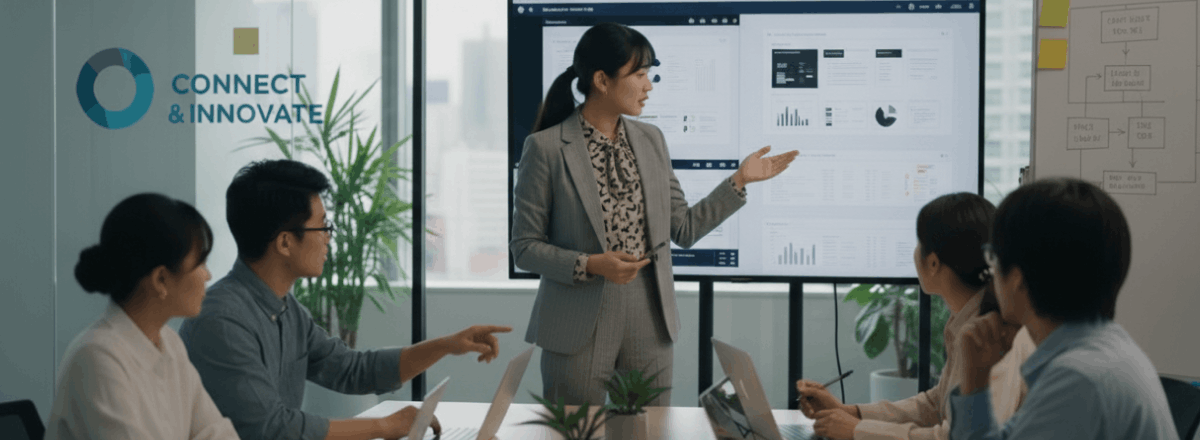
Graduates of this faculty are expected to play an active role as "digitally proficient individuals" in a wide range of fields, from government agencies to the private sector.
They are expected to become rare individuals who can drive and lead projects, in particular.
Qualifications you can obtain
- first class
Land Mobile Radio Operator - third class
Maritime Special Radio Operator - Second-class electrician
(Academic exemption) - Telecommunications construction personnel
(Exemption from some subjects)