Music as learned from religious and historical perspectives
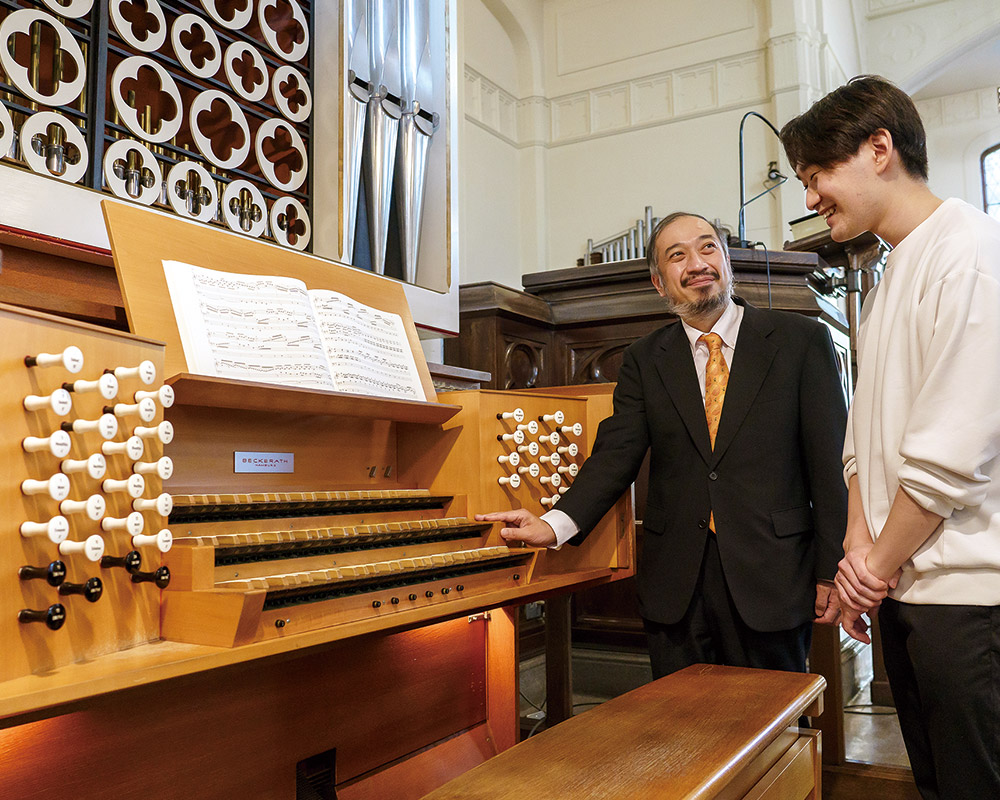
This course explores music from religious and historical perspectives. We will learn about the role music has played in Christian culture, interpret hymn lyrics, and study their connections to culture and history. In addition to listening to the majestic sound of the pipe organ in the chapel, we will learn about the instrument's mechanics and have the opportunity to see firsthand how the large pipes resonate behind it. We will also introduce examples of how European classical music was adopted and established in Japan, broadly covering music closely related to daily life. This is an opportunity to encounter new aspects of music.
Discussions for understanding oneself and others
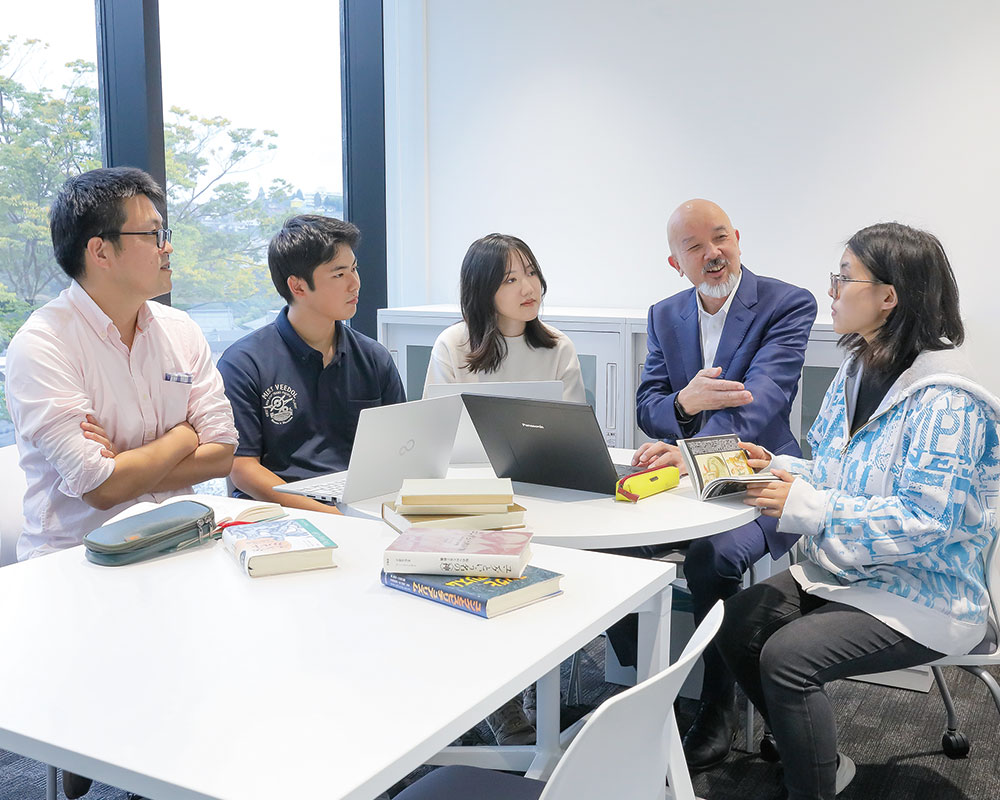
Our seminars incorporate many group discussions. We use easy-to-talk-about topics such as everyday events and personal interests, while guiding students towards fundamental themes of the course, such as understanding diversity, self-liberation, and "what it means to be human." Through repeated discussions, students will look inward and develop the skills to express themselves richly in their own words. Until the second year, students will learn broadly and absorb knowledge, and from the third year onward, they will deepen their independent learning towards their chosen research themes.

To consider the issues of "life" through learning about death.
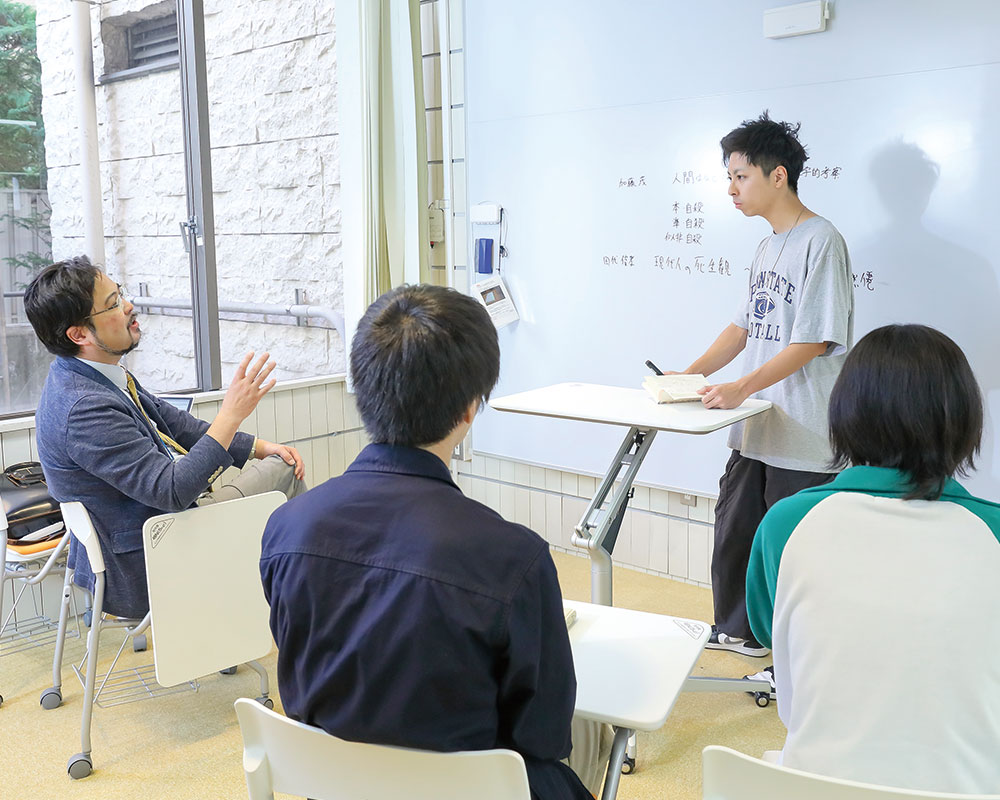
In the first year, the "Fundamentals of Integrated Humanities I & II (Required)" course addresses themes related to death. In the second year, "Thanatology I (Elective)" covers issues of life and death from the perspectives of all faculty members' areas of expertise. In the third year, "Thanatology II (Elective)" allows students to learn about issues and events related to death from a comprehensive perspective, and in "Humanities Seminar I & II (Required)," students with a particular interest in thanatology investigate and present prior research on their own areas of interest (image). Finally, in the fourth year, "Thesis Seminar I & II (Required)" students work on their graduation research, and each year several students write graduation theses on themes related to thanatology and graduate.
Small-group seminars with personalized guidance for graduation theses.
Through repeated refinement, the level of perfection has been improved.
A distinctive feature of this program is that all students are required to complete a graduation thesis, and receive thorough guidance along the way. With an enrollment capacity of 60 students, 11 faculty members are assigned to each student, and graduation thesis guidance is conducted in a small-group seminar format. Each student presents their thesis, expressing their thoughts on a given topic, in the seminar, and receives feedback from faculty, fellow seminar members, and TAs (teaching assistants), revising and refining their work. This leads to improvements in presentation skills and communication abilities, and students grow by evaluating the work of other students, ultimately resulting in a high-quality graduation thesis that serves as the culmination of their university life.