
WATANABE, Yumi Associate Professor

The more you learn about it, the deeper it becomes.
Exploring the connection between religion and art
In Loreto, a city in central Italy, lies a colossal relic: the "Holy House," believed to be the dwelling place of Jesus Christ, the Virgin Mary, and Saint Joseph. This "Holy House" is thought to have been brought from Nazareth by angels at the end of the 13th century and has become a pilgrimage site attracting numerous pilgrims. I am currently researching the iconography associated with this "Holy House."
The world is full of diverse works of art, but there are many things we don't truly see or notice when we look at paintings, even though we think we do. By learning about the background and reasons behind the creation of these works, our perspectives and feelings towards society and art can change, and it can have a significant impact on our lives. Let's learn together!
- Main research areas: Early Renaissance art, Christian art
- Courses taught: Christianity and Art, European Cultural Studies, etc.
Research topic
- Iconography in Early Renaissance Art (Christian Art): Meaning and Function
- The veneration and iconography of Santa Casa (the Holy House)
Research Topics
My research primarily focuses on 15th-century Italian art, examining the meaning and function of works from an iconographic perspective. I analyze why certain works were created, the theological background behind them, and the intentions of their patrons from multiple viewpoints. Recently, I have been researching the relationship between the "Venerable Loreto," centered on the Santa Casa in Loreto, Italy, and its iconography, as well as the reproduction of the Santa Casa in Walsingham, England, and its iconography.
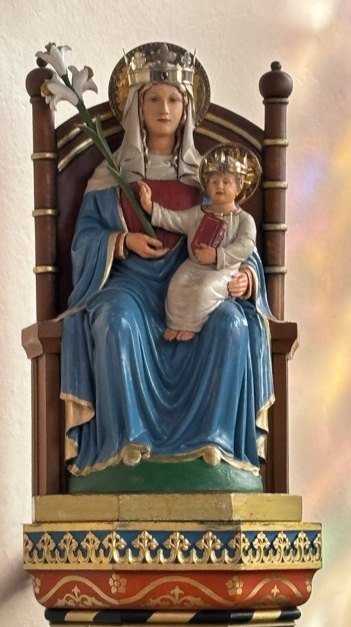
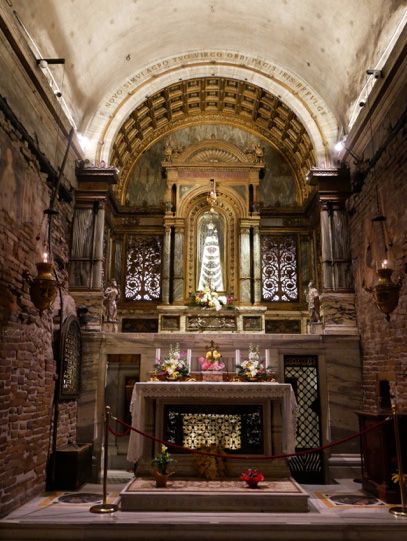
Examples of graduation thesis titles for seminars
- "Impressionism and Female Painters"
- "A Study on Caravaggio's 'St. Matthew Trilogy'"
- "The Influence of Surrealism in the West on Japanese Art: Focusing on Salvador Dalí"
- "A Study on Titian's 'The Assumption of the Virgin' – Focusing on the Basilica of Santa Maria Gloriosa dei Frari"
- "The Evolution of Netherlandish Landscape Painting - Focusing on Brueghel -"
- "Fra Angelico and 'The Annunciation' - Focusing on 'The Annunciation at the Prado Museum'"
- "Rococo-era clothing and gender views"
Recent works
- “The Annunciation and the Cult of Santa Casa in Loreto,” Iconographica, XXIII, 2024, pp. 68-82.
- "The 'Holy House' (Santa Casa) and Pilgrimage: From the Perspective of the Relationship Between the Papacy and the Franciscan Order," *Studies in European Cultural History*, 2024, No. 25, pp. 73-90.
- "Spoleto Cathedral and Liturgy: Musical Representation and Inscriptions in Iconography," *Bulletin of the Institute for Religious Music, Tohoku Gakuin University*, 2023, No. 27, pp. 1-10.
- “Filippo Lippi's Frescoes at Spoleto, Cardinal Eroli, and the Immaculate Conception,” Mitteilungen des Kunsthistorischen Institutes in Florenz, 2022, LXIV Band, Heft 2, pp. 221-230.
- "The Litany of Loreto and the Immaculate Conception," *Bulletin of the Institute for Christian Culture*, Tohoku Gakuin University, No. 4, June 2022, pp. 19-40.
- "A Study on the Frescoes of Spoleto Cathedral by Filippo Lippi (ca. 1406–1469)—Focusing on the Annunciation—," *Art History*, 184, vol. LXVII, no. 2, 2018, pp. 252–265.
- “Filippo Lippi's Spoleto Frescoes: the scrolls held by angels on the triumphal arch spandrels,” Arte Cristiana, 2017, fasc. 902, vol. CV, set.-ott., pp. 332-337.
For more details, please see researchmap.