
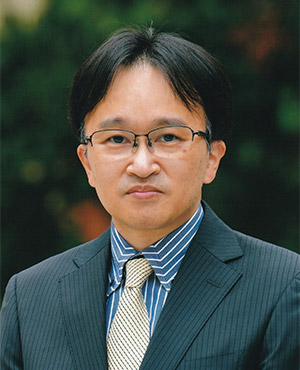
SATO, Yasuhito
To all students studying in Faculty of Economics
Modern society faces many complex challenges. These include widening global economic inequality, deepening poverty, economic conflicts between nations, and the social and economic impacts of the COVID-19 pandemic. Solving these challenges requires a deep understanding of how society works and the ability to think logically based on data. Economics plays a crucial role in addressing these challenges.
Many people might think of economics as the study of "money." While economics certainly has aspects related to money, it is not limited to that. Although it is difficult to define economics concisely, recent leading textbooks describe it as "the study of people's choices." Economics studies how to allocate scarce resources and what impact those choices have on society. In other words, every action and choice (decision-making) we make every day is a subject of economics.
Therefore, the study of economics is not limited to "economic problems" such as economic growth and financial crises. It includes a wide range of fields that are closely related to our lives, such as education, healthcare, environmental issues, and demographic changes.
Furthermore, the appeal of economics lies not only in its empirical aspect of "uncovering facts," but also in its normative aspect of "considering what constitutes a desirable society." Economics not only analyzes the consequences of choices, but also evaluates whether those consequences are desirable, providing insights that form the basis for formulating public policies and designing institutions.
The Faculty Faculty of Economics at Tohoku Gakuin University aims to "cultivate individuals who can contribute to society in various ways by acquiring specialized knowledge in economics based on Christian principles and a broad liberal arts education, developing theories and skills for the economic and social system that are not swayed by the times and that allow for foresight" (Philosophy and Objectives of Faculty of Economics).
The curriculum of Faculty of Economics is systematically integrated with general education subjects, foreign language subjects, and specialized subjects, designed to allow students to acquire a broad general education while progressively learning from the fundamentals to the applications of economics, and further to the analysis of real-world economic problems and policies. In the first year, students learn basic economic theories and analytical methods, and from the second year onward, they develop the ability to apply these to address real-world problems. In addition, small-group seminars are offered throughout all academic years, providing opportunities for advanced and specialized learning and research tailored to each student's intellectual interests.
The fruits of this learning are evident in achievements such as participation in national research conferences and awards in essay contests. Faculty of Economics boasts faculty members with outstanding research achievements both domestically and internationally, who support students' learning. University learning requires an active approach, not a passive one. Plan your coursework carefully, challenge yourself in areas that interest you, and cultivate the ability to identify and solve problems on your own.
The four years at university are a valuable opportunity to grow both academically and personally. I hope that you will utilize the knowledge and experience gained in Faculty of Economics to become individuals who can contribute to society. I sincerely hope that you will grow significantly through your studies here.