
Departmental characteristics
Cultivating a global perspective, both from the viewpoint of East Asia and Japan, through the lens of East Asian-Japanese relations.
What is taken for granted in Japan is not necessarily the same in other countries. Understanding Japan's relationship and position with other countries, and knowing not only how other countries are viewed from Japan, but also how Japan is viewed from other countries, is important if you intend to live on a global stage. While we are unconsciously aware of how Japan is viewed from Europe and other Western countries, fewer people may be aware of how Japan is viewed from neighboring East Asia. The East Asia course offers subjects that allow you to intellectually understand what kind of presence Japan has in Asia and to learn the wisdom to jointly forge the future of East Asia based on its past history.
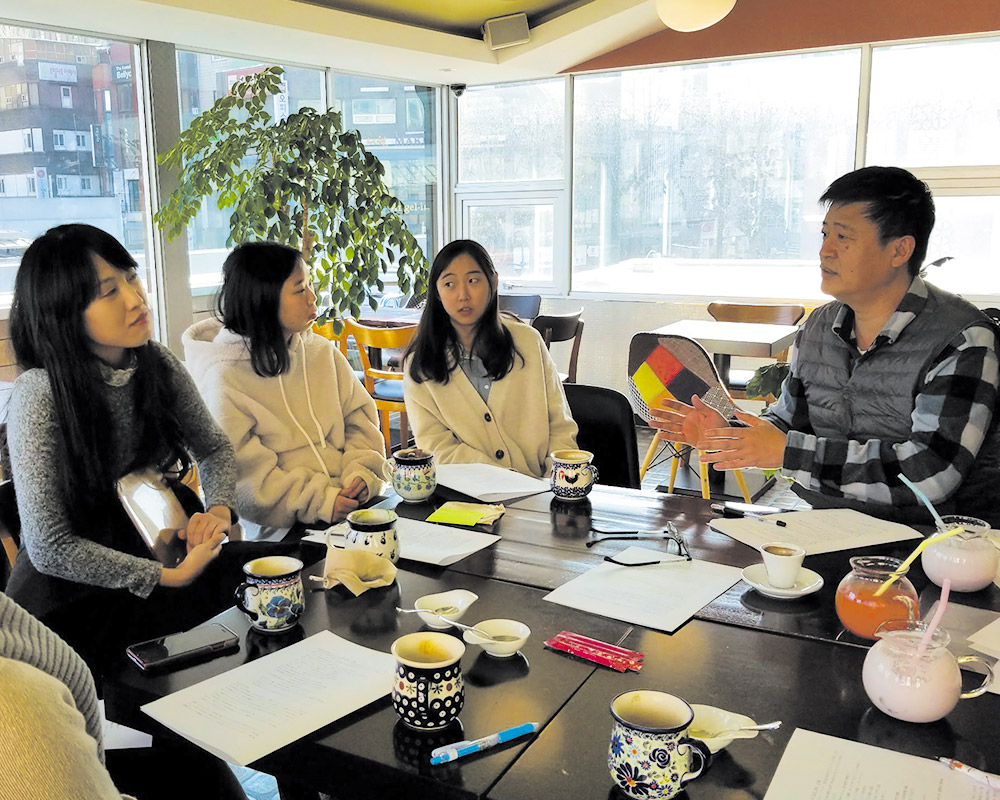
Growing need for Japanese language education: Learning together with international students
This department allows students to obtain the "Basic Qualification for Japanese Language Teachers," which certifies the fundamental knowledge and skills required to teach Japanese as a foreign language. Students begin by analyzing the structure of the Japanese language in "The Structure of the Japanese Language," gaining an understanding of its characteristics, and then deepen their knowledge in "Japanese Linguistics I" and "Japanese Linguistics II." They also take courses such as "Sociolinguistics," "Symbiotic Linguistics," and "Intercultural Communication," and acquire specialized knowledge in the history, current state, and teaching methods of Japanese language education before conducting teaching practice at a Japanese language school in their fourth year. Many international students interested in the Japanese language, society, and culture also enroll in this program.
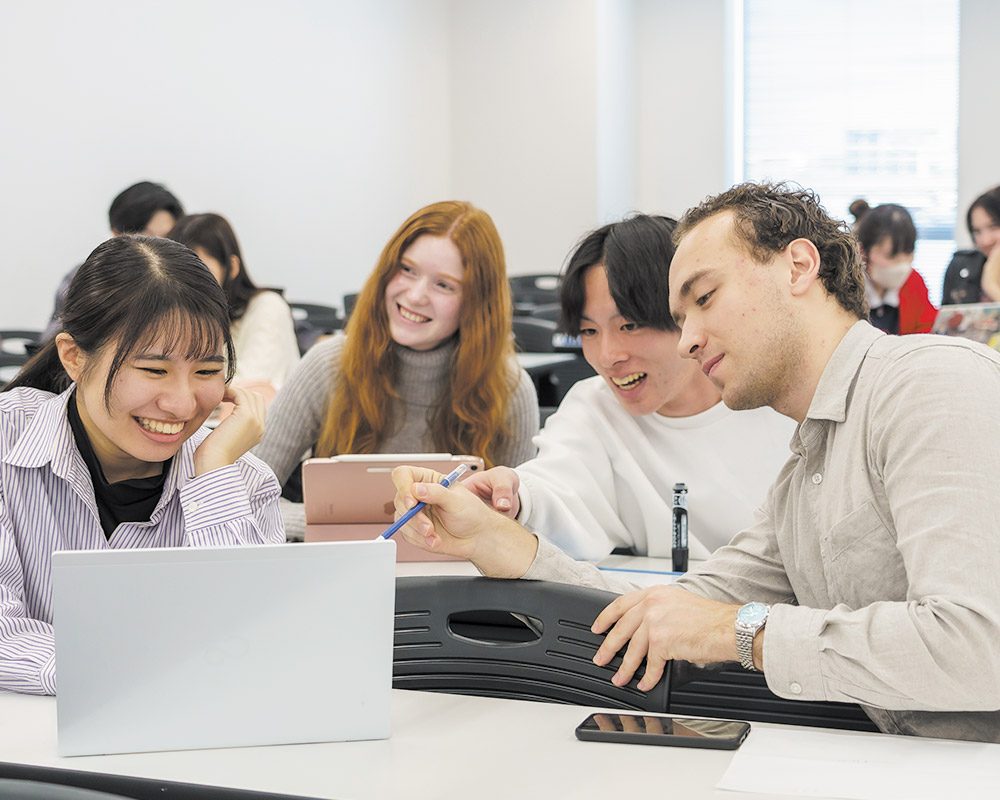
Let's discuss from the perspectives of people from all over the world!
Cultivating the qualities of a true global citizen
This practical class encourages students to consider, discuss, and exchange opinions in English on global topics such as the environment, peace, and human rights from a global perspective. By stepping outside the identity of "Japanese university students" and simulating fictional roles, students gain a simulated experience of the perspectives of people around the world. Emphasis is placed on confidently expressing opinions while making eye contact, rather than simply correcting grammatical errors, and students genuinely gain confidence with each session. The unique teaching methods and timely topics are a testament to the expertise of a faculty member specializing in international relations with extensive overseas teaching experience. This class cultivates the qualities of a true global citizen.
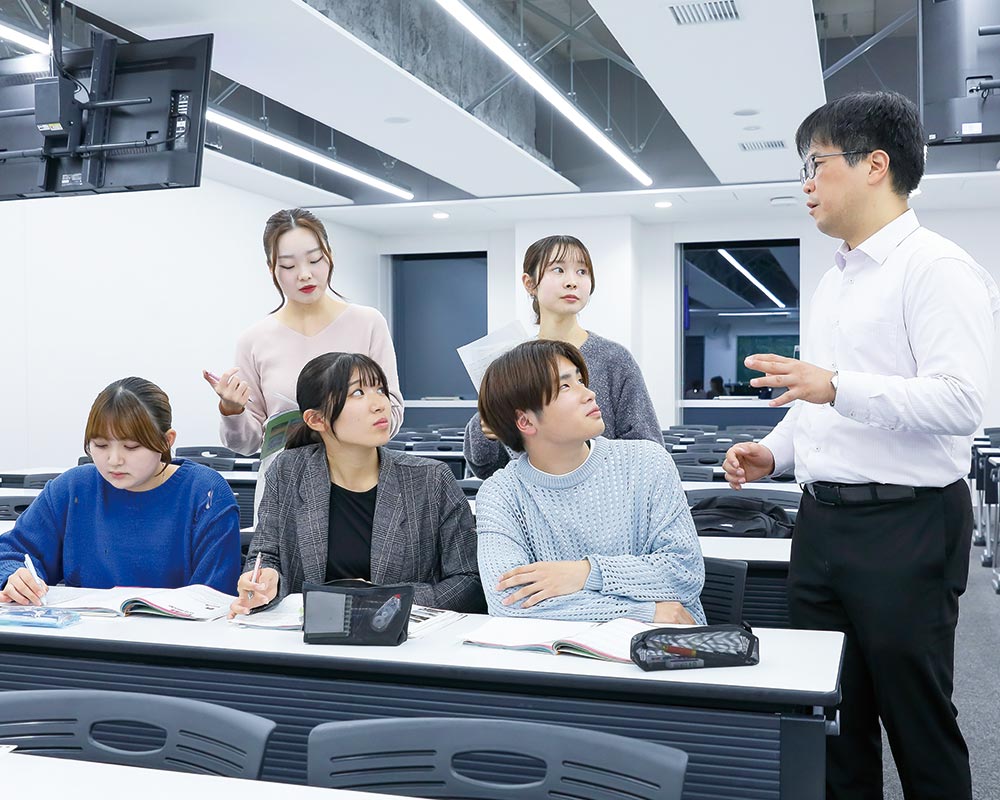
Numerous researchers specializing in Korea and North Korea
Learning opportunities extend beyond the classroom.
Companies in the Tohoku region primarily do business with companies in the United States, followed by China, Taiwan, and South Korea. What is most lacking is young Japanese talent proficient in the languages of these countries. Faculty of International Studies is characterized by its extensive range of specialized courses related to the Greater China region and the Korean Peninsula. In particular, it boasts a large number of faculty members with roots in the Korean Peninsula or those actively engaged in research related to Korea. Leveraging this strength, the department offers opportunities to step outside the classroom, such as visiting the Korean Consulate General in Sendai, interacting with Korean students, and hosting visiting delegations from Korea. For those who want to learn about the Korean language and culture, or delve deeply into the relationship between the Korean Peninsula and Japan, this faculty offers an ideal selection of specialized courses.
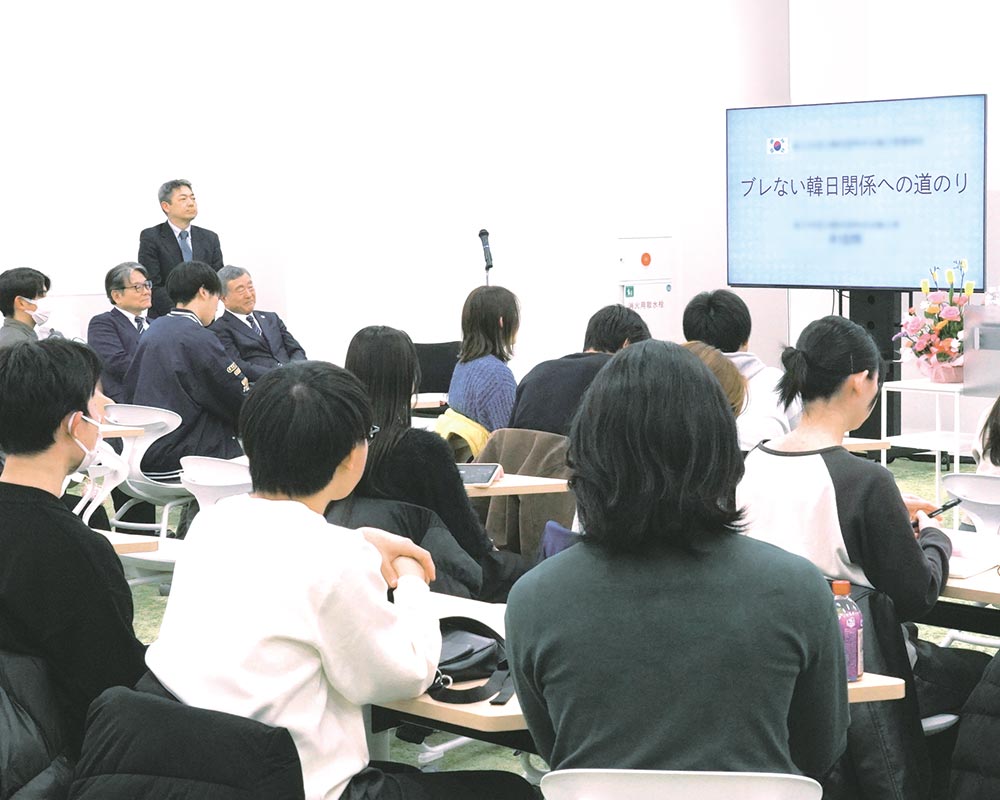
Learn about, study, speak about, and think about the world "in" English.
Exciting days gave me confidence.

Airisa Takahashi, 2nd year student
(Miyagi Prefecture / Graduate of Sendai Nika High School)
Rather than simply learning English, I think the defining characteristic of this department is that we use English "to" experience, learn about, speak about, and think about the world. I've learned that English is a means to an end, not an end in itself. Every day is exciting, and I enjoy coming to university. My favorite class is "International Relations," where we discuss a wide range of topics in English, including SDGs, conflict, and poverty. In "Gender Studies," I was enlightened by the professor's words that "gender is not about male and female, but a spectrum." Every class gives me new perspectives and ways of thinking.
One of the attractive aspects of this program is the abundance of learning opportunities outside of classes, such as independent study groups and English cafes. Speaking English a lot boosted my confidence, and I was even able to participate in a language study abroad program during the summer of my second year. I believe that joining this department is the reason I've become so much more proactive than I ever imagined before.