
Acquire practical skills in ICT utilization instruction.
Thanks to national policies, almost every elementary and junior high school student across the country has been provided with a device. The ways in which these devices are used are expanding year by year, including for school communications, homework assignments, and recording and sending homework progress. In this context, ICT utilization skills are essential for teachers as well. In this department, we deepen collaboration and joint research with schools to incorporate the ever-changing methods and challenges of ICT use in the field into students' learning. Through practical lessons, students will hone their skills in how to effectively use digital tools in the classroom and how to teach children how to use them correctly.

Small class sizes and a curriculum that caters to all school levels.
With an enrollment capacity of 70 students per grade level, the school features practical lessons made possible by small class sizes, and provides instruction that develops teaching skills in both academic and student guidance. In response to the growing trend of integrated elementary and junior high school education, the curriculum is set up to allow students to obtain teaching licenses for elementary school and junior/senior high school (English). The teaching staff includes not only education specialists but also former elementary, junior high, and high school teachers, who directly share their real-world experience. Through full-scale mock lessons and regular presentations of lesson plans, students can gain practical experience and acquire teaching methods appropriate to each grade level and proficiency level.
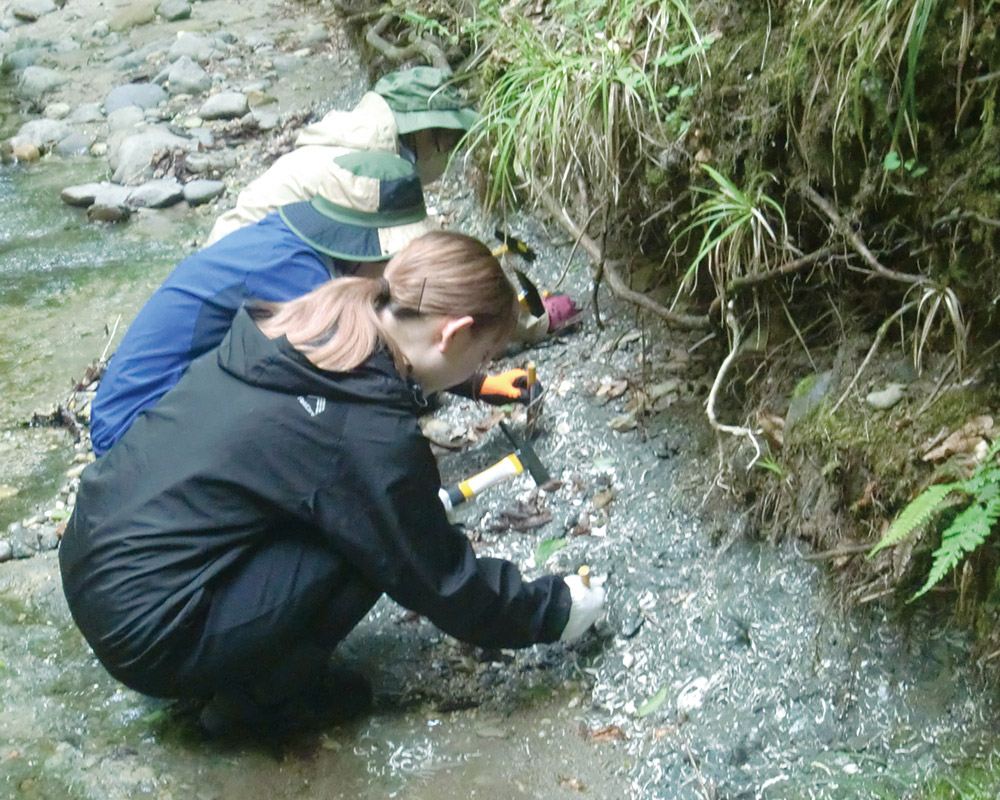
Developing teachers who are confident in their English skills through high-level communication exercises.
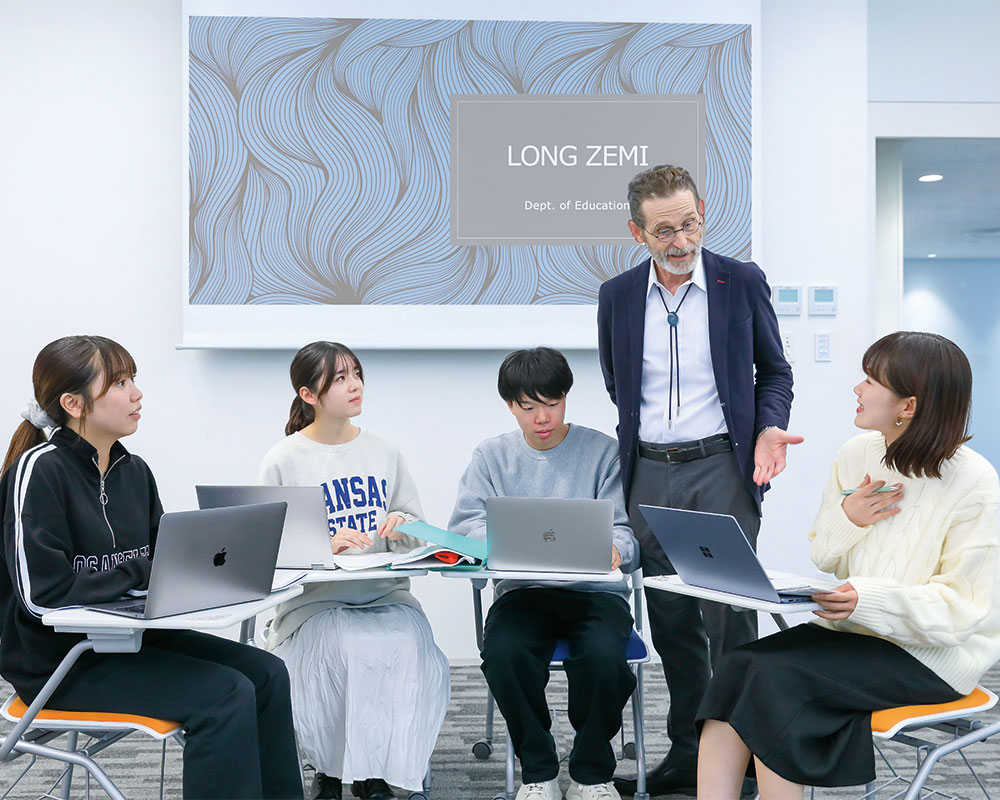
Department of Education was founded with a strong desire to cultivate teachers who are confident in their English skills. A distinctive feature is the "Comprehensive English Communication Workshop," where students exchange opinions and give presentations entirely in English. The workshop primarily involves students discussing articles from English-language newspapers and other materials of their choice, and by continuing to take it from the first to third year, students acquire more practical skills and natural communication abilities. The curriculum is designed to enable students to obtain teaching licenses for elementary school and junior/senior high school (English), fostering not only improved language skills but also individuals who can provide excellent English instruction at all levels of school.
The meticulous attention to detail that comes with small class sizes.
Acquire solid leadership skills through practical experience.
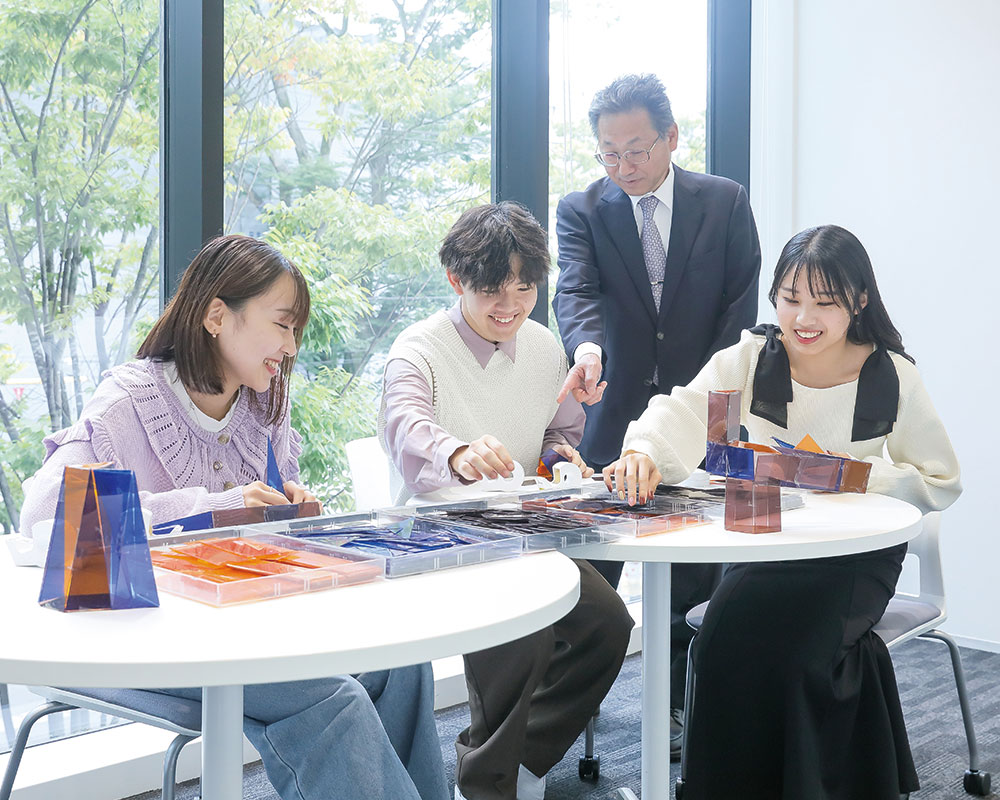
Through meticulous, practical lessons made possible by our small class sizes, we steadily cultivate skills in both instructional and student guidance. With a maximum of 70 students per grade level, some subjects are further divided into smaller groups for instruction. Each student creates their own lesson plan and materials, conducts mock lessons, and receives precise feedback, which they then use to improve their next mock lesson, thus honing their practical skills. Our teaching staff consists of education specialists and former elementary, middle, and high school teachers, characterized by their multifaceted instruction based on extensive practical experience and the latest industry trends. We assign specialist teachers to each subject, providing detailed support tailored to each student's desired career path.
Strengths in developing English language teaching skills
The best environment for those who are serious about becoming teachers.
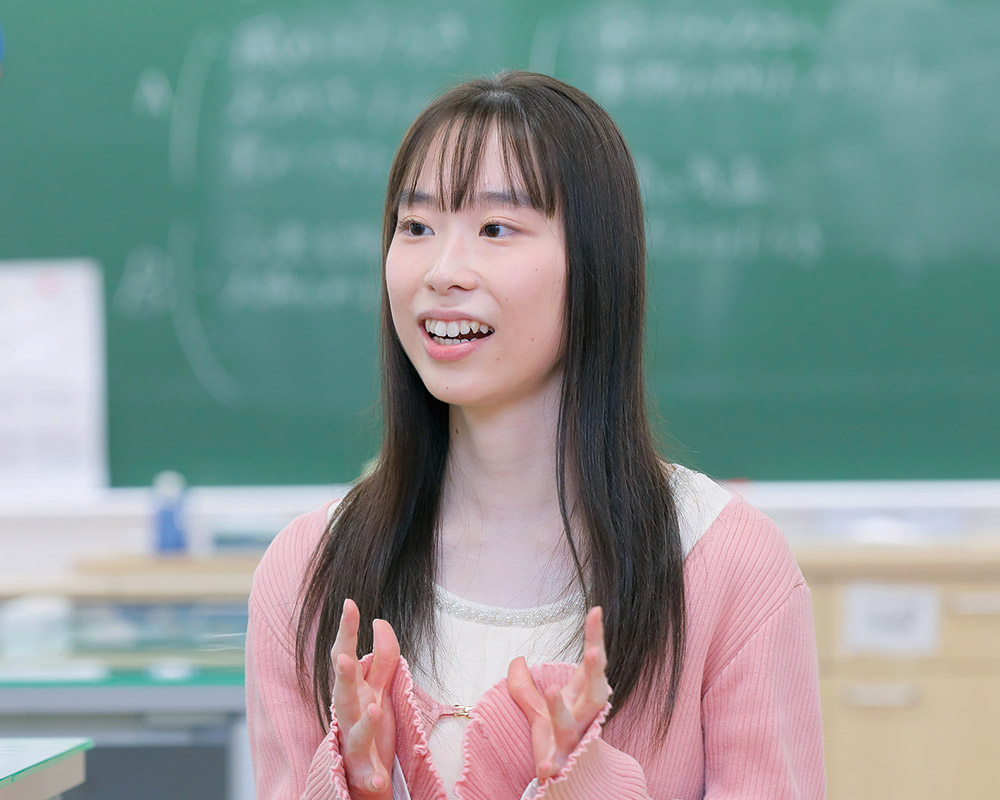
3rd year student, Mito Muto
(Miyagi Prefecture / Tohoku Gakuin Ryugaoka High School graduate)
As I aspired to Department of Education, I was drawn to this university because it offers teaching licenses for all school levels and places a strong emphasis on English education. I was very anxious when I learned that there would be all-English classes from the beginning of my first year, but thanks to the professors' creative teaching methods, I was able to keep up, and before I knew it, my fear of English had disappeared.
To be honest, the constant cycle of classes and practical exercises can be exhausting at times. However, every day is incredibly intense and fulfilling, and knowing that my classmates are working just as hard is a huge source of encouragement. I've been able to do this because I'm with everyone. I believe that the English teaching skills, which are a strength of this department, are a significant advantage in the elementary school teacher recruitment exam. With small class sizes allowing for detailed instruction, close relationships with professors, and a supportive atmosphere where students encourage each other, I can confidently say that this is the best environment for anyone seriously aiming to become a teacher.