
Two courses allow students to study three fields—architecture, civil engineering, and environment—in an interdisciplinary manner.
The curriculum of this department is structured around three pillars: architecture, civil engineering, and environment. Because the areas covered are very broad, a key feature is that students first gain an overall understanding of each field, and then, from their second year onwards, through individual application and selection, they specialize in either the "Architecture Course" or the "Environmental Civil Engineering Course." Each course offers extensive support for obtaining qualifications, and the department offers a wide variety of certifications. Furthermore, many faculty members are engaged in practical research, providing ample opportunities to meet external individuals with whom students are collaborating on projects, allowing them to hone their skills through diverse interactions.
Towards a sustainable society: To construction engineers with an environmental perspective.
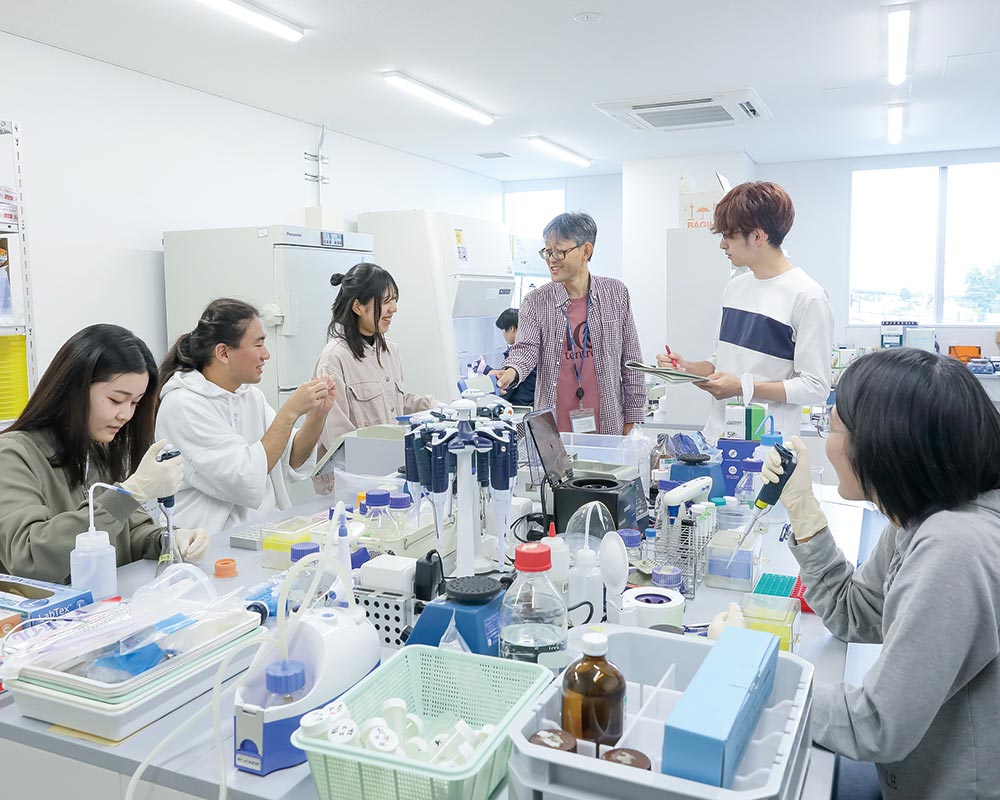
The construction and environmental fields are closely related. When constructing structures, it is necessary to consider the impact on the surrounding environment beforehand. Research on water supply systems to provide safe drinking water, sewage systems to treat domestic wastewater, and air and light for comfortable indoor living are also part of the construction field's work. Furthermore, the purification of polluted environments is an indispensable technology in today's society, and a variety of technologies are being developed, including chemical methods and approaches using microorganisms. By learning about the diverse possibilities and technologies related to the environment, we support your path to becoming an engineer with a perspective on "nature" and "the environment" that contributes to a sustainable society.

Pickup Research Lab
Biotechnology contributing to environmental remediation
The Environmental Microbiology Engineering Laboratory conducts research on "environmental biotechnology," which removes and purifies environmental pollutants using the power of living organisms. They remove harmful substances such as arsenic and cadmium contained in soil and groundwater, using the action of plants and microorganisms. While conducting practical research both domestically and internationally, they are also striving to elucidate the mechanisms of the plants and microorganisms that play these roles. Environmental purification without relying on chemicals is an essential field for the future of humankind, and improving water and soil quality contributes to civil engineering projects such as sewage system development.
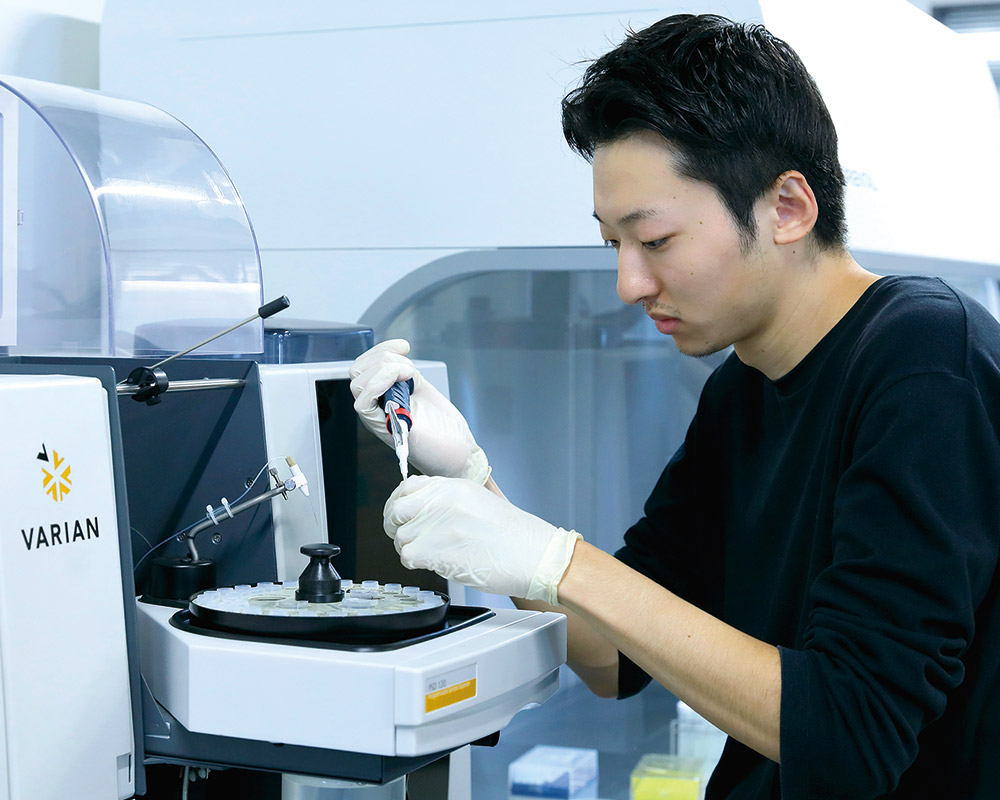
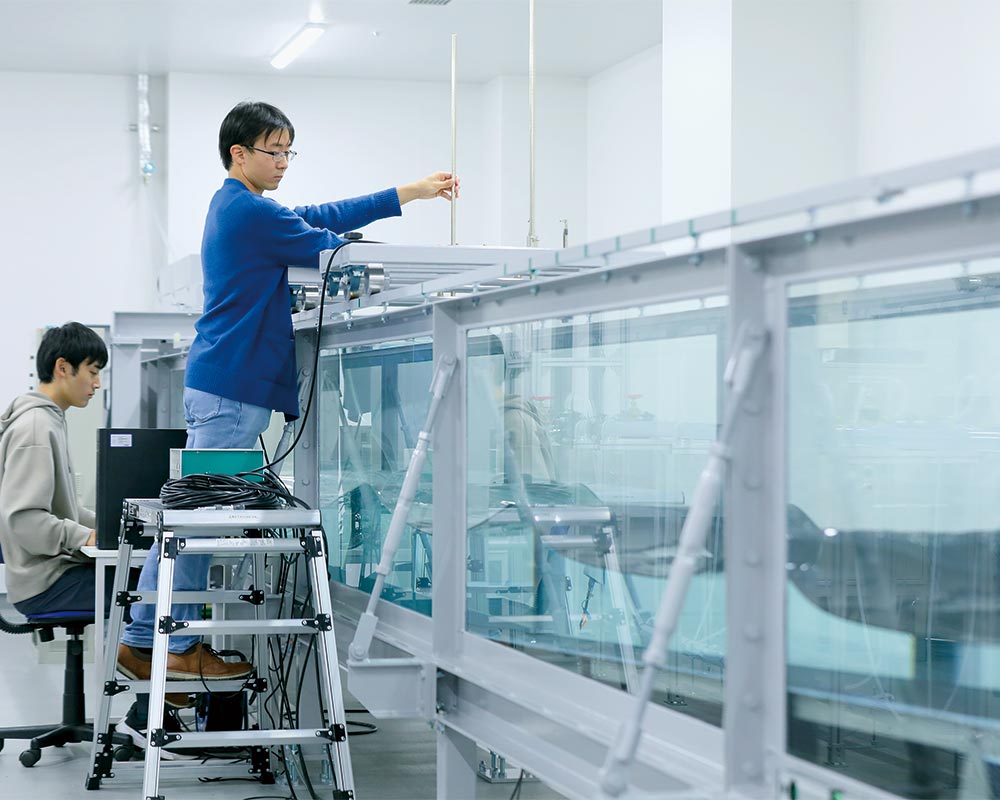
Hydraulics aiming for disaster prevention and mitigation with state-of-the-art equipment and cutting-edge technology
Tsunamis and high waves during typhoons cause immense damage to people and cities, and drastically alter coastal topography and environments. Furthermore, it has been pointed out that flood disasters, which have occurred frequently in recent years, are becoming even more dangerous due to climate change. At Associate Professor Yuta Mitobe's Hydraulic Engineering Laboratory, researchers investigate ocean waves, tsunamis, and river flows through experiments using state-of-the-art equipment, and also study changes in local topography and environments through the acquisition and analysis of on-site images using drones and other means. Through research incorporating new technologies such as the development of new image measurement methods and analysis using AI, the laboratory aims to contribute to disaster prevention and mitigation.
Architecture that leaves a lasting impression on people's hearts.
Hone your skills through repeated practice.
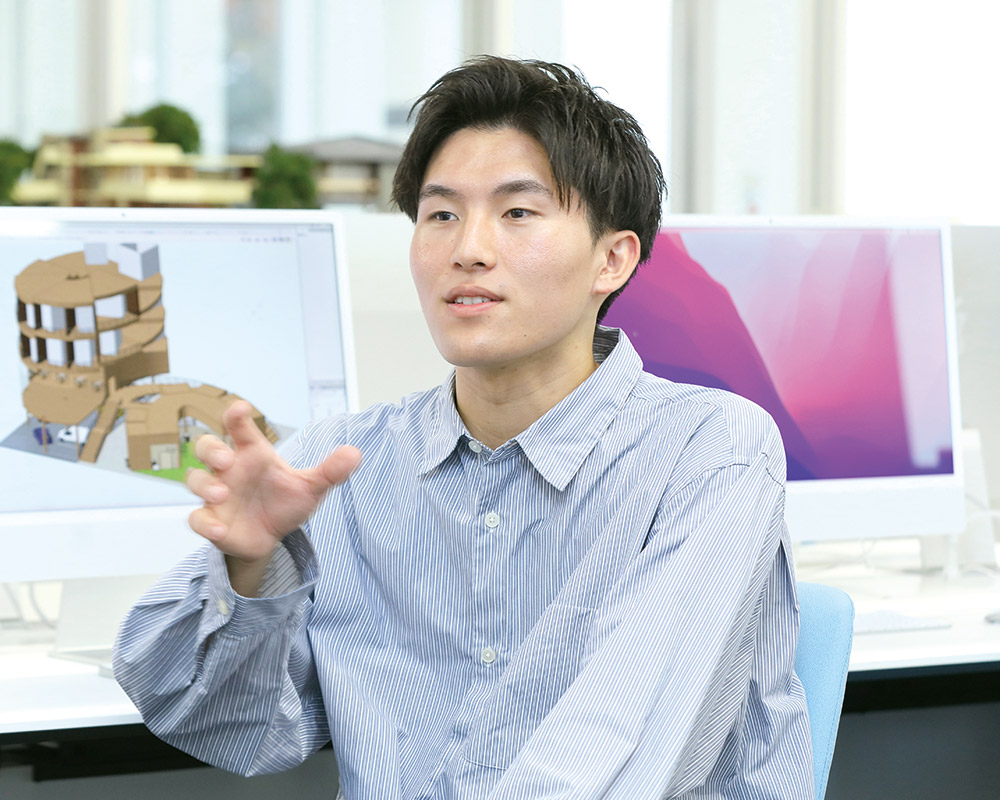
Karen Tsuchizawa, 3rd year student
(From Iwate Prefecture / Graduate of Morioka Third High School)
I enjoy looking at photo books of beautiful architecture from around the world, and I hope to be involved in creating buildings that leave a lasting impression on people's hearts, which is why I chose to study architecture in this department. What I find appealing is that I can broadly study civil engineering and architecture in parallel, and then choose a course in my second year to deepen my specialization.
I was awarded a Special Prize by the Cooperation Association at the 29th JIA Tohoku Architectural Student Awards, which are given to students studying architecture in the Tohoku region. The school I designed was an elementary school. I incorporated elements that I would want to study in if I were a student there. This department has a lot of assignments, and there are many days when I have to stay late into the night. But even though it's tough, when it's all over, it strangely becomes a good memory. Maybe it's because I'm always encouraging my classmates who have the same goals. After graduation, I want to work in the display industry, designing various spaces. I would be happy if I could do work that is useful to society by incorporating user-friendly and easy-to-use designs.