
Support for obtaining professional qualifications that are useful in the real world.
A key feature of this department is its practical curriculum designed to help students acquire numerous licenses and qualifications. For example, by completing the required courses during their studies and gaining practical experience after graduation, students can obtain the national qualification of "Chief Electrical Engineer's License." Some examinations are waived for the "Second-Class Electrician's License." Students can also obtain qualifications such as "Chief Telecommunications Engineer," "First-Class Land Mobile Radio Operator," "Third-Class Maritime Mobile Radio Operator," and "Teacher's License (Industrial High School, Class 1)." Further studies in Graduate Schools can also lead to the acquisition of specialized licenses.
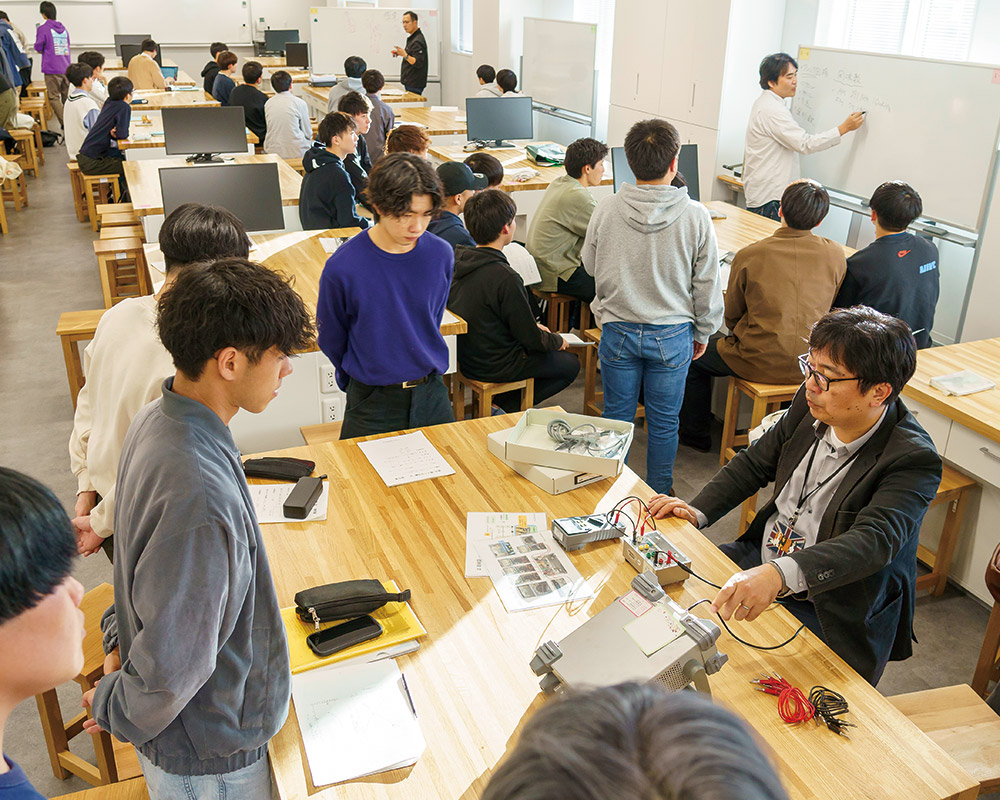
Support for acquiring professional qualifications useful in the real world and outstanding employment record.
A key feature of this department is its practical curriculum designed to help students acquire numerous licenses and qualifications. For example, by completing the required courses during their studies and gaining practical experience after graduation, students can obtain the national qualification of "Chief Electrical Engineer's License." Some examinations are waived for the "Second-Class Electrician's License." Furthermore, students can acquire qualifications such as "Chief Telecommunications Engineer," "First-Class Land Mobile Radio Operator," "Third-Class Maritime Mobile Radio Operator," and "Teacher's License (Industrial High School, Class 1)." It is also possible to obtain specialized licenses by pursuing Graduate Schools. These factors contribute to the department's consistently strong employment record each year.
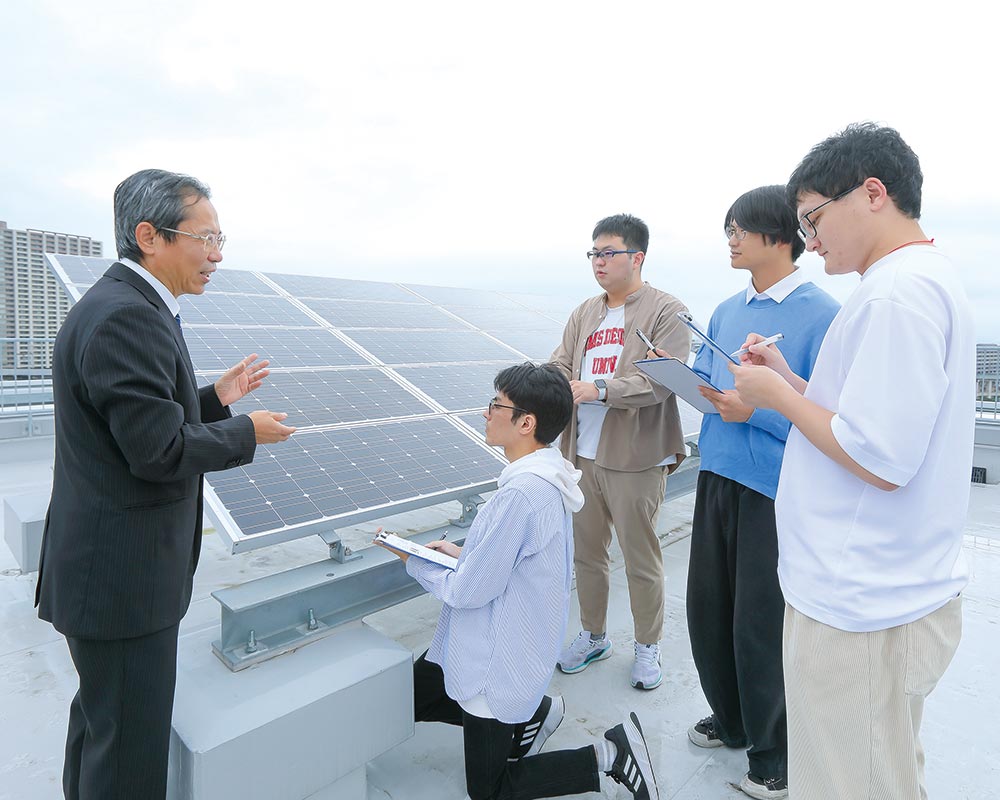
Pickup Research Lab
State-of-the-art equipment to support deeper and more advanced research
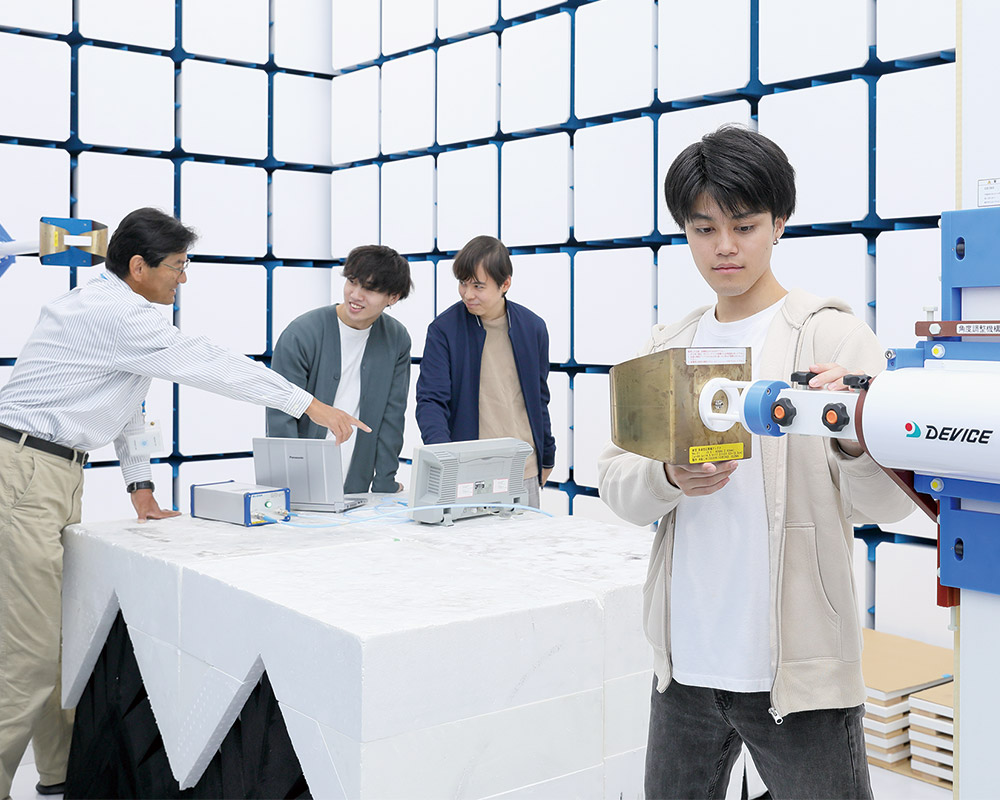
The research buildings on Itsutsubashi Campus, where the Faculty of Faculty of Engineering 's research facilities are concentrated, are equipped with state-of-the-art facilities that deepen learning in each field and support cutting-edge research. Advanced facilities such as the "EMC Anechoic Chamber" for measuring and developing radio wave noise from communication devices such as robots and IoT devices, the "Magnetic Materials Science Laboratory" that supports the research and development of new magnetic materials for permanent magnets, and the "Anechoic Chamber" for research on the creation of acoustic information processing systems in an environment where sound reflection is completely eliminated support highly precise research.
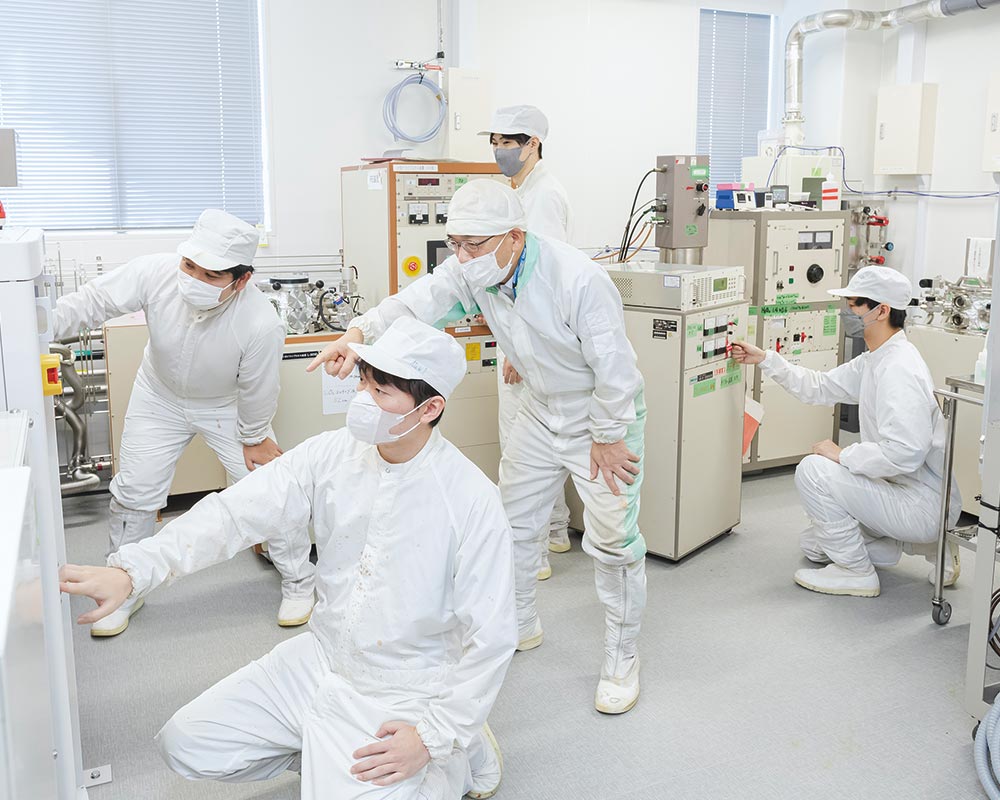
Unraveling the next-generation semiconductor technology that will pave the way for the future of the IoT society.
Research is underway worldwide to develop more compact, faster, and energy-efficient transistors (semiconductors). Among the various approaches, Professor Akihito Hara's laboratory is focusing on "thin-film transistors." They are conducting comprehensive research aimed at semiconductor device technology on glass and plastic substrates, and the three-dimensional integration of semiconductor devices. The establishment and demonstration of these technologies are expected to lead to the realization of key devices that will support the 5G network society, IoT society, and AI society, such as thin and light sheet-like computers. The laboratory is well-equipped with research facilities necessary for the development of semiconductor technology. You can experience firsthand the basic research that forms the foundation of the semiconductor industry that will create the future.
I discovered the unique appeal of learning in science and engineering fields, where knowledge is acquired through lectures and skills are mastered through practical application.
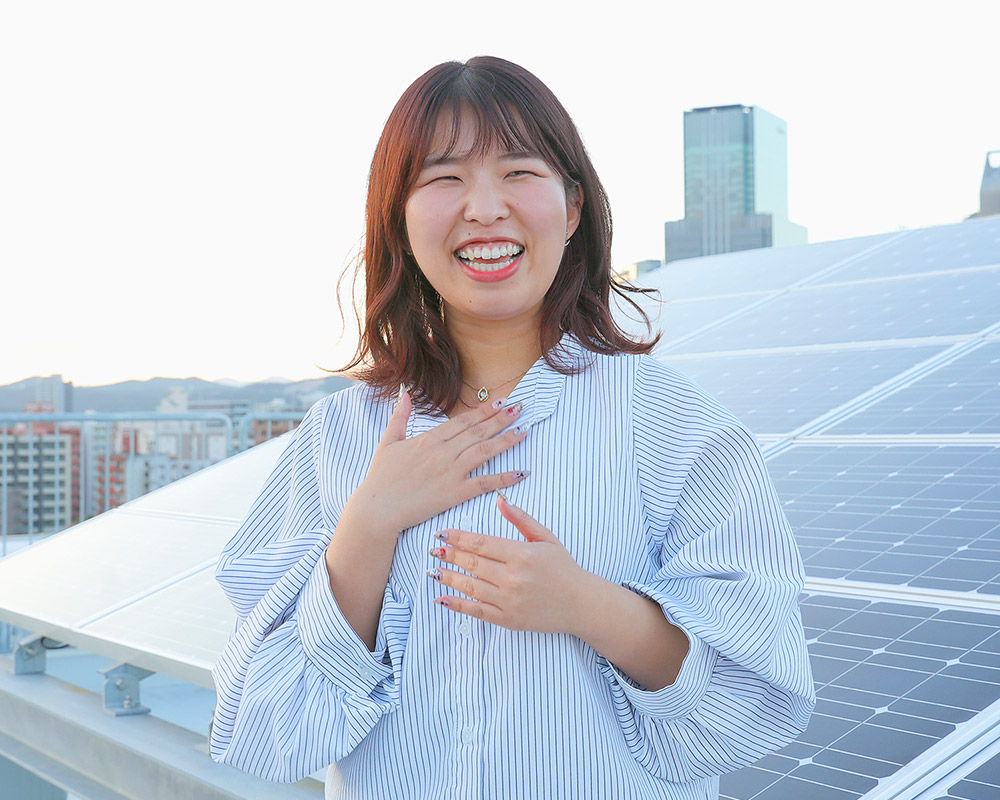
3rd year student, Mai Togashi
(Miyagi Prefecture / Graduate of Sendai Jonan High School)
I came from a general high school background and entered this university without any specialized knowledge, but in my first year, I was taught the basics carefully and was able to keep up with the classes without any difficulty. As I progressed through the grades, the number of more specialized classes increased and the classes became more difficult, but my interest deepened as well. Experiments are very challenging, but they are my favorite time. We conduct experiments in groups almost every week, and it's not uncommon for us to not get the results we expected, so we discuss and come up with different methods and try again and again. I think the process of actually trying out what you've learned in lectures and mastering it is what makes science so interesting.
I've been involved in the university festival committee since my first year. Until two years ago, Faculty of Engineering was on a separate campus, and the university festival was held separately. Now I work together with students from the humanities faculties, which I think is one of the advantages of having a single campus. I'm able to dedicate myself to these activities thanks to the support I receive from my professors.