
Departmental characteristics
Learn the fundamentals of mechanical engineering by getting your hands dirty.
This program provides foundational education in mechanical knowledge, which forms the basis of manufacturing, and the latest computer control technologies. It deepens students' understanding of how to operate "tangible machines," allowing them to fully experience the appeal of manufacturing. While most drafting is done on computers today, this program emphasizes the process of completing everything from design to drafting by hand. Students acquire the skills to create designs that suit their purpose and application, and to accurately reflect the design intent in their drafting. Mastering the fundamentals of mechanical engineering fosters versatility and adaptability, enabling a wide range of career choices.
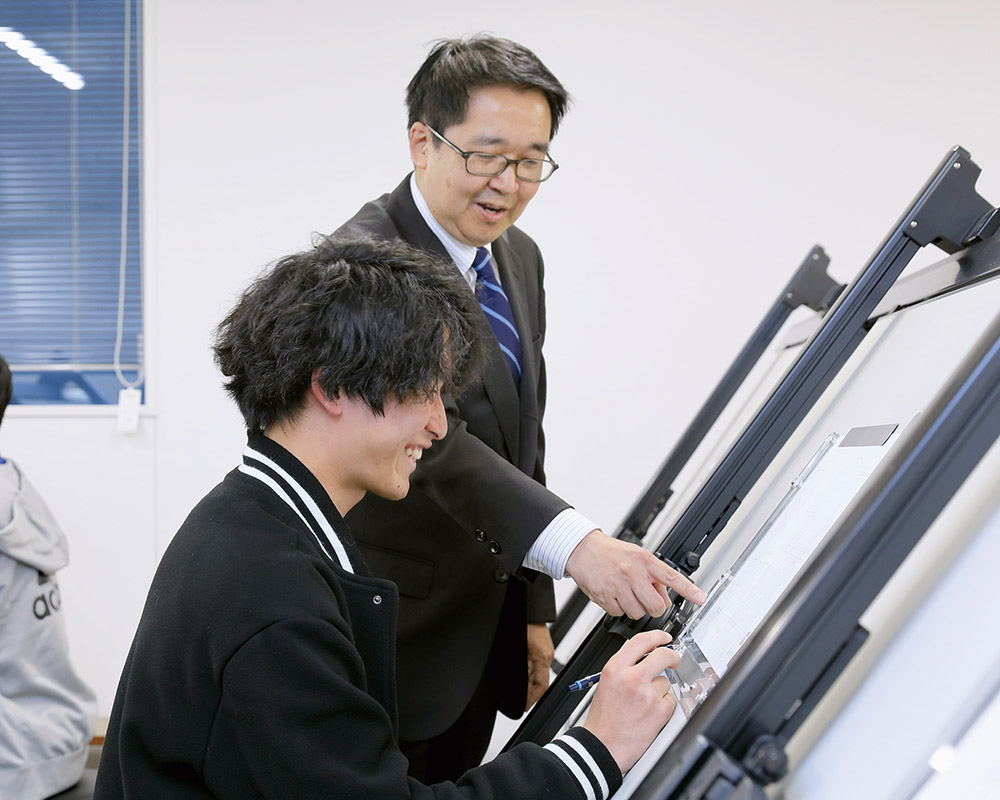
From the fundamental principles to the creation of the "working tools" that support modern society, we cover a wide range of topics.
Machines are "moving tools." They support our daily lives, from automobiles and robots to home appliances, air conditioners, and building equipment, and also play a vital role in the production that creates them. Most of today's machines are built upon a wide range of integrated technologies combining computers, software, and electronics. This department provides education from the basics to specialized fields, and further to areas directly related to practical applications through the integration of various specialties, allowing students to gain the knowledge and experience necessary to understand, build, and operate such machines, all through hands-on learning. Furthermore, advice on course selection through a "plan" guides students towards learning based on their interests and passions.
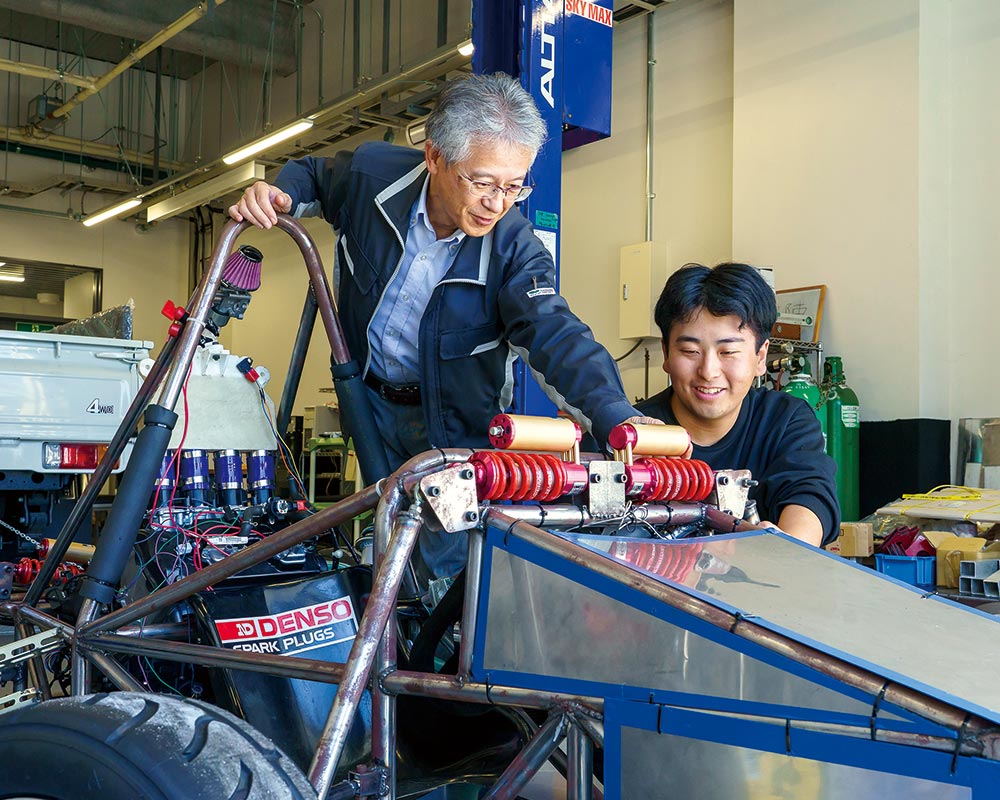
Pickup Research Lab
Pioneering the intersection of human anatomy and function with mechanical engineering.
Our Biomechanics Laboratory conducts one of the few studies in Japan that aims to elucidate the mechanics of the auditory organ and apply this knowledge to the fields of medicine, welfare, and sports. In the medical and welfare fields, we have developed a device that enables hearing screening tests for newborns, which were previously difficult to perform, leading to the early detection of ear diseases.
In the field of sports, we are investigating the relationship between repeated impacts to the head in contact sports and hearing loss, and developing supporters to mitigate those impacts. Research that combines the elucidation of the structure and function of the human body with mechanical engineering will attract even more attention in the future.
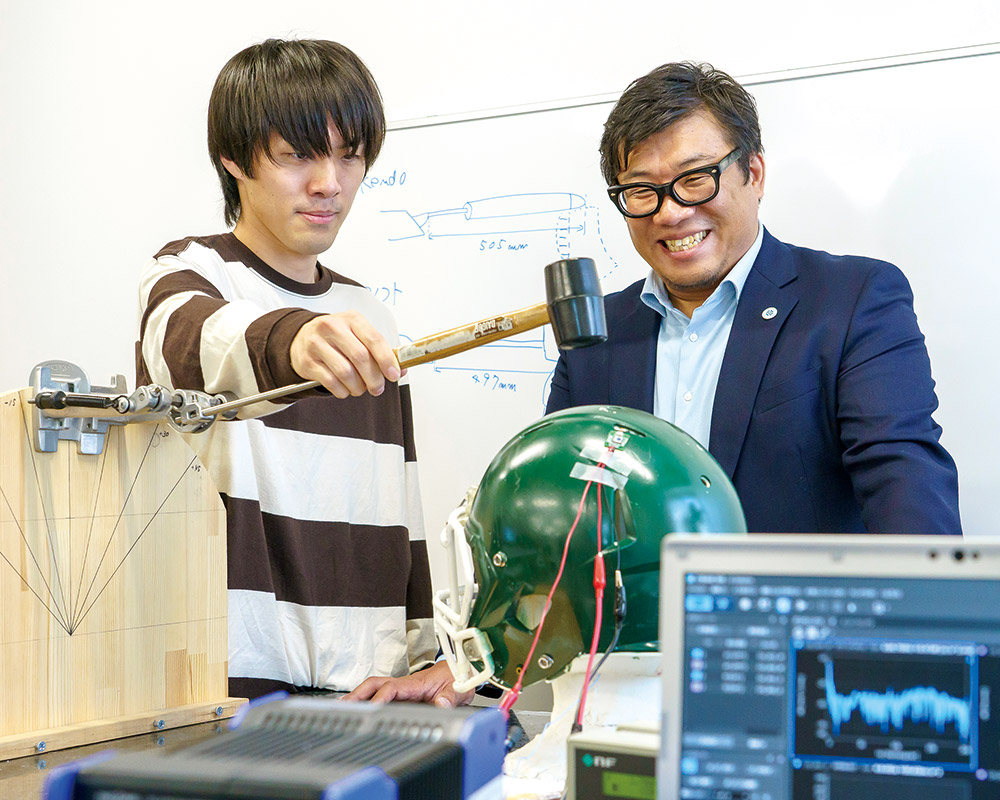
Development of an electromagnetic vibration actuator to explore the potential of vibration utilization (vibration profit).
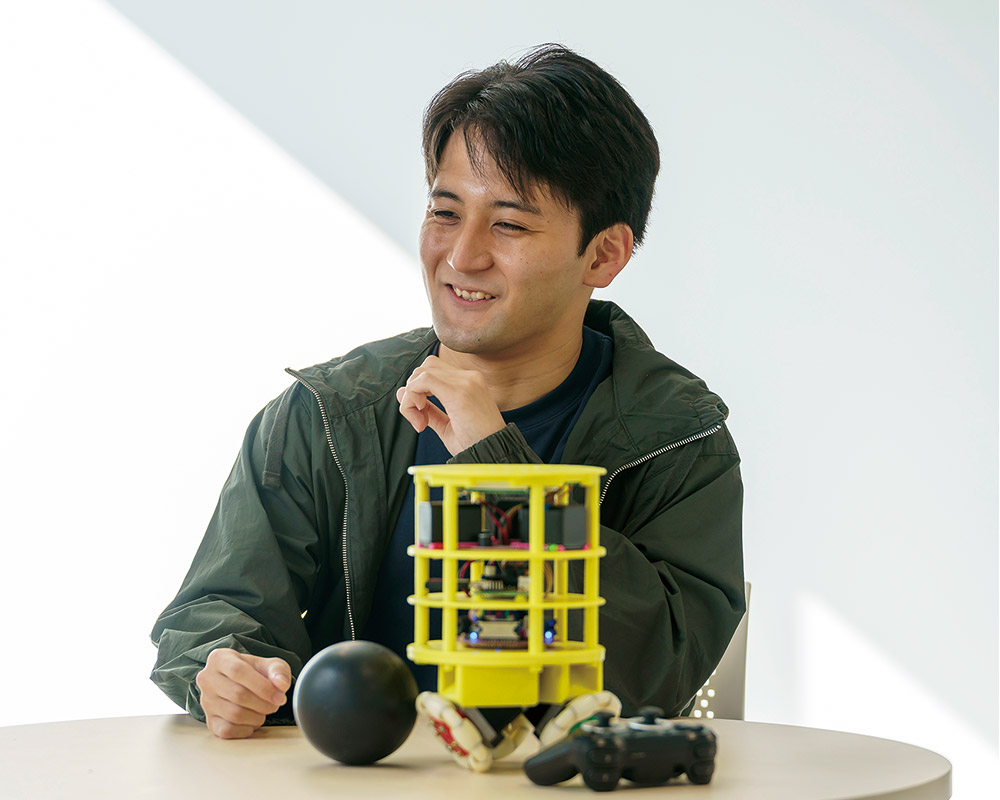
Professor Hiroyuki Yaguchi's laboratory is developing vibration-type electromagnetic actuators that are efficient and capable of diverse movements. What's unique is their reverse approach of "utilizing vibration," which is usually something that is reduced or controlled, to make effective use of it. By applying this technology and converting oscillating motion into a propulsion source, they have been able to realize small, lightweight, and highly efficient actuators. Small motor-type actuators equipped with sensors and cameras are expected to simplify structural inspections of aging buildings, bridge piers, and pipes, and to be used in various pumps. Aiming for further technological advancement and social implementation, they are working with students to establish the operating principle of electromagnetic vibration.
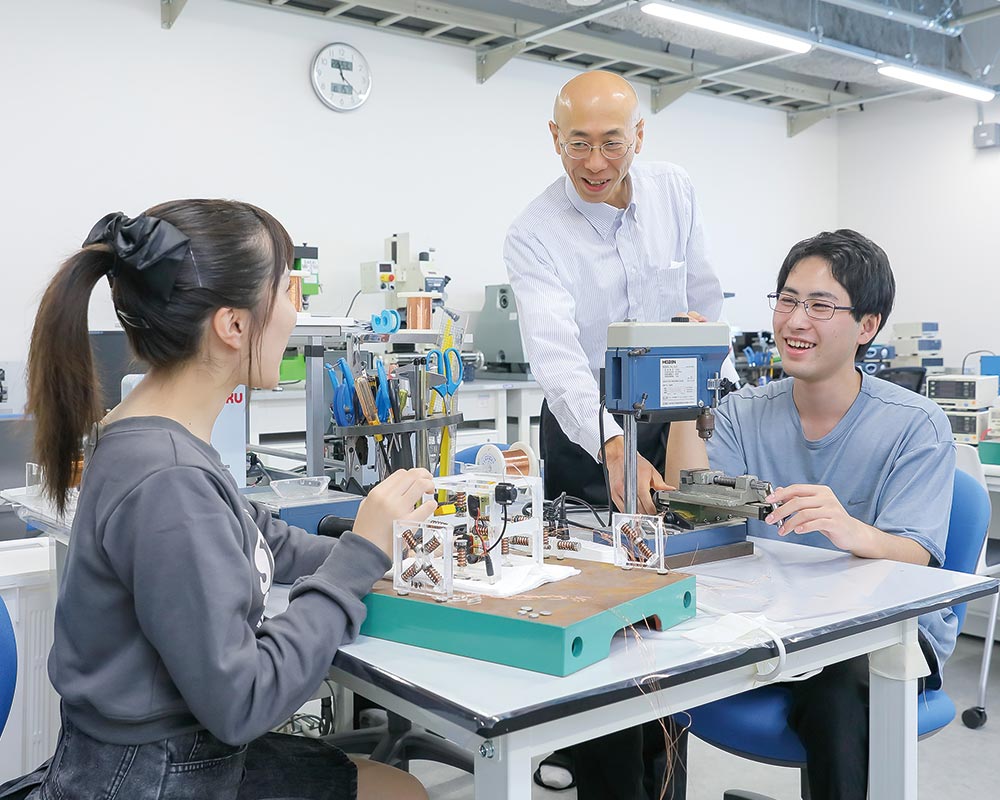
"I want to build a robot! I want to make it move!"
That passion has nothing to do with gender.
3rd year student, Misaki Sato
(Miyagi Prefecture / Graduate of Sendai Minami High School)
I saw cutting-edge technology at a robot exhibition when I was in junior high school, and I dreamed of designing my own robots someday, which led me to this department. I was worried because I was in a regular high school, but the classes were taught carefully, and I was able to keep up without any problems. I haven't decided on a research lab yet, but I'm interested in the development and control mechanisms of robots. I feel that the future holds great promise for robots in the welfare and nursing care industries. There are so many things robots can do, such as assisting visually impaired people with walking and creating assistive suits to reduce the burden on caregivers in elderly care facilities, and I think that will only increase in the future.
While this department has a male student body, I don't feel any disadvantages as a woman. In fact, I sometimes find the dexterity and meticulousness required for drafting to be an advantage, and women's roles are becoming increasingly common in the industry. If you enjoy making things, gender doesn't matter, so please give it a try.