
Taking on the responsibility of expanding "manufacturing"
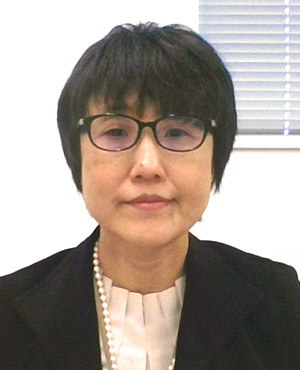
KATO, Yoko
Established in 1962, the Department of Mechanical Engineering changed its name to the Department of Mechanical Engineering in 2002, and then became the current Department of Mechanical Engineering and Intelligent Systems in 2006. Since its founding, the department has produced personnel who are proficient in both hardware and software and are responsible for "manufacturing."
In this department, students from general high schools who have studied a wide range of natural science subjects, primarily mathematics and physics, and students from technical high schools who have studied engineering subjects will sit side by side. We believe that by recognizing each other's strengths and teaching one another, students will gain a deeper understanding of the lectures.
While the fields related to machinery are constantly expanding, a common thread is the mechanics of materials, heat, fluids, and vibrations—the "four fundamental forces" ("strength of materials," "thermodynamics," "fluid mechanics," and "machine dynamics"). In this department, after enrollment, students will work on foundational subjects in natural sciences and mechanical engineering—basic subjects in natural sciences, mainly mathematics and physics, as well as drafting, fabrication, programming, etc.—to build a solid foundation before studying these subjects. We offer a wide range of lectures covering various fields of mechanical engineering—various fields (materials, machine design, fabrication, heat, fluids, control, biomedical), experimental, and computational mechanics (simulation). Our curriculum is well-balanced, combining both old and new—a philosophy that evokes the phrase "learning from the past to understand the present." Based on this, in the final year (4th year), students will belong to a research laboratory and work on their graduation research under the guidance of faculty members. Regardless of the field, research must be "the first in the world." Students will read academic papers (in English) to understand the trends in their research field, formulate their own ideas, and engage in discussions with their supervising professor and research lab members.
From the second year, students will choose one of two courses based on a main theme: the "Mobility Mechanodesign Course," which focuses on materials, mechanical design, fabrication, heat, and fluid dynamics; and the "Bio-Robotics Course," which focuses on control and biological systems. Note that the range of subjects you can take will not be restricted by your course selection.
"Machines are everywhere"—the fields related to machinery are extremely broad, and our department maintains a high rate of job placement. Graduates find employment in a wide range of companies, government agencies, and educational institutions (as teachers), including manufacturing, power generation, and IT.
As experienced professionals in the field of mechanical engineering, all of our staff look forward to learning alongside you.