
Qualifications obtainable at this university
Some professions, such as teachers and museum curators, require specific qualifications for employment. For those aspiring to these professions, obtaining these qualifications is essential. If you wish to acquire the qualifications listed here, you must earn the required credits in addition to your graduation credits. It is important to carefully consider your future goals when choosing qualifications and creating a study plan.
List of qualifications obtainable at this university
The qualifications you can obtain are as follows:
- Teacher's License (Teacher Training Course)
- Curator (Curator Training Program)
- Social Education Supervisor (Social Education Supervisor Course)
- Librarian (Librarian training course)
- School Librarian Teacher (School Librarian Teacher Training Course)
- Social Researcher (Social Researcher Qualification)
- Japanese Psychological Association Certified Psychologist
Applicable to students entering the Department of Department of Psychology and Behavioral Sciences Faculty of Human Sciences (from the 2023 academic year onward).
Faculty of Liberal Arts Department of Human Science (applicable to students enrolled before 2022) - Certified Clinical Psychologist (part of the eligibility requirements for taking the national examination)
Applicable to students entering the Department of Department of Psychology and Behavioral Sciences Faculty of Human Sciences (from the 2023 academic year onward).
Faculty of Liberal Arts Department of Human Science (applicable to students enrolled before 2022) - Japanese language teacher (Japanese language teacher training course)
Applicable to students admitted to Faculty of International Studies from 2023 onwards.
Applicable Faculty of Liberal Arts (students admitted before 2022)
In order to obtain a qualification, you must acquire the required credits for each course in addition to the credits required for graduation.
List of qualifications and departments available at this university
Students entering in 2023 or later
| qualification | Teacher's license | Curator | library librarian |
school library Teacher librarian |
social education Director |
society Surveyor |
Japan Psychological Society Certification psychologist |
Official recognition psychologist *2 |
Japanese Teacher |
|||
| Faculty/Department | primary school kind of |
junior high school kind of |
high school kind of |
|||||||||
| Faculty of Letters | Department of English | English | English | ○ | ○ | ○ | ○ | |||||
| Department of General Humanities | religion | religion | ○ | ○ | ○ | ○ | ||||||
| Department of History | society | Geography and History | ○ | ○ | ○ | ○ | ||||||
| Department of Education | ○ | English | English | ○ | ○ | |||||||
| Faculty of Economics | Department of Economics | society | Civics and Commerce | |||||||||
| Faculty of Business Administration | Department of Business Administration | society | Civics and Commerce | |||||||||
| Faculty of Law | Department of Law | society | Geography, History, and Civics | |||||||||
| Faculty of Engineering | Department of Mechanical Engineering and Intelligent Systems | industry | ||||||||||
| Department of Electrical and Electronic Engineering | industry | |||||||||||
| Department of Civil and Environmental Engineering | industry | |||||||||||
| Faculty of Regional Studies | region Community Studies *1 |
society | Geography, History, and Civics | ○ | ||||||||
| Department of Policy Design | society | Citizens | ||||||||||
| Faculty of Informatics | Data Science Department |
mathematics | Mathematics/Information | ○ | ||||||||
| Faculty of Human Sciences | Department of Psychology and Behavioral Sciences | health and physical education | health and physical education | ○ | ○ | ○ | ||||||
| Faculty of International Studies | Department of International Studies | ○ | ||||||||||
- *1 In addition, students in Department of Regional Community Studies can obtain the qualification of Regional Surveyor. Furthermore, it is planned that students will be able to obtain the qualification of GIS Academician.
- *2 It is possible to take the undergraduate courses required to obtain the qualification. In order to take the national examination, it is necessary to either complete the required courses at Graduate Schools after graduating from undergraduate school, or to gain practical experience for a period of time or longer at a facility designated by ministerial ordinance.
Qualifications obtainable in Faculty of Engineering
Each department in the Faculty of Faculty of Engineering offers opportunities to obtain eligibility to take numerous technical qualification exams, including those requiring practical experience, such as Licensed Surveyor, Assistant Surveyor, Chief Electrical Engineer, and Second-Class Architect. For more details, please see the individual department introduction pages.
Students who enrolled in or before the 2022 academic year
| qualification | Teacher's license | Curator | library librarian |
school library Teacher librarian |
social education Director |
society Surveyor |
Japan Psychological Society Certification psychologist |
Official recognition psychologist *1 |
Japanese Teacher |
|||
| Faculty/Department | primary school kind of |
junior high school kind of |
high school kind of |
|||||||||
| Faculty of Letters | Department of English | English | English | ○ | ○ | ○ | ○ | |||||
| Department of General Humanities | religion | religion | ○ | ○ | ○ | ○ | ||||||
| Department of History | society | Geography and History | ○ | ○ | ○ | ○ | ||||||
| Department of Education | ○ | English | English | ○ | ○ | |||||||
| Faculty of Economics | Department of Economics | society | Civics and Commerce | |||||||||
| Department of Co-existing Society Studies | society | Citizens | ||||||||||
| Faculty of Business Administration | Department of Business Administration | society | Civics and Commerce | |||||||||
| Faculty of Law | Department of Law | society | Geography, History, and Civics | |||||||||
| Faculty of Engineering | Department of Mechanical Engineering and Intelligent Systems | industry | ||||||||||
| Department of Electrical and Electronic Engineering | industry | |||||||||||
| Department of Civil and Environmental Engineering | industry | |||||||||||
| Department of Information Technology | industry | |||||||||||
| Faculty of Liberal Arts | Department of Human Science | society | Citizens | ○ | ○ | ○ | ○ | ○ | ||||
| Department of Language and Culture | English | English | ○ | ○ | ||||||||
| Department of Information Science | mathematics | Mathematics/Information | ○ | ○ | ||||||||
| Department of Regional Design | society | Geography, History, and Civics | ○ | ○ | ||||||||
- *1 It is possible to take the undergraduate courses required to obtain the qualification. In order to take the national examination, it is necessary to either complete the required courses at Graduate Schools after graduating from undergraduate school, or to gain practical experience for a period of time or longer at a facility designated by ministerial ordinance.
teaching profession
In order to become a teacher at a kindergarten, elementary school, junior high school, senior high school, secondary school, or special needs school as defined in Article 1 of the School Education Act, one must possess a teaching license (hereinafter referred to as "license").
This license is granted to individuals who have acquired the required credits in prescribed subjects at a university program accredited by the Ministry of Education, Culture, Sports, Science and Technology in accordance with the Teacher Certification Act and the Enforcement Regulations of the Teacher Certification Act, and who possess the necessary basic qualifications, upon application to the relevant prefectural board of education.
Our university's teacher training program is designed for students who strongly aspire to become teachers in the future, and is not simply a superficial program aimed at obtaining a teaching license.
To obtain a teaching license, you must complete certain courses in addition to your graduation credits. Therefore, it is necessary to plan your coursework systematically from your first year. Failure to acquire the required credits in a given year may make it difficult to complete courses in subsequent years. Therefore, please refer to the curriculum schedule and other relevant documents to fully understand the content before undertaking the teacher training program. If you have any questions, please consult the relevant office.
Please note that students enrolled in the teacher training program are required to attend all orientations (pre- and post-course guidance) and guidance sessions listed on the annual schedule. Failure to attend without a valid reason may result in being treated as having forfeited the teacher training program.
Support Program for Obtaining a First-Class Elementary School Teacher's License
Since 2006, our university has offered a "Elementary School Teacher's License Acquisition Support Program" in collaboration with Seitoku University in Matsudo City, Chiba Prefecture, which allows students to obtain an elementary school teaching license upon graduation. By taking and completing teacher training courses in your affiliated faculty at our university with the aim of obtaining a junior high school teaching license, and simultaneously taking and completing the correspondence course at Seitoku University's Distance Education Division, you can obtain an Elementary School Teacher's License. Many of the program participants take the teacher employment examinations in Miyagi Prefecture and various prefectures in the Tohoku and Kanto regions, and a large number have passed.
The process for obtaining a primary school teacher's license (Type 1)
I am taking teacher training courses in my department at this university.
(Eligibility to apply for a Type 1 Junior High School Teacher's License)
+
Shotoku University Correspondence Education Department
(As a non-degree student)
Obtained a Class 1 Elementary School Teacher's License
- *The program starts in the second year and aims to be completed in three years.
- *Selection will be made for a limited number of 20 applicants each year.
- *Separate tuition fees to Shotoku University will be required.
- *Excludes Department of Education Faculty of Letters (Education Department), Faculty of Engineering, and Faculty of International Studies.
Curator
A specialist in museums and art galleries, a researcher, and also an expert in social education.
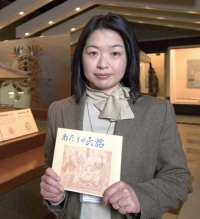
A “curator” is a professional staff member who works at a museum. At our university, we offer curator programs at Faculty of Letters, Department of English, Department of General Humanities, and Department of History, where we provide the courses necessary to obtain the required qualifications.
The term "museum" encompasses a wide range of subjects, including history, art, folklore, industry, and natural science, based on the materials they handle. Therefore, museums include not only history, archaeology, and folklore museums and archives, but also science museums, zoos, botanical gardens, and aquariums. Museums must collect materials based on research, organize and preserve those materials, and develop educational and outreach activities for society centered on exhibitions. These tasks are carried out by curators. In other words, museum curators must be researchers in their respective fields of expertise as well as experts in social education.
In order for a museum to be recognized under the Museum Law, curators are essential. In today's world, where lifelong learning is strongly demanded, museums are one of the important pillars of this education, and in order to fulfill this social function, museums need competent curators.
While employment as a civil servant is a prerequisite for museums operated by local governments, the number of privately run museum facilities has been gradually increasing recently.
social education director
Professionals who will lead the era of lifelong learning: Expanding fields of activity beyond local government.
A "Social Education Supervisor" is a "specialized educational staff member" stationed in the secretariat of prefectural and municipal boards of education, who provides expert technical advice and guidance to those who conduct social education. In other words, social education supervisors are central leaders in social education administration, playing a role in supporting the learning activities of local people through planning, guidance, and advice to stakeholders in social education administration. Furthermore, with the increasing emphasis on community-wide support for school education today, social education supervisors are expected to play a role in connecting schools and communities.
To become a social education specialist, one must first acquire the required credits in "subjects related to social education" at a university, and then be employed as a civil servant by a municipality or prefecture after graduation. Alternatively, if one has served as an assistant social education specialist for more than one year at a board of education, they will be eligible to be appointed as a social education specialist.
Our university has established social education specialist programs in the Department of Department of English, the Department Department of General Humanities, and the Department of Department of History in the Faculty Faculty of Letters, the Faculty of Regional Studies Community Studies in Department of Regional Community Studies, and Faculty of Liberal Arts, with the aim of training social education specialists who can respond to the era of lifelong learning.
In today's era of lifelong learning, expectations for social education are high, and not only local governments but also private educational, cultural, and sports organizations, as well as corporate learning departments, are seeking individuals with the same qualifications and abilities as certified social education specialists. By completing the social education specialist course, individuals can acquire the skills to plan, develop, and implement educational and training programs, and can play an active role in related organizations and departments.
Librarian / School Librarian Teacher
To introduce the appeal of books and promote educational activities.

Libraries include public libraries (including municipal libraries), university libraries, school libraries, the National Diet Library, and specialized libraries. Professional staff in these public libraries are called "librarians." Librarians work in public libraries and other institutions, handling tasks such as selecting, ordering, acquiring, classifying, cataloging, lending, and providing reading guidance for library materials. At this university, students can obtain librarian qualifications by completing the prescribed courses in departments that offer librarian training programs. However, in order to work in a library operated by a local government, one must pass the local government's employment examination, be hired as a civil servant, and be assigned to the library.
Librarian duties at a school library
In addition to the "librarian" qualification, there is a qualification called "teacher librarian" who performs librarian duties in school libraries located in elementary, junior high, high schools, and special needs schools. To become a teacher librarian, one must first obtain a teaching license and then complete the required courses in the teacher librarian course.