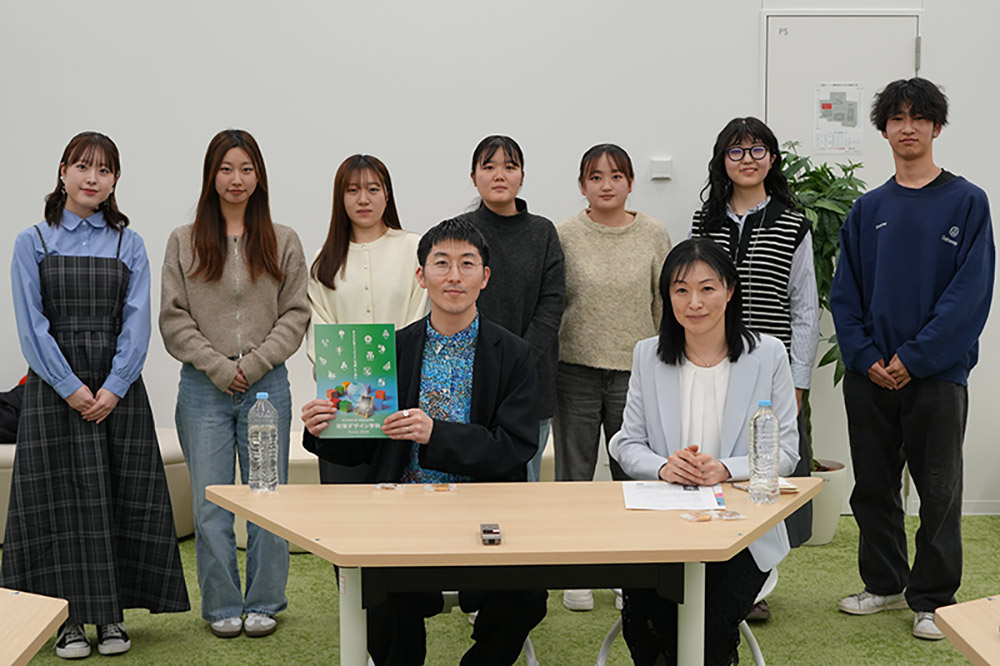
Roundtable discussion: Graduates x Students
Heralbony Co., Ltd.
We welcome Mr. Fumito Matsuda
Students from Department of Policy Design asked their admired senior, Fumito Matsuda, all sorts of questions they'd always wanted to ask him. The roundtable discussion will be published in eight parts.
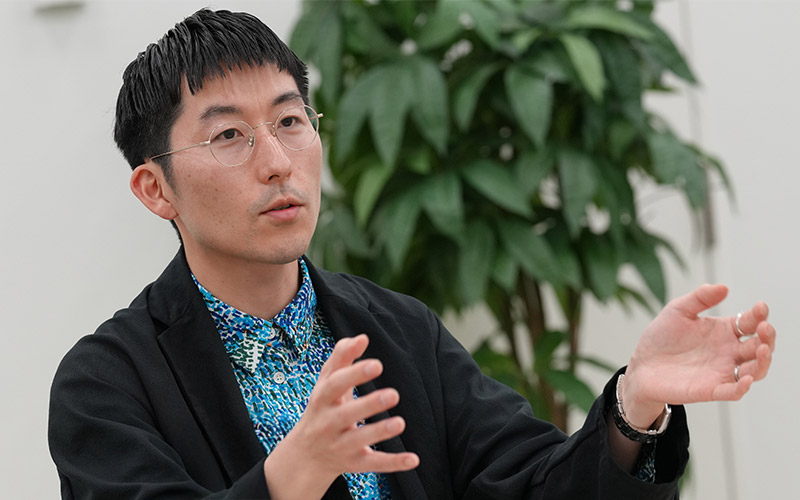
- guest
- Fumito Matsuda /
Heralbony Co., Ltd. Representative Director and Co-CEO
Graduates Department of Co-existing Society Studies Faculty of Economics Tohoku Gakuin University (2nd graduating class) - Participating students
-
- Nodoka Okura / 1st year student, Department of Policy Design / Graduate of Sendai Shirayuri Gakuen High School
- Yui Otomo / 1st year, Miyagi Gakuin High School graduate
- Rino Kiyoto / 2nd year student, graduate of St. Ursula Gakuin Eichi High School
- Mao Goto / 2nd year student, graduate of Izumidateyama High School, Miyagi Prefecture
- Rie Sato/2nd year, Yamagata Gakuin High School graduate
- Riho Sanpei / 2nd year student, graduate of Miyagi Prefectural Sendai San'o High School
- Takuya Matsuda / 2nd year student, graduate of Yamagata Gakuin High School
- host
- Yumi Kumazawa
Faculty member Department of Policy Design (While the guest was a student, they belonged to Department of Co-existing Society Studies) - Date and time
- Saturday, March 1, 2025, evening
- place
- Tohoku Gakuin University, Itsutsubashi Campus, Schneider Memorial Hall, 1st Floor, "Door to the Future Center"
*This roundtable discussion took place after the Tohoku Gakuin University Startup Lecture –Itsutsubashi Impact: A New Pulse Woven from Tradition and Innovation – which was held on the same day.
#01 A social entrepreneur who poses "questions" to society: Heralbony's new challenge
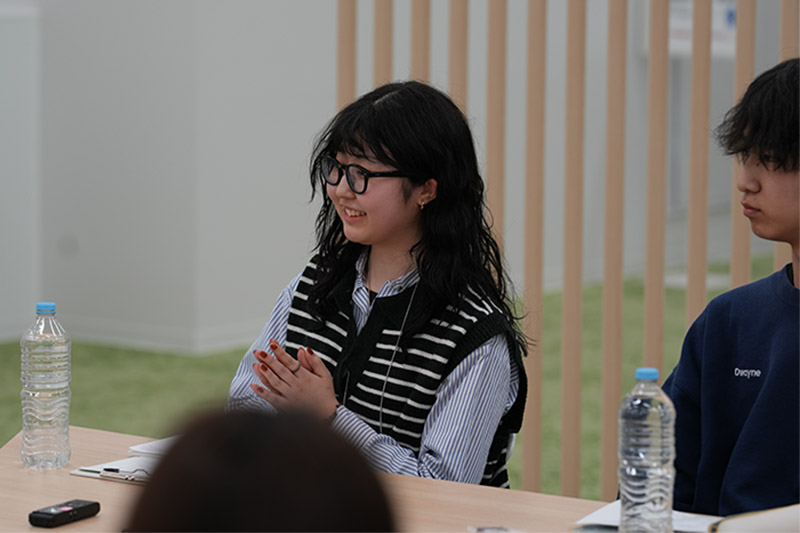
- Student: Rino Kiyofuji
- At the beginning of his lecture, Mr. Matsuda said that "by defining disability as 'uniqueness,' we can fundamentally change the underlying negative image of disability," and I thought that the way he is properly incorporating the works of unique artists into the business is wonderful.
- Fumito Matsuda
- thank you.
- 《Student Kiyofuji》
- With that in mind, I have a question. I imagine that Heralbony's business model, which leverages the unique characteristics of people with disabilities, may have drawn criticism or concerns from society and the industry. If so, I would like to know how you responded to that criticism and how you improved based on those reactions.
- Fumito Matsuda
- That's a very good question, thank you.
It seems that "economic viability" and "welfare" are often seen as two sides of the same coin. To begin with, there's a certain number of people who have an allergic reaction to the idea of bringing business into welfare. That's a fact. To put it more bluntly, when you're thinking about truly growing a social-oriented business like an "impact startup," if you pursue economic viability, the more deeply rooted the social problem, the more it can appear, from society's perspective, as exploitative, even if not outright exploitation. But the more you focus on welfare, the more you focus on them, the less profitable it becomes.
As Heralbony takes on new challenges as a corporation, we are thinking of creating a new non-profit structure. Perhaps it will be for people who are just on the verge of standing out—I believe that "standing out" itself encompasses a wide variety of people. We want to reach out to society through various mechanisms. This could include people with severe behavioral disorders, or people with severe physical and mental disabilities, and we want to create a new space where we can explore the fact that "a wide variety of uniqueness exists."
Having that in place creates a system where no one is left behind. I believe that strengthening that system is extremely important as the company grows.
However, criticism is... It's not like "you're not a real entrepreneur until you're criticized," but our business is an act of raising questions for society, so a complete lack of criticism, a state of silence, is the coldest thing. I think the biggest problem is when a company is completely silent. In that sense, I personally think that aiming for that level of criticism—being able to ask questions that people have never considered before—is a very important aspect for those called "social entrepreneurs." - 《Student Kiyofuji》
- Thank you. I myself am very interested in the idea of combining welfare and business.
- Fumito Matsuda
- What attracted you to it?
- Student Kiyoto
-
I don't have any concrete plans yet... I have this idea of wanting to create something that combines the welfare sector and business. When I thought about that, I realized that welfare and economics are, as you mentioned earlier, like oil and water, and that's the difficult part. That's why I admire Heralbony, who has overcome that and succeeded as a business. I'm still very nervous.
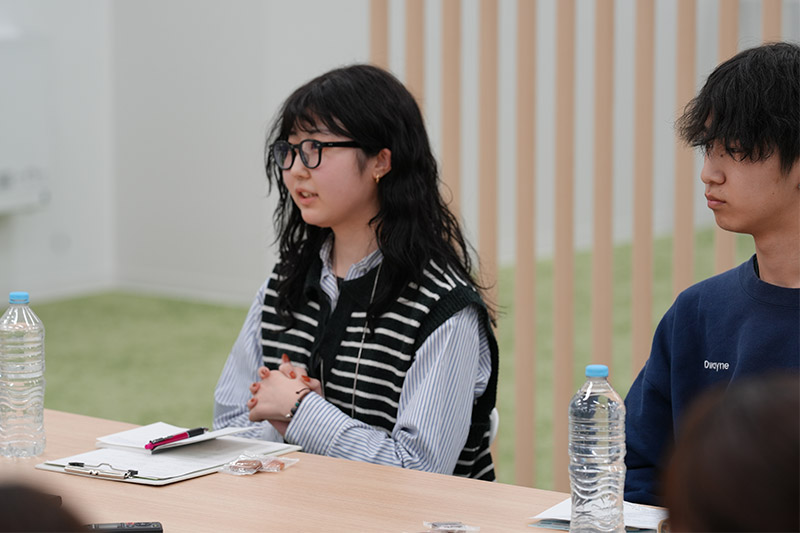
- Fumito Matsuda
- Thank you. When you do something, I think it's really good to think deeply about things like, "Why is it necessary for you to do this?" Ultimately, when you start a company, you'll be the one giving presentations and pitches like today's [lecture], and when you do, you need empathy first. If you don't create empathy and exert an attraction that makes people want to co-create with you, it won't spread. If you have a model that thoroughly explores "why you are doing this," I think people will follow you as a result.
#02 Thinking about who you want to make happy / Communicating your company's core message to society
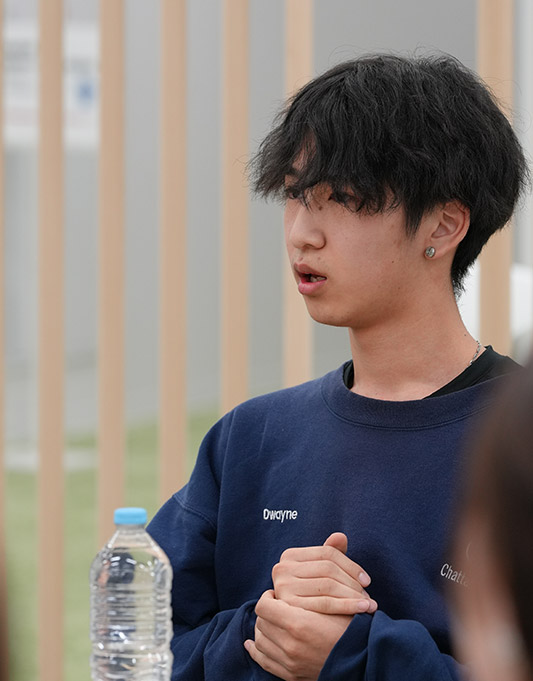
- 《Student Takuya Matsuda》
- Earlier, after your lecture, I spoke a little about the entrepreneurship club. I'm participating in SIAC (Social Innovation Accelerator College). From that experience, I've realized how incredibly difficult it is to create economic value. So, what I'd most like to know is, "Why do you do it in that particular place?" and "What's the first step in putting it into practice?"
- Fumito Matsuda
- When you say "in that place," do you mean Iwate Prefecture?
- 《Student - Matsuda》
- Yes, in Iwate.
- Fumito Matsuda
- It's quite simple. When I think about who I want to make happy, it's "I want to make my brother happy." And when I think about where I want to increase that proportion, it's definitely Iwate, and creating a society where my brother (who has a disability) can live a fulfilling life is my highest priority.
When we conducted a nationwide awareness survey about Heralbony, we found that its recognition wasn't very high across the country. However, within Iwate Prefecture, it's more well-known than Patagonia or Montbell. People in Iwate are quite familiar with Heralbony, probably because it's featured a lot in the local media. So, I think there's something about it that can be changed locally.
I think the answer will vary greatly depending on what the goal is to achieve. If it were AI (artificial intelligence), SaaS (Software as a Service), or DAO (decentralized autonomous organization), I don't think there would be a need to do it locally. Well, it is possible to solve it locally with a DAO. If you want to create one role model in that area and then expand it horizontally, then I think it's fine to do it locally. So, I feel like it will change drastically depending on what the destination is. For us, creating happiness for my brother there and raising awareness of that was extremely important, so that's what we did. - 《Student - Matsuda》
- I have another question. I think that for a company to continue to exist, it needs a core group of fans, or people who will continue to spend money on it. What kind of efforts have you made to build that fan base?
- Fumito Matsuda
- There are many things we do, but if I had to choose one, it would be opinion advertising. Once or twice a year, we make sure to convey our core message, which is important to us, to society. We make it a point to do it in line with the news. For example, the "#The word 'disabled person'" that I presented today [at the lecture], or the one about shredding documents. I think those are opinion ads that are aimed at people with disabilities, their parents, and various other people. Some people will resonate with them, and others will not. It also becomes a process in which we can become acutely aware of that ourselves. As a result, it leads to an increase in users and our fan base.
For example, if a major advertising agency or a general trading company were to run that ad, I think it would cause a huge backlash. That's because the company's philosophy isn't aligned with that. It's the same thing; being able to say "what you want to do" and "consistency" in that is what ultimately leads to gaining fans. The most important thing is to define the core of "where are you aiming to go?" and I think it's extremely important to directly challenge that kind of advertising. We also ran an ad with the hashtag "#Don't erase people with disabilities" during the Noto Peninsula earthquake. Heralbony uses opinion ads to ask various questions to the world.
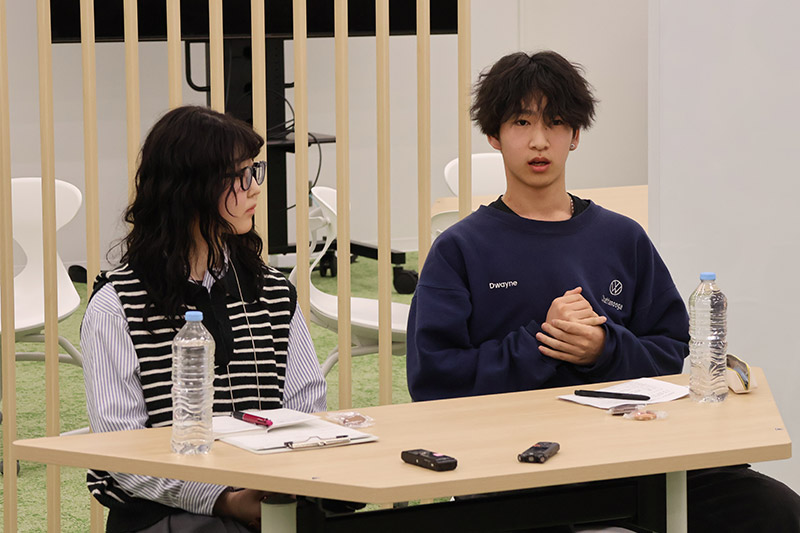
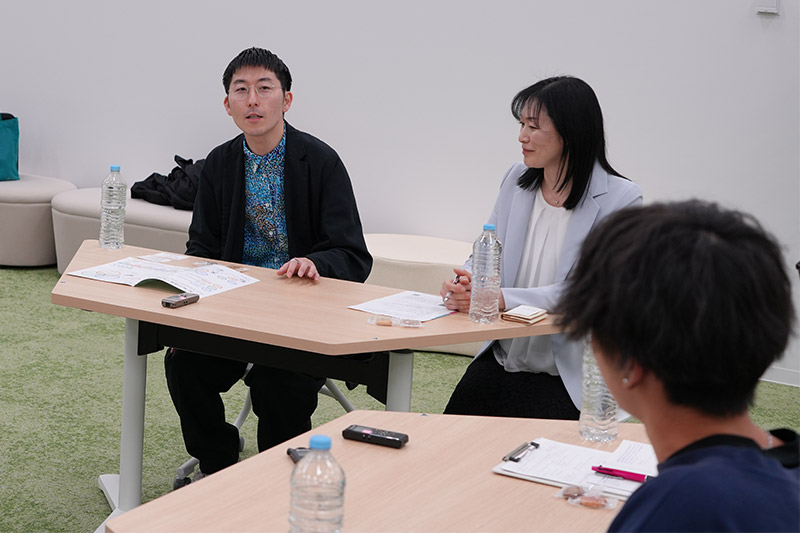
#03 Create an environment where you can speak your mind to your teammates.
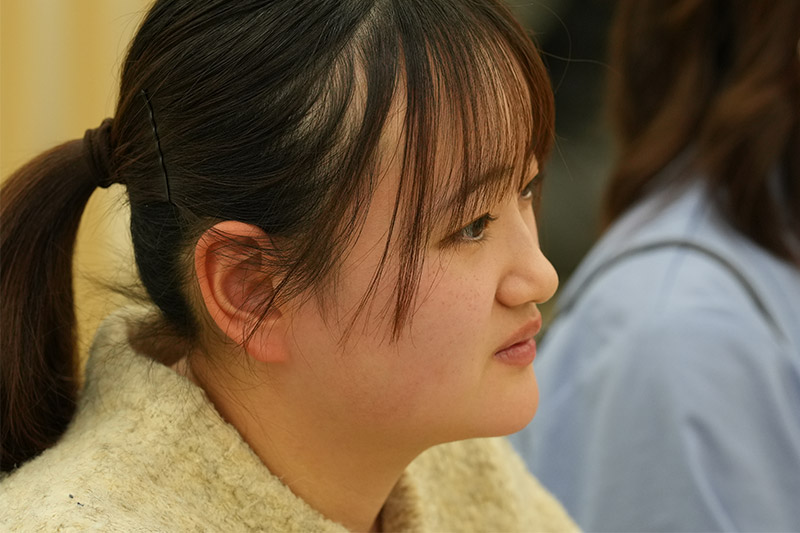
- Student: Rie Sato
- I attended the lecture hoping to find some common ground or hints for the future between Mr. Matsuda's entrepreneurship and the way my own club activities are run.
I'm currently the captain of my club, and since the new system was implemented last August, we've been aiming for an even higher level. Right now, I'm finding it very difficult to get the new things we've started to stick. Ms. Matsuda, who started her own business, is working to change the image of people with disabilities from negative to positive. I'd like to ask her what she focused on most at the beginning, and what she did to gain the trust of those around her. - Fumito Matsuda
- It's certainly difficult. It's really difficult. --Currently, Heralbony has over 80 employees, all full-time. For the first 15 or so people, we started by hiring people through referrals, or rather, people who didn't put out job applications but simply wanted to work for us as "ourselves." So, while it's important that they resonate with Heralbony, we really had to persuade them to join us, saying, "We want to work with this person."
We have a management meeting once a month. In the management meeting, we put together everything on a board, like the direction we're heading, how we're going to get there, how we're communicating, and how we're getting our message across. And we create an environment where we can all say what we want to say. We try to create an environment where we can speak our minds frankly, and not in the club setting, but in an area with a bit more psychological safety. When we do that, I think we can come to an agreement. It's tough, isn't it? But what's the hardest part?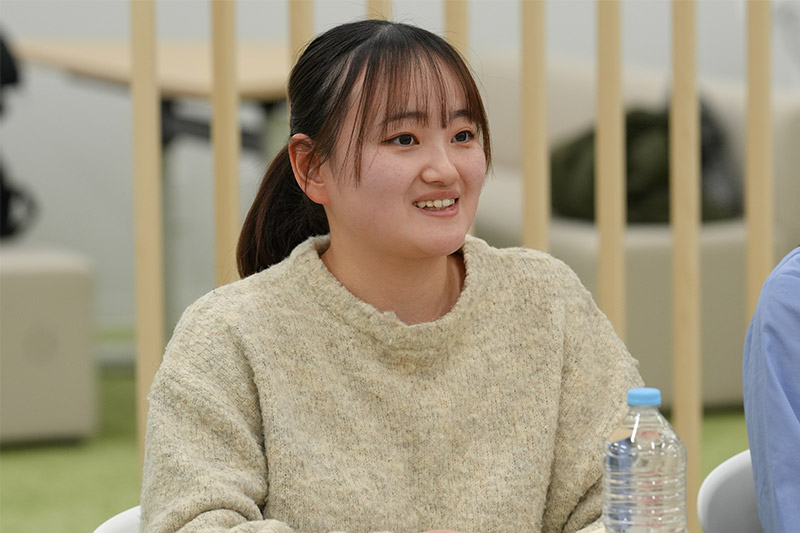
- 《Student - Sato》
- I'm still only a second-year student. I have seniors above me, and also students above and below me. We won the spring league this time, so expectations are high, but the pressure is also immense.
- Fumito Matsuda
- Winning is amazing! I really can't help but root for you. But wouldn't it make a difference just to convey that "I have feelings about this"? I think that nowadays, leadership isn't like the old-fashioned Showa-era "This is it!" type, but rather leadership that includes your own pain and weaknesses, and those things too, and that's what people tend to follow. I think it's also quite significant to feel that it's okay to be that kind of leader. I have a lot of weaknesses and pains myself, so I feel like I'm putting them out there a lot.
#04 The starting point was the desire to create happiness for our brother with our own hands.
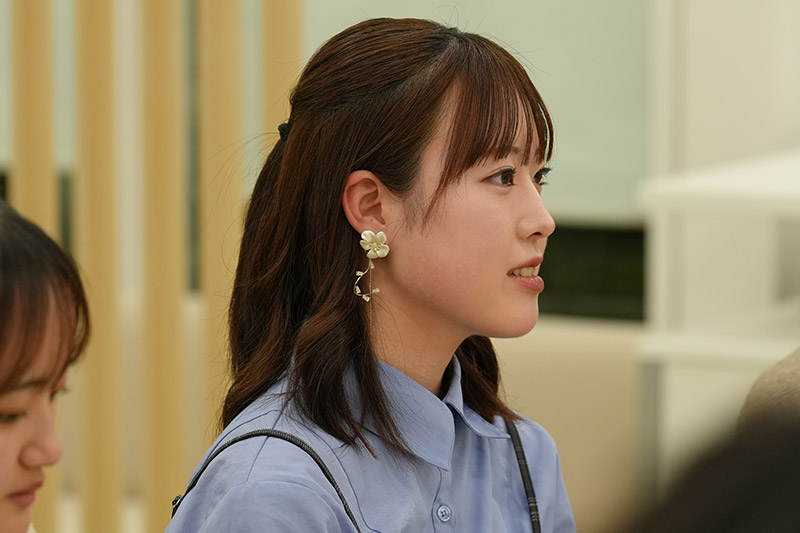
- 《Student: Mao Goto》
- I have two questions. First, regardless of whether your goals are specific or abstract, I'm curious why you've come to the conclusion that you want to "start a business."
- Fumito Matsuda
- I've wanted to start a job support facility and welfare facility for people with disabilities ever since I was in high school. I think that was because I wanted to create a system that I and my brother could be truly satisfied with. I think it was because we wanted to create happiness with our own hands. I don't quite remember how it all came about, but I think that's the origin of what I'm doing. To begin with, my father is a banker, so he was strongly against this kind of business model. When we first started this model, we had to start from the question, "How are we going to borrow money?" We thought it would work out somehow, but at first, it was really difficult because we couldn't borrow any money. So we started in a room in our house.
But if you don't have that much of a desire to do it, you won't stick with it. When I say "won't stick with it," I mean I'm all for taking on challenges on a whim, but if you're thinking about actually making it your job and growing from it, you really need something to keep you going. If you don't have something that hooks you, you won't have the motivation to put in the effort. - 《Student Goto》
-
My other question is about myself. I have so many things I want to do that I can't decide. What do you think is the best way to find something you truly want to do?
- Fumito Matsuda
- That's difficult... What do you think, teacher?
- Teacher Kumazawa
- The Matsuda I knew as a student didn't seem like the type to start a business at all. When did you decide to start your own business? You got a job at a completely different company after graduation, right? So you didn't have any intention of starting a business while you were still in school?
- Fumito Matsuda
- During high school, I think my twin brother Takaya and I both decided that we wanted to work in the field of social welfare.
- Teacher Kumazawa
- When you were choosing a university, did you consider that you wanted to choose a university related to that kind of thing?
- Fumito Matsuda
- Ah, that's right. I chose Department of Economics at Tohoku Gakuin University because of my brother's influence. I looked into it because of my brother's influence, and I thought it might be a good fit for me.
- Teacher Kumazawa
- So, you're saying it might be useful for something in the future?
- Fumito Matsuda
- That's what I thought.
- Teacher Kumazawa
- But did you end up getting a job at a regular company?
- Fumito Matsuda
- Yes, that's right. It all started with the Great East Japan Earthquake. I met a lot of different people because of the earthquake, and that's what made me want to take on that challenge.
- Teacher Kumazawa
- That's right. So, even though Ms. Matsuda wanted to work in welfare, the earthquake led her to join a general contractor. It wasn't necessarily a straight path that she was always heading in. Was that also related to the earthquake?
- Fumito Matsuda
- Yes, that's because there was passion there. Definitely.
But the very first project that was established at Heralbony was a project to turn the temporary fences of general contractors' construction sites into art museums. There is an evaluation system called "construction performance evaluation," and if the score is high, it is easier to get preferential treatment in bidding for construction projects, so we worked with the prefecture to create a program that would add 1 or 2 points if Heralbony's art was used. And then, more and more, the site supervisors showed interest, beyond mere empathy. Knowing the budget, we were able to create a framework where we could say, "We can order it for about this much," and that's how it expanded. How should I put it, in the end, you never know where and what will be connected. That (i.e., work experience at a general contractor) ultimately led to work [at Heralbony]. If I hadn't had that experience, I wouldn't have even thought of doing such a project in the first place.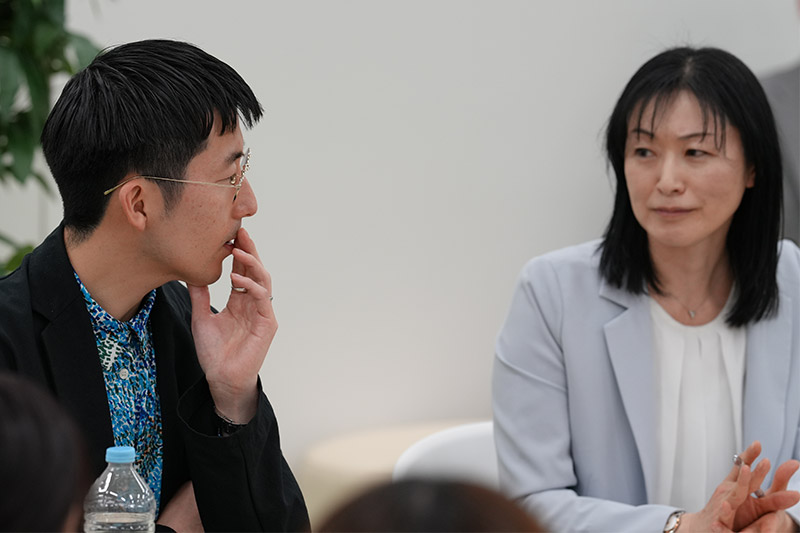
How hard you work within the given circumstances, and whether you yourself believe that the result is the best choice in your life—that's far more important, isn't it? So, I think it's about getting to a point where you can believe that whatever choice you make is the best one.
#05 The Importance of Mechanisms for Enhancing Brand Value
- Student: Riho Sanpei
- I was curious about what kind of unique strengths exist at a company like "Heralbony," which creates various kinds of value through art.
- Fumito Matsuda
- I think we have many strengths. First of all, the artists' works are wonderful, which is a given. Also, we hold an international art award called the "HERALBONY Art Prize," and we have a diverse group of judges. There are artists who want to sign a contract with Heralbony, and we also want to sign contracts with the people who are selected. We are constantly creating a matching system, so we can create a foundation from the beginning where art can be properly evaluated in the market. I think that is a huge advantage. We can consistently show to the public how to present that to society, including the artists' intentions and how to communicate them to society. I think that would be quite difficult for other companies.
As a brand company, we don't partner with just anyone. In fact, we often have to decline offers. Our core principle is whether we can truly make an impact on society by doing so, which makes us difficult to imitate. I don't think value is easily created in products that can be used by anyone. I don't think value is created in products that are offered to everyone. In a way, we are very selective. However, to do that, we have to handle sales as well, and we have to create brand value that makes people think, "We want to work with this company." I think the fact that we are starting to achieve that now is what sets us apart from other companies.
To put it simply, the reason people buy Hermès scarves is because they're paying for the "Hermès" brand. They're paying for the credibility, trust, and affection associated with that brand. But each Hermès Carre (scarf) is painted by a different artist. I think there are many people who buy them without knowing anything about the artist. They just think, "It's lovely, it's beautiful." If you don't create that brand value, people won't want to know about the artist. So I think it's the job of a brand to create that desire, and I think being able to create such a brand is a strength. I think it's very important to refine what that strength is.
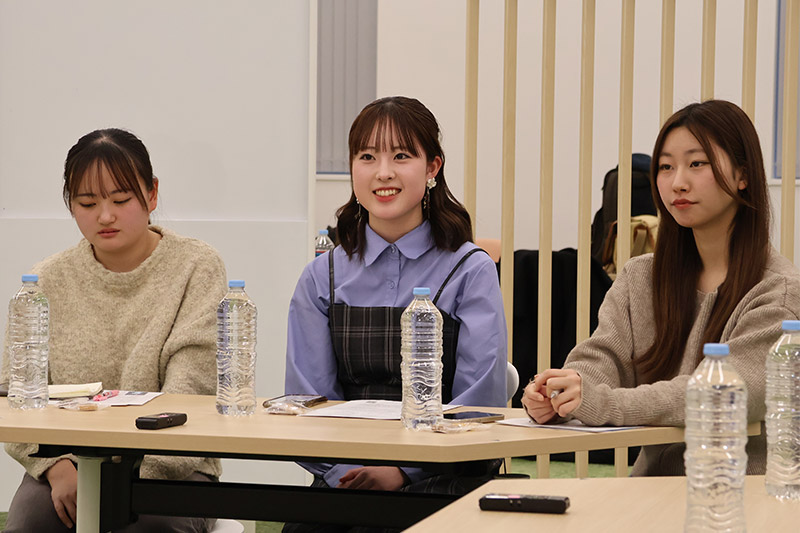
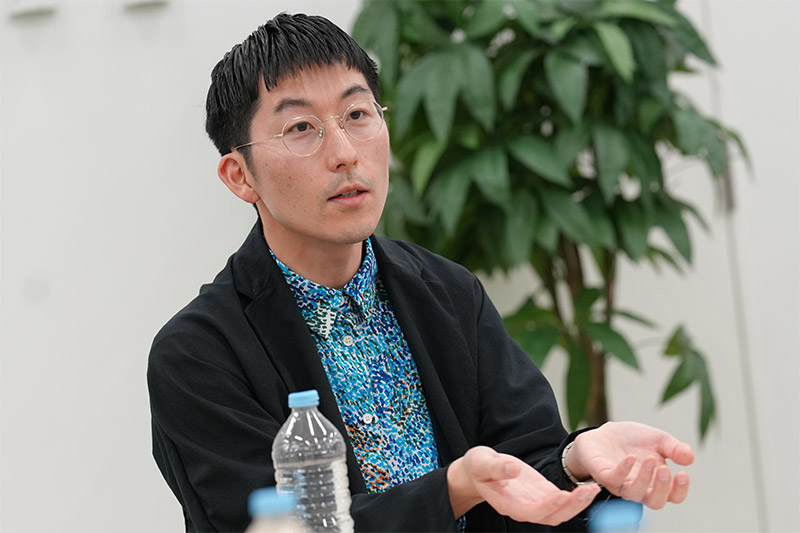
#06 Free-spirited college days where I met all sorts of people
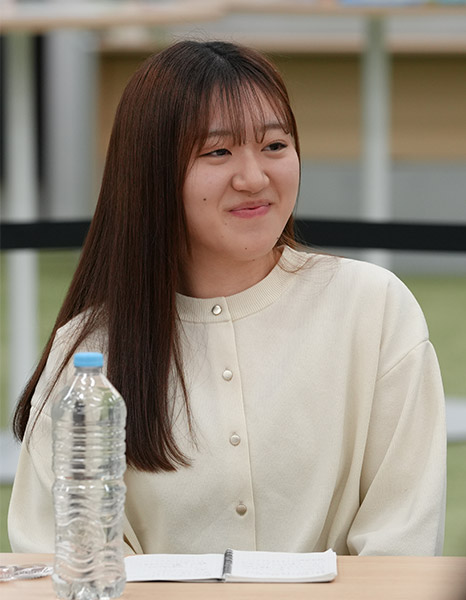
- 《Student: Yui Otomo》
- Personally, I'd like to create a business in the future that solves local problems in some way. Ms. Matsuda, you've been thinking about creating a welfare facility since high school. I'd like to ask what kind of qualifications and skills you acquired at university, and what kind of people you would want to work with.
- Fumito Matsuda
- Ah, that's true. But since we've been twins, one of our strengths is that when we graduated from university, my friends from my university and his (Takaya's) friends from his university went on a graduation trip together, so our social circles were twice as wide. In reality, we didn't do that much in our symbiotic society [Department of Economics], but we were very active in things like organizing fashion events at clubs.
- Teacher Kumazawa
- That's right (laughs).
- Fumito Matsuda
- I was really into events and things like that, outside of university. I think I was challenging myself with all sorts of things. Like going to Southeast Asia alone. I met someone who had traveled around the world at a Sukiya in Izumi Ward, and I was so inspired by him that I had this strange opportunity to let him stay at my house for a week. That inspired me to travel around Asia myself, so I worked hard at part-time jobs. So, I think you never know what will connect to what, so if there's something you want to challenge yourself with at university, then do it. If there's something you want to do outside of university, then I think you should put all your effort into it. I think the question is whether you feel that it has connected to what you wanted to do in the end.
- Teacher Kumazawa
- I was hoping you'd mention some of the good things about university, like how you were able to interact with lots of people (laughs).
- Fumito Matsuda
- No, no, there were lots of good things about university. My university friends came to listen to my lecture today. Also, I met a lot of people in the fashion industry. One of our current members, Yunosuke Ota, is also a graduate of Tohoku Gakuin University. We started the company with two of my twin brother Takaya's best friends from university and two of my own best friends from university. The company has grown steadily since then, and we've been able to take on all sorts of challenges, so I think those encounters were really great. This Ota guy went to the Philippines to study English, and we even hitchhiked together during university. It's the best university if you're looking for those kinds of encounters. It's a bit of a stretch to summarize it like this (laughs). No, really. It's the best university. Freedom.
- Teacher Kumazawa
- That's right. It's a free environment, and there are all kinds of people there.
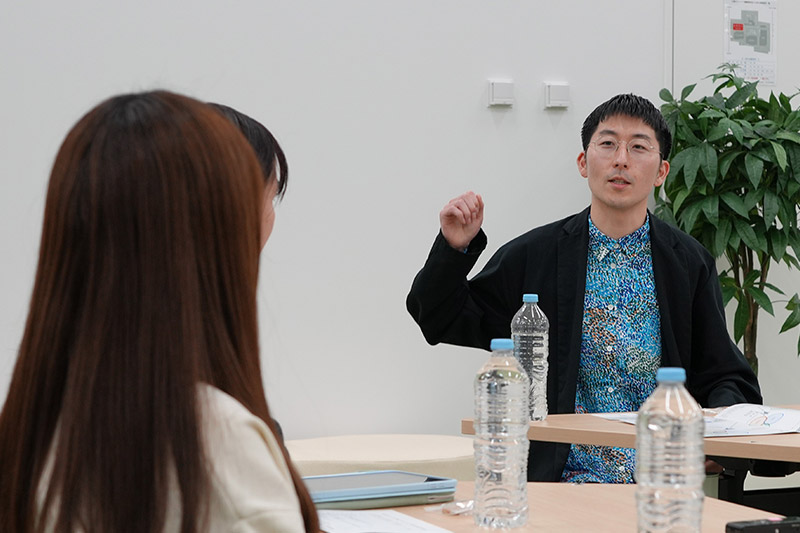
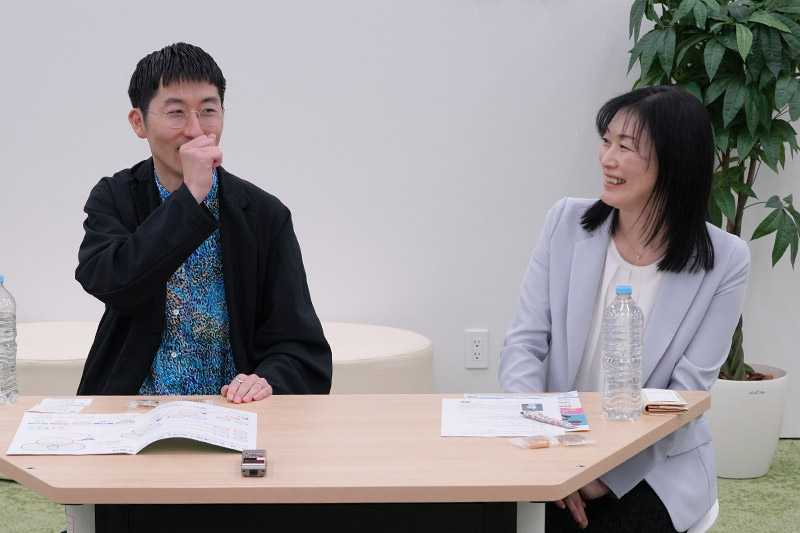
#07 Challenges in your 20s will have an impact on your life
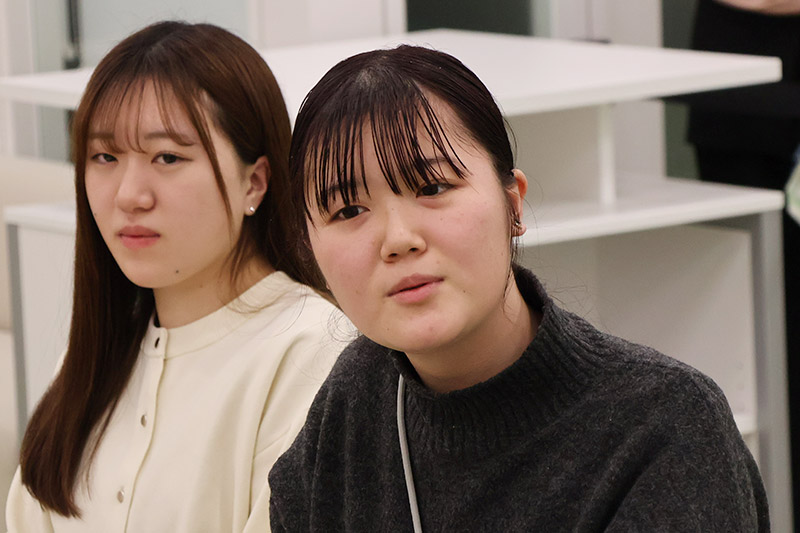
- 《Student: Nodoka Okura》
- I was really struck by the words "The power to affirm freedom and break through" that appeared on the monitor at the beginning of your lecture. I'm terrible at affirming myself, so I'd love to know how I can affirm my own freedom. I'd like to hear some tips and tricks.
- Fumito Matsuda
- That's a tough one. But what I always keep in mind is that when you're starting a business, there are quite a few really tough times, but it might be surprisingly important to have the mindset that "this will make a good story for the future." Of course, I think there are plenty of incredibly tough parts that won't make for good stories. But I think it makes a difference just to have the mindset to secure some kind of mental space for yourself. Because you have so many people supporting you, right?
- 《Student, Ozo》
- Yes, they are here.
- Fumito Matsuda
- That's true. And I think there are a lot of people who say they really like it, so if we keep giving to them, and they give back to us, and so on, the chances of that happening will increase. Certainly, "affirming freedom" is difficult, isn't it?
- Teacher Kumazawa
- But perhaps Mr. Matsuda's very existence embodies that very idea?
- Fumito Matsuda
- That's not true. But it's really important, isn't it? What I really think is that having the mindset of "making the company overwhelmingly successful" is very important. When you become serious about that and decide to dedicate your life to it, you shift gears. I think that in life, if there's a moment when you can work really hard, it will have an effect later on in your 30s, 40s, and 50s. If you have an opportunity to bet on something at some point in your 20s, that will have a tremendous leverage in your 30s and 40s. It would be great if there was something that you could challenge yourself with. That's what I think about in general, yes.
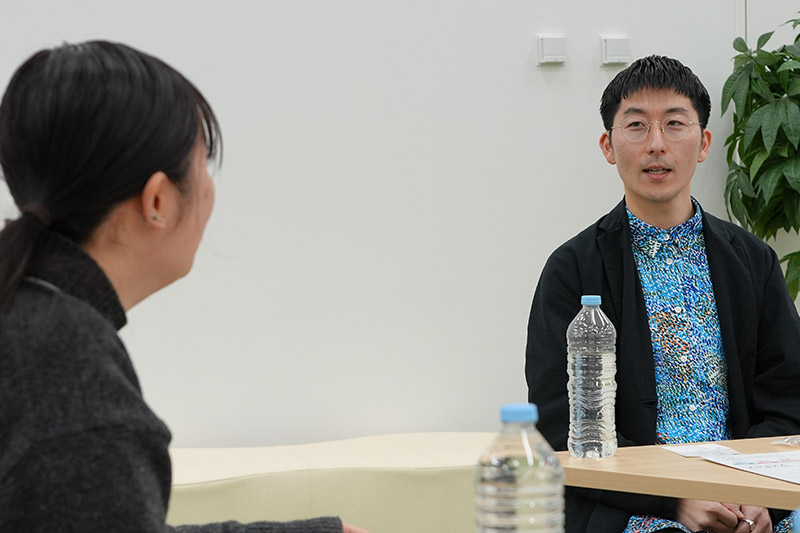
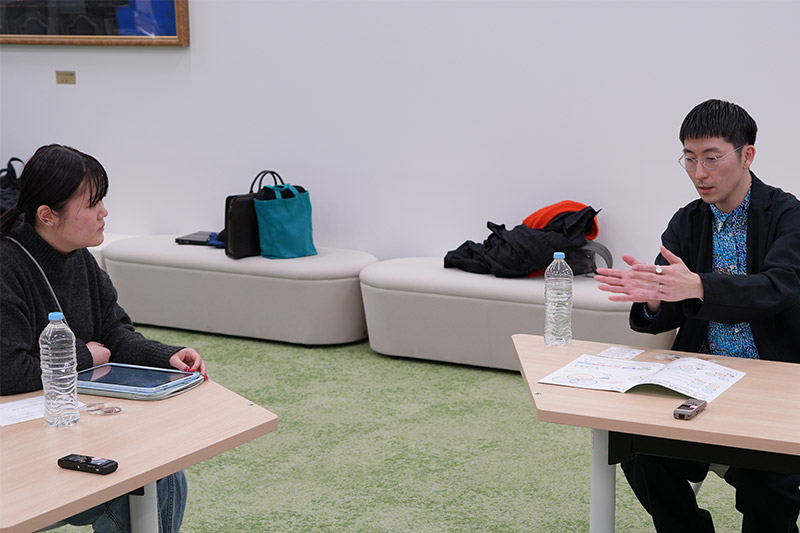
#08 From winning the LVMH Innovation Award to expanding into Paris—Thinking from objectives to strategies
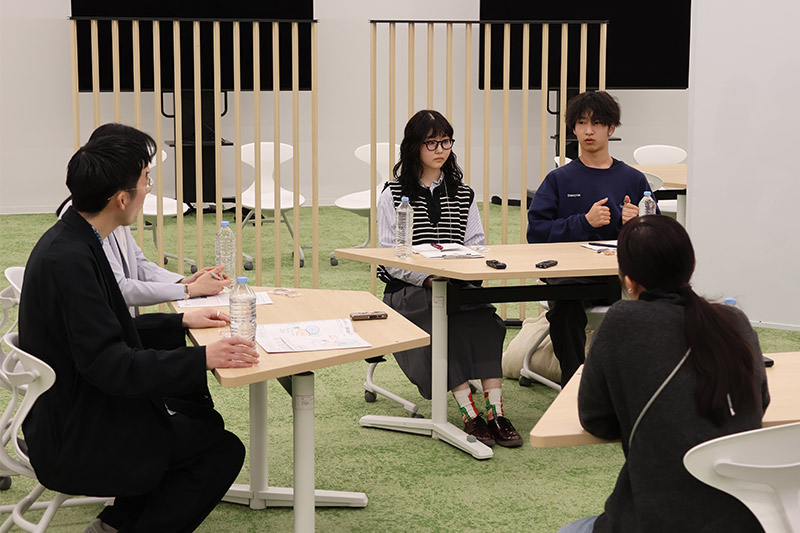
- Teacher Kumazawa
- We're almost out of time, but is there anything else you absolutely want to ask?
- 《Student - Matsuda》
- Finally, I'm currently very interested in overseas sales channels. As you mentioned, Heralbony will be opening a base in Paris, so I'd like to hear how you've established connections with overseas markets.
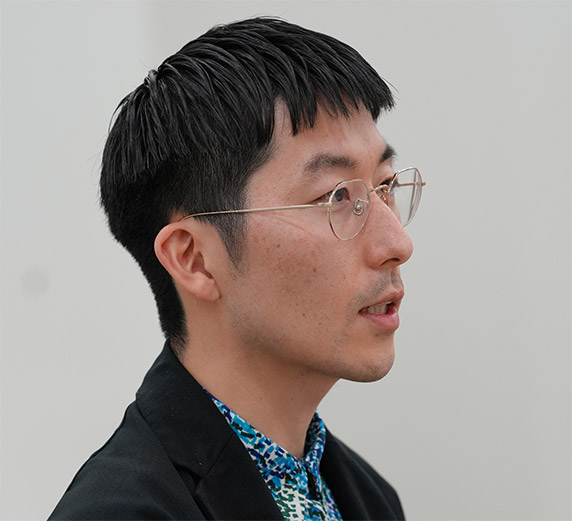
- Fumito Matsuda
- That was truly intentional. There's no way we could win by directly challenging Paris, no matter how you look at it. So we thought aiming for the LVMH Innovation Award was the shortest route to success.
LVMH is a huge conglomerate that owns 75 different fashion houses, including Louis Vuitton and Rimowa. If you are selected for their award, you can use Station F (one of the world's largest startup facilities in Paris) for free. For two years, you get intensive mentoring from the people there on how to grow your company. I decided I wanted to win that award. However, no Japanese company had ever been selected, so I researched how to get selected and found out that you need to get letters of recommendation from Japanese companies. Letters of recommendation from LVMH Japan, Loewe Japan, Dior Japan, etc. Once I understood that, I thought hard about how to approach them and got those letters of recommendation. So, I worked hard to transform a company that was completely unreachable into one that was truly competitive. It was because of that work that we were selected.
This allows us to have meetings with various companies because they become interested in our work. So, no matter what you do, if you have a goal, you should think about what will provide the most leverage and allow you to grow the most. This makes it easier for your business to grow, and as a result, I think it will increase the total number of people with disabilities and all kinds of people who are happy. I think it would be good to approach this as a project. - Teacher Kumazawa
- It's a wonderful opportunity, but unfortunately, we're running out of time. Thank you so much. (Applause)