
Departmental characteristics
Cultivating the ability to propose policies and the ability to collaborate.
Based on political science, economics, and sociology, our program provides learning that fosters the ability to propose policies and collaborate to solve regional issues and create a better society. In today's world, where the population is declining and the society is aging, policies for creating a better community cannot be left solely to the national and local governments. Participation and collaboration from not only the government but also businesses, NPOs, and the people living in the community are essential. Based on this idea, the curriculum of this department is structured around specialized subjects in three areas: "Public Administration," "Economy and Industry," and "Civil Society."
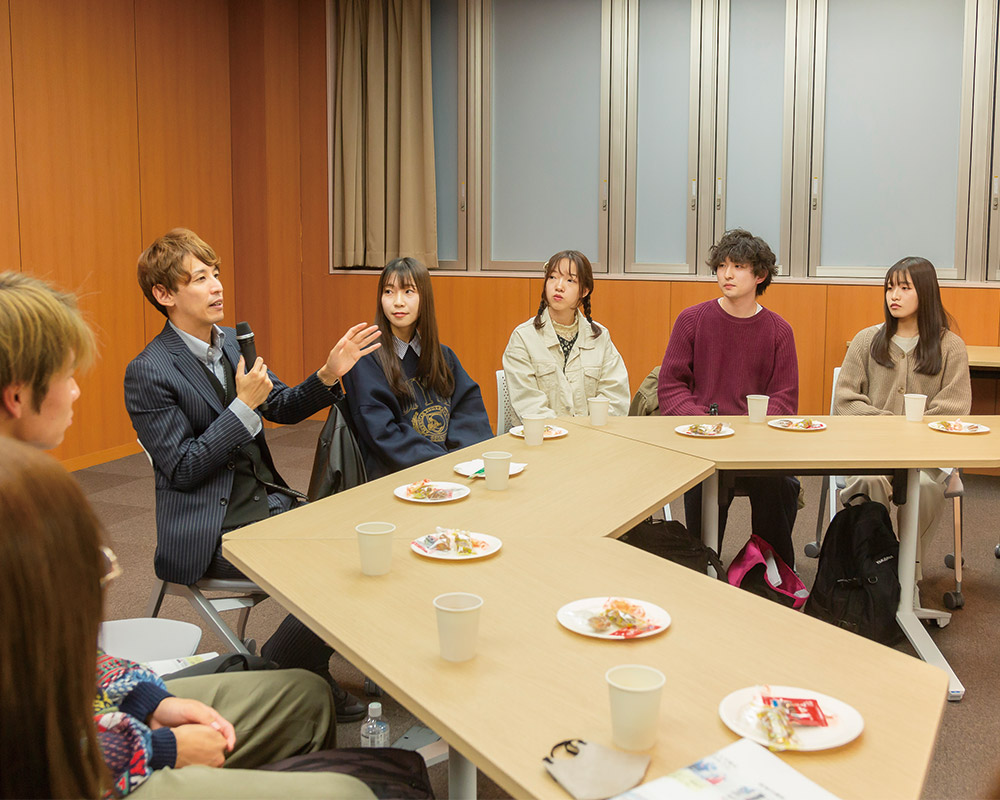
Developing problem-solving skills through practical training.
This department places great emphasis on developing "problem-solving and discovery skills." While society faces a wide variety of problems, those related to local communities are considered among the most challenging due to their complexity and the often lacking skills and resources necessary for their resolution. To cultivate practical problem-solving abilities for such issues, students learn various theories and current situations from their first year, and then, building upon that foundation, participate in local project internships or policy design internships. In these internships, students develop the ability to identify problems faced by local businesses, municipalities, and society, and to devise solutions.
*For details on practical training subjects... Classes you can only find here Please take a look.
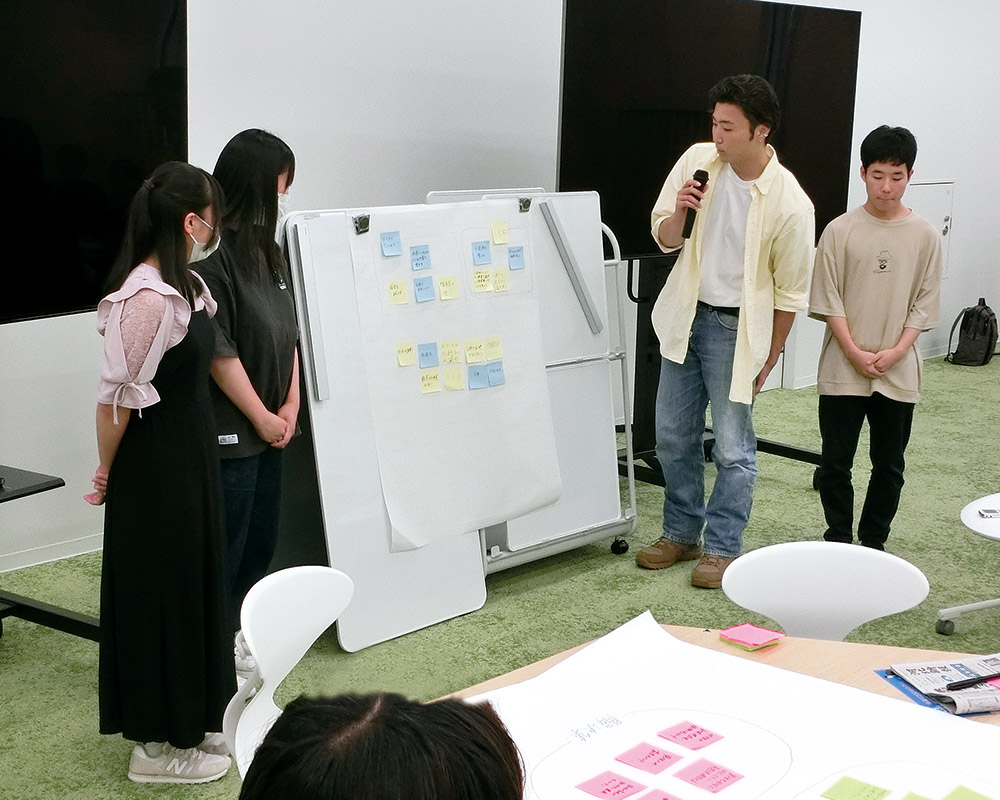
Listen to, ask questions of, and think about the stories of those working on the front lines in each field.
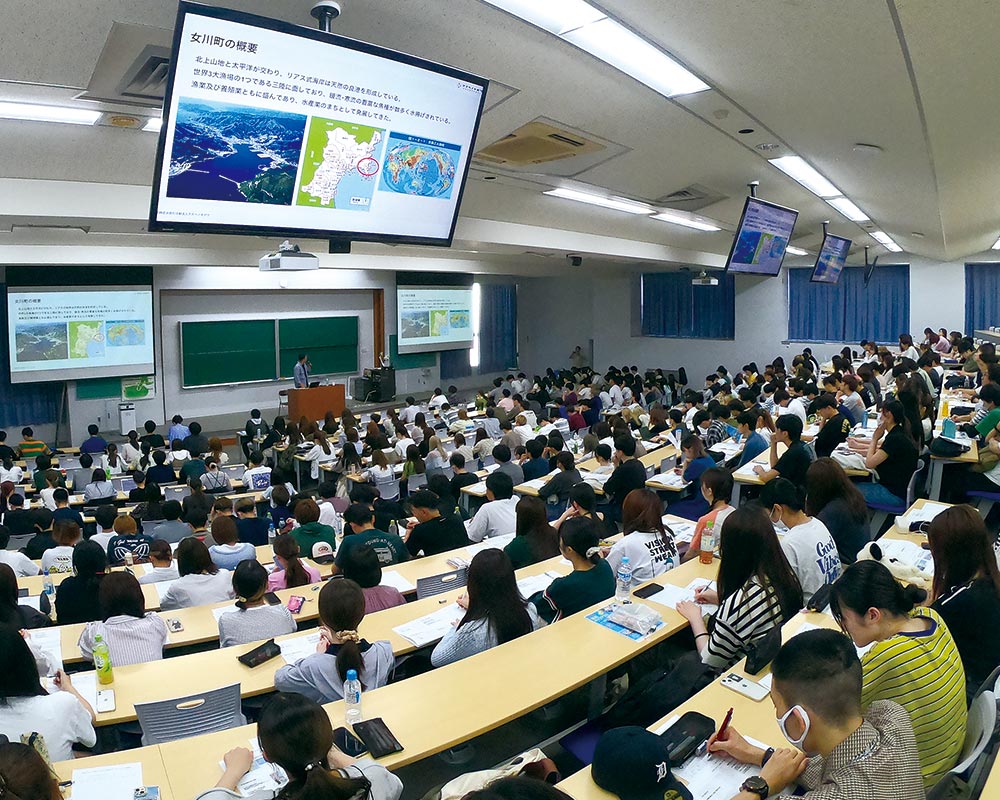
As part of our diverse learning opportunities, our department holds a "Lecture Series for Students" once a year. In these lectures, we invite individuals who are actively working in various fields, learning through trial and error. Through their stories, students can reflect on what they can do and consider their future.
*The lecture was A unique encounter that can only be found here It's also posted on the page.
Solve local problems and revitalize the town!
Learning that broadens future options
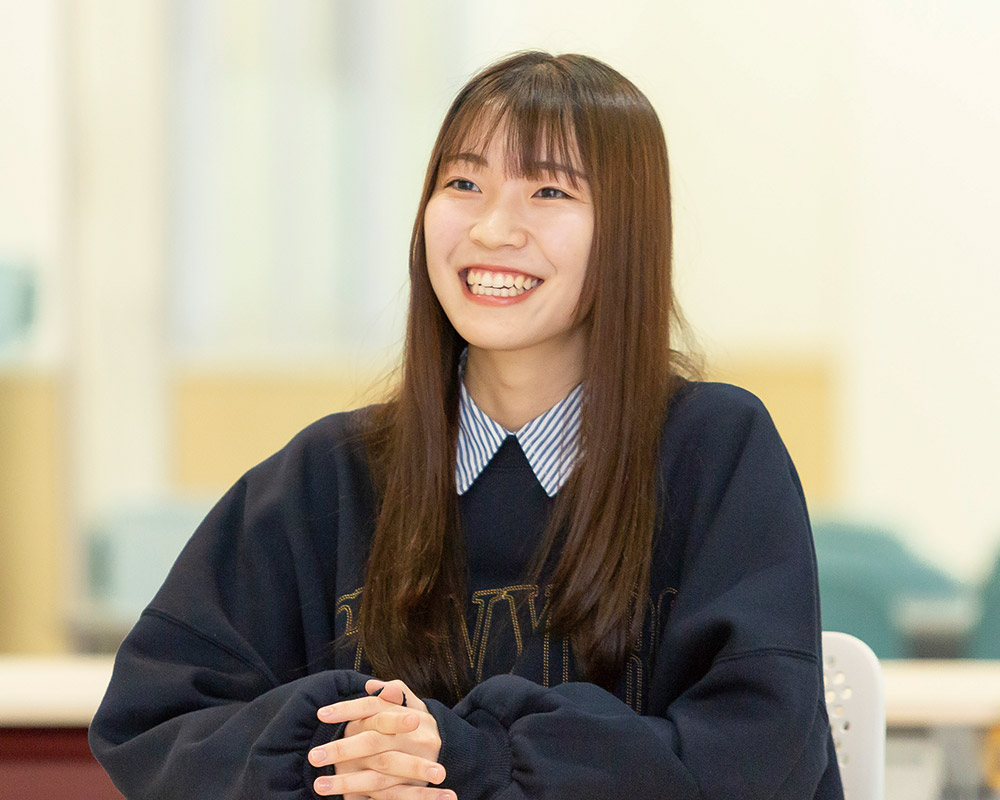
Enrollment for the 2023 academic year
Akari Takagi Mr. Miss. (Second-year student at the time of the interview)
(From Iwate Prefecture / Graduate of Morioka Kita High School)
My interest in regional revitalization and policy stemmed from researching the issue of vacant houses during a high school inquiry-based learning project, which led me to choose this department. In the first year's "Basic Seminar," I was able to practically acquire the fundamental skills of summarizing and presenting research findings in an easy-to-understand manner. I believe these skills will be useful throughout my university life and even after I enter the workforce. In my second year, the number of specialized subjects has increased, and I am learning about social issues and policies in detail. We are the first graduating class of this department, and I strongly feel the passion of the professors to "create a great department."
When I first enrolled, I was convinced that the only job that could revitalize the community was that of a civil servant. However, my perspective completely changed as I took classes. I learned that private companies and NPOs are also making significant contributions to the community, which greatly broadened my future options. I live in Morioka City, Iwate Prefecture, and commute by Shinkansen (bullet train). This choice was only possible because the campus is concentrated near Sendai Station.