Education in this department
Characteristics of specialized education
This department provides learning that fosters the ability to propose policies and collaborate to solve regional issues and create a better society, while drawing on political science, economics, and sociology as academic foundations. In today's world, where the population is declining and the society is aging, policies for creating a better community cannot be left solely to the national and local governments. Participation and collaboration from not only the government but also businesses, NPOs, and the people living in the community are essential (collaboration between the public, private, and community sectors).
Based on this philosophy, the curriculum of this department is structured around specialized subjects in three areas: "Public Administration," "Economy and Industry," and "Civil Society." The faculty members have a wide range of expertise (in addition to those mentioned above, there are also faculty members in social welfare, business administration, and cultural anthropology), allowing students to learn a multifaceted approach.
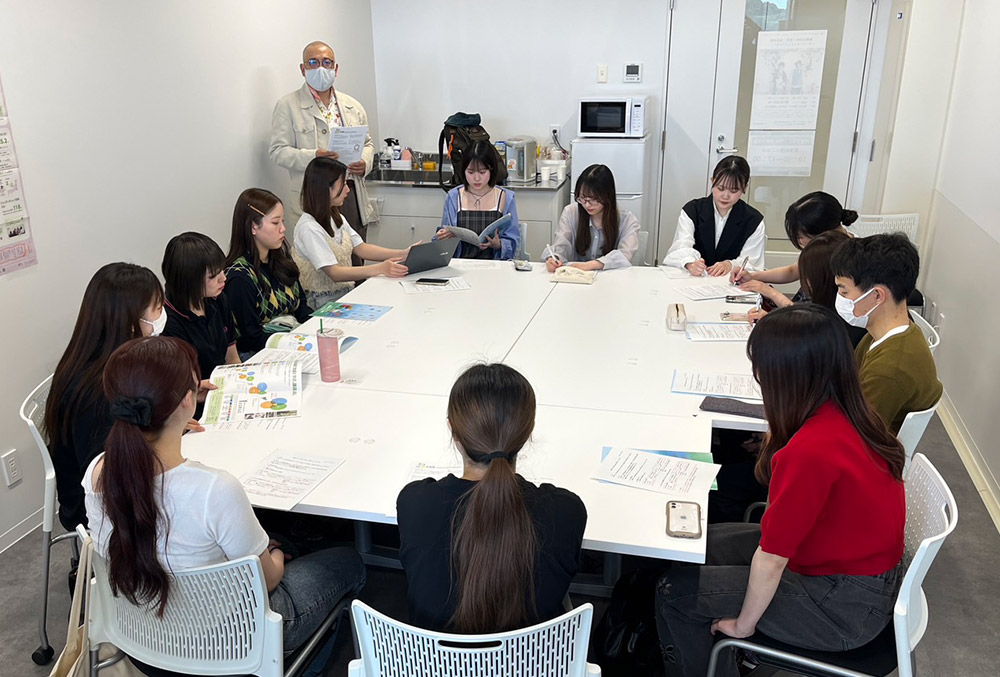
In the first year, students build a foundation of learning through small-group seminars and introductory courses. In the second and third years, they deepen their learning by participating in off-campus internships both domestically and internationally. In the third and fourth years, they join more specialized seminars to explore their own research topics.
The three learning areas of Department of Policy Design
To solve the challenges of the local community
Cultivate the necessary "multi-faceted perspective"

public administration area
To coordinate everyone's opinions and interests
Create a system
- Introduction to political science
- Local finance theory
- Principles of Social Welfare, etc.
Economic and industrial sector
Making use of resources
Revitalizing the community
- Regional Business Management Theory
- Regional finance theory
- Labor economics, etc.

Civil society area
In the experiences of diverse people
Turn your attention
- Disaster Volunteerism and NPO Theory
- Multicultural coexistence theory
- Contemporary social issues, etc.
Unique classes
Introduction to SDGs(Specialized Foundation Course)
In recent years, we have been hearing the term "SDGs" a lot. In this class, we will not only gain a superficial understanding of the SDGs, but also consider their background and specific content from the perspective of the paradigm shift in the concept of development, and organize the framework of the SDGs.
Special lecturesSpecial subjects
In this course, we will invite external lecturers who are involved in activities related to public administration, economy and industry, and civil society to give presentations. Based on these lectures, students will engage in group work and presentations to investigate and think more deeply about local issues.
Inequality in society andpublic administration
Japan is said to be a country of "100 million middle-class people." In this class, students will learn about the current state of income inequality, employment inequality, health inequality, and efforts to correct this inequality. We will also look at inequality in other countries, such as the United States.
Regional Economic Data Analysis:Economy and Industry
In recent years, there has been a growing movement to formulate policies based on scientific evidence. In this course, you will develop the ability to propose effective solutions to local issues by "visualizing" the current situation, challenges, future prospects, and policy effects of your region.
Gender and policycivil society
Various policy measures are essential to resolving gender issues. In this class, students will acquire a perspective for considering policies to resolve gender and sexuality issues by learning about the domestic history and domestic and international situations regarding policies.
Post-disaster urban development theory:Civil society
In this course, students will learn about the changes in local communities before and after disasters, as well as the characteristics of the recovery process, through examples of domestic disasters such as the Great East Japan Earthquake. This will help them develop perspectives on how to approach the recovery of disaster-stricken areas and how to engage with local communities.
Department of Policy Design Educational Support Office
- Location: 16th floor of the Schneider Memorial Tower, Itsutsubashi
Campus Map - Opening hours: Weekdays 10:00 AM - 5:00 PM (1:00 PM - 2:00 PM is staff lunch break)
Department of Policy Design has an "Educational Support Room" which serves as a hub for education and learning. It can be used for preparing for and reviewing practical courses, and also contains reference materials for classes (available only within the Educational Support Room). All students in Department of Policy Design are welcome to use it, so please make full use of it.