
Exercises I and II
(From the third year onwards)
Deepen your learning in small groups.
Seminars are conducted with one instructor and a small number of students. Through a comprehensive style of knowledge transfer—from instructor to student, from student to instructor, and from student to student—students learn deeply about a specific research topic through repeated discussions and exchanges of knowledge.
Government, citizens, and businesses are working together to improve the financial literacy of local residents.
- Instructor: IGAKURA, Masashi
-
- We will understand the various financial challenges faced by local residents and consider measures to improve their financial literacy through financial and economic education.
- We will work with government agencies, financial institutions, and other organizations to create educational materials for financial and economic education.
- We participate in nationwide debate competitions (Securities Seminar Competitions) and hone our skills by competing with peers from all over the country.
This book examines the various issues surrounding "multicultural coexistence."
- Instructor: ISHIKAWA, Shinsaku
-
- This study examines various issues related to "multicultural coexistence," focusing on themes such as coexistence with immigrants and foreigners, and issues of ethnicity and religion. "Multicultural coexistence" is a policy term aimed at promoting coexistence with foreigners residing in Japan.
- To gain practical experience in multicultural coexistence, we participate in volunteer activities, attend lectures, and attend research meetings and events. For example, we participate in Japanese language classes for foreign residents, volunteer support activities, and exchange events. We also hold an annual seminar camp in and around Nagoya, which has a large foreign population.
Thinking about urban development using economics
- Instructor: OKUYAMA, Tadahiro
-
- We will consider the significance and effectiveness of public policies in addressing various social problems.
- In the lectures, we will think about methods for analyzing social problems and solutions to them through group work and presentations.
- We conduct on-site investigations in areas where problems are actually occurring, such as disasters and the protection of the natural environment.
Learn about Japan's social security system and think about its challenges and solutions.
- Instructor: KUMAZAWA, Yumi
-
- We will consider the current state of Japan's social security system, including pensions, healthcare, welfare, and social assistance, what challenges it faces, and how to resolve them.
- Through wheelchair experiences, elderly simulations, and pregnant simulations, participants will deepen their understanding of people with different health conditions and other factors than their own, and consider how to support them.
- We are also planning pension dialogue meetings with the Ministry of Health, Labour and Welfare and the Tohoku Regional Bureau of Health and Welfare, as well as joint seminars with other universities.
- [Related Links]
-
- CARNIVAL WORKS
- "Imoni Shokudo" (Taro Stew Restaurant) with the students of Professor Kumazawa's seminar Department of Policy Design at Tohoku Gakuin University
- Tohoku Regional Bureau of Health and Welfare Photo Report
- We held a "Pension Dialogue Meeting with Students" at Tohoku Gakuin University.
Discrimination issues in Japan
- Instructor: KUROSAKA, Ai
-
- We will consider the issue of discrimination, which is often invisible to the public, including discrimination against people with infectious diseases, discrimination against people with disabilities, discrimination against Burakumin (a historically marginalized group in Japan), and issues surrounding sexual diversity.
- By visiting the sites of discrimination issues and conducting interviews with those directly affected, students will get closer to the reality of these problems. Advanced students will learn interview techniques and conduct interviews on their own chosen topics.
- This program helps students develop the ability to envision "coexistence" with others from different social and cultural backgrounds.
Revitalizing "community spaces" through participatory urban development
- Instructor: SATO, Shigeru
-
- Using shopping streets, which are both a microcosm and the face of the local community, as our field of study, we will address the issue of community space revitalization.
- We research and implement community revitalization initiatives while fostering relationships with local stakeholders (shops, neighborhood associations, politicians, government, etc.).
Learn methods for solving social problems and put those solutions into practice.
- Instructor: WADA, Masaharu
-
- There are "methods" for solving social problems. This seminar aims to help students understand these methods and work towards solving them. Based on students' interests, we will learn the necessary methods and continuously explore their applications.
- You will acquire the essential skills of project management, including the ability to analyze existing problems, conceive and implement new solutions, and continuously evaluate and improve projects.
- We have projects that we are implementing in collaboration with local businesses and local governments. We will expand these projects and put them into practice to solve problems.
- Because there is a lot of interaction with external parties, you will develop essential business skills.
Communication and Gender
- Instructor: KOMIYA, Tomone
-
- Both "gender" and "sexism" are social phenomena that arise from "communication"!
- You will acquire the ability to study everyday communication (anything!) from a gender perspective, using sociological and philosophical methods.
- You will acquire the ability to design communication for an equal society.
Sociology of Regions and Disasters
- Instructor: SAITO, Yasunori
-
The regions surrounding us are facing various challenges, including population decline, a low birthrate and aging population, and natural disasters. In this situation, diverse entities such as government and corporations, as well as volunteers, NPOs, and social entrepreneurs, have been working to solve and improve these problems. In my seminar, we explore the sustainability of the "local" areas in which we live by reading specialized books and academic papers, and sometimes by actually going into the field.
Exploring Global Connections: Reflecting on Social Issues Through Connections
- Instructor: SAKUMA, Kyoko
-
- This seminar aims to explore familiar social issues from the perspective of their connections to different countries, regions, and people, fostering a broad yet concrete understanding of the subject.
- The objects, information, and scenery that surround us in our daily lives can be seen as connected to the world if we change our perspective.
- Food, fashion, primary industries, renewable energy, music, traditional events and culture, sports, games...the choice of what to focus on is up to you!
Learning from disaster-stricken areas: Regional disaster prevention, mitigation, and recovery
- Instructor: SADAIKE, Yuki
-
In this seminar, we will learn about case studies in regional disaster prevention and mitigation activities and the disaster recovery process through reading books and articles, and fieldwork. We will consider points such as: ① What are the common and unique challenges in disasters and regions?, and ② What are the common points in "good examples"? How can they be applied to other regions? In addition, by choosing our own themes and fields, conducting research, and reporting the results, we will learn from each other and cultivate diverse perspectives.
Various issues surrounding "labor" and future challenges
- Instructor: MIYACHI, Katsunori
-
Judging from the career paths of university graduates and the employment structure in Japan, the vast majority of students in Department of Policy Design (and indeed at Tohoku Gakuin University) will likely end up working as "employed workers" for someone else.
In that context, conditions surrounding "work," such as wages, working hours, and career planning for both men and women, as well as the various problems that arise there, are extremely real and relevant to our daily lives.
In this seminar, we will discuss strategies for realizing "decent work" (meaning meaningful and humane work).
Child poverty and child welfare (Considering social welfare, focusing on the field of child and family welfare)
- Instructor: MUTO, Atsushi
-
When we talk about child poverty, it's not just children who are living in poverty.
This seminar will use the issue of child poverty as a starting point to cultivate a perspective on worker poverty.
In addition, each participant will be assigned a field, set a theme, and conduct research and analysis.
Considering the relationship between the government and diverse local stakeholders
- Instructor: ICHIKAWA, tatsuki
-
- What kind of activities is the local government undertaking?
- How does the government collaborate with local stakeholders to provide administrative services?
In this seminar, in order to consider collaboration between the government and citizens, we will examine the role of neighborhood associations in order to think about initiatives toward community development led by residents, through reading literature and collaborating with the Wakabayashi Ward Office.
What constitutes a "correct" policy?
- Instructor: KAWAMURA, Mami
-
In this seminar, we will consider the ideal form of society we should strive for, based on philosophical examinations of concepts such as "freedom," "equality," and "righteousness," and discuss solutions to the various challenges facing modern society.
Unique seminar activities
Students take on the challenge! Solving local issues through "public, community, and private sector collaboration" at a children's cafeteria.
Instructor: KUMAZAWA, Yumi
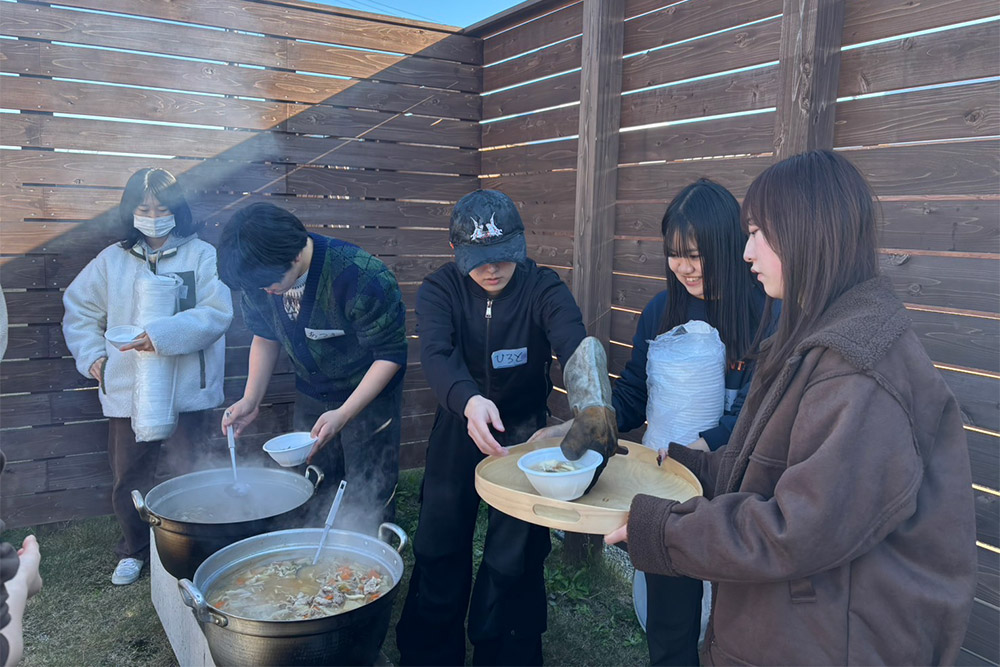
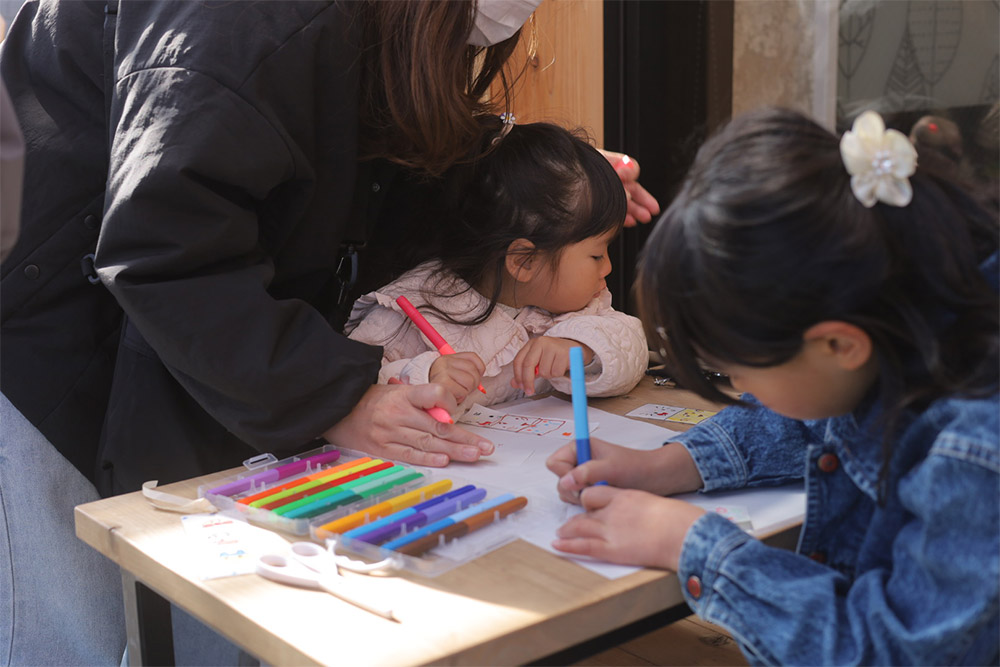
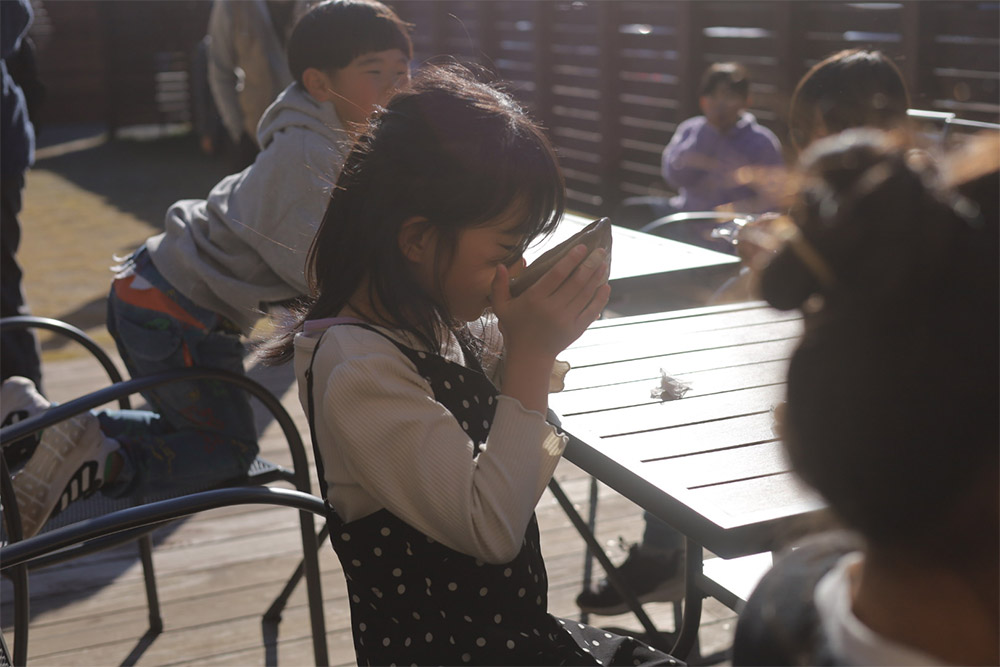
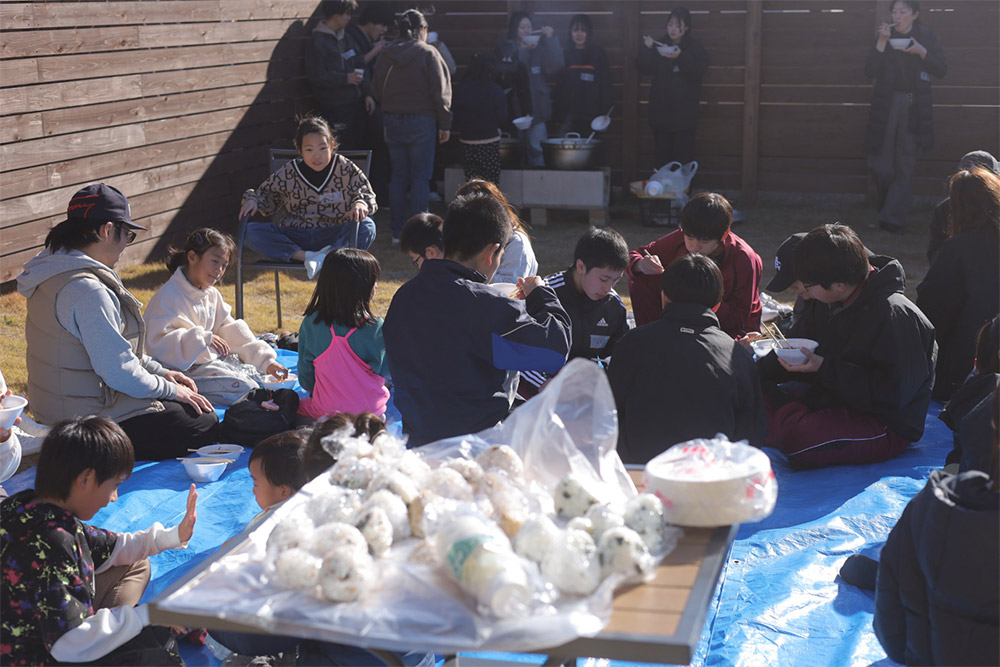
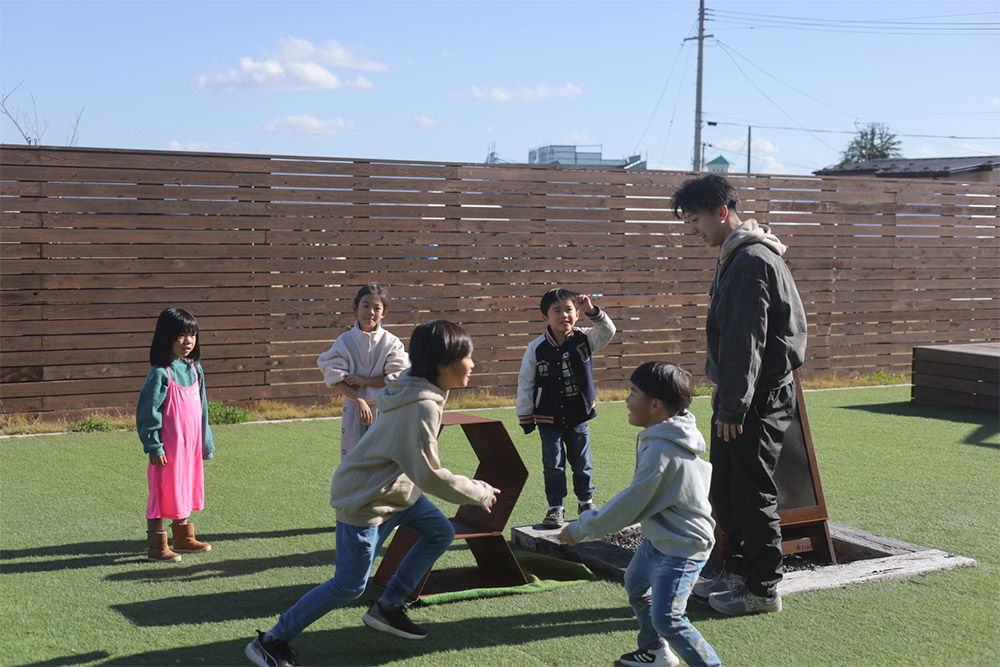
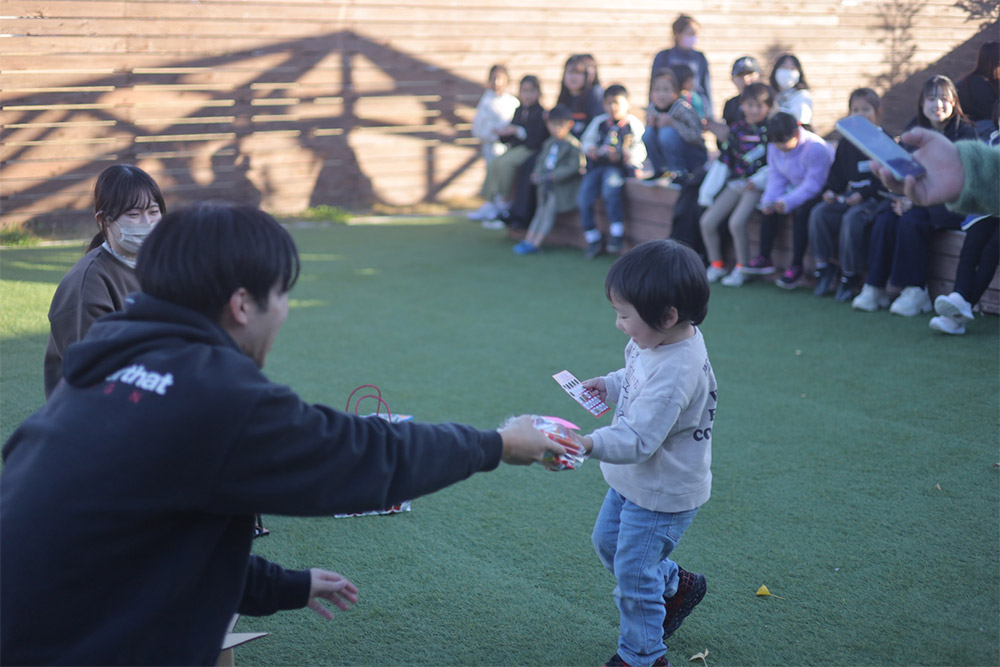
Koori Town (Fukushima Prefecture) only has elementary and junior high schools, and there is a tendency for young people to leave the town when they go on to higher education. As a result, there is a problem of disparity in children's experiences, meaning that children have few opportunities to interact with people outside their own age group (especially high school and university students). To address this issue, the Kumazawa Seminar held an Imoni Cafeteria (children's cafeteria) in November 2025.
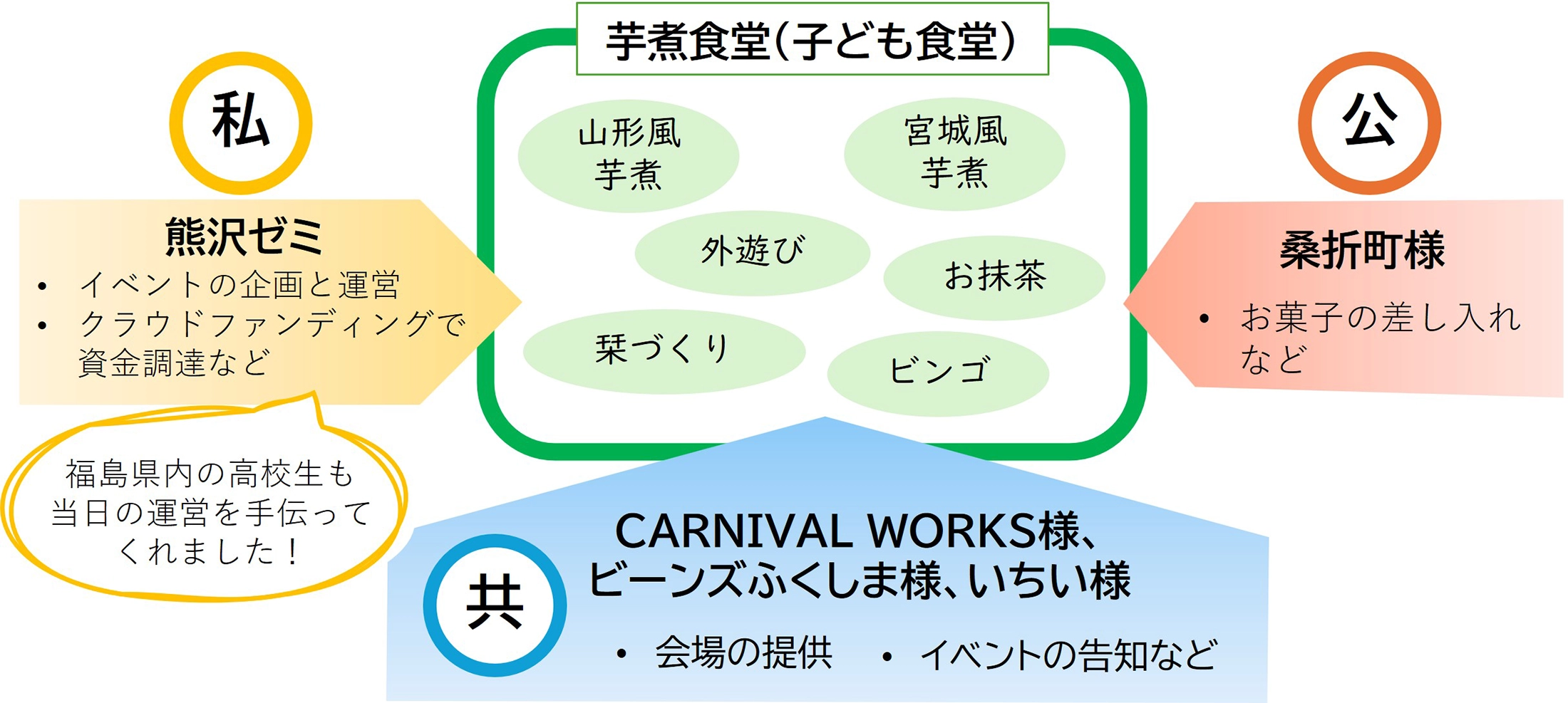
Approximately 40 children and their parents participated, making it a fun day filled with many valuable experiences.
This project received support from many people in terms of operation, funding, and other aspects. Thank you very much.
- [Related Links]
- CARNIVAL WORKS, a general incorporated association, presents "Imoni Restaurant with the Kumazawa Seminar students Department of Policy Design Tohoku Gakuin University."
Department of Policy Design Instagram There are also posts on this site.
Pension dialogue meeting with the Ministry of Health, Labour and Welfare and the Tohoku Regional Bureau of Health and Welfare
Instructor: KUMAZAWA, Yumi
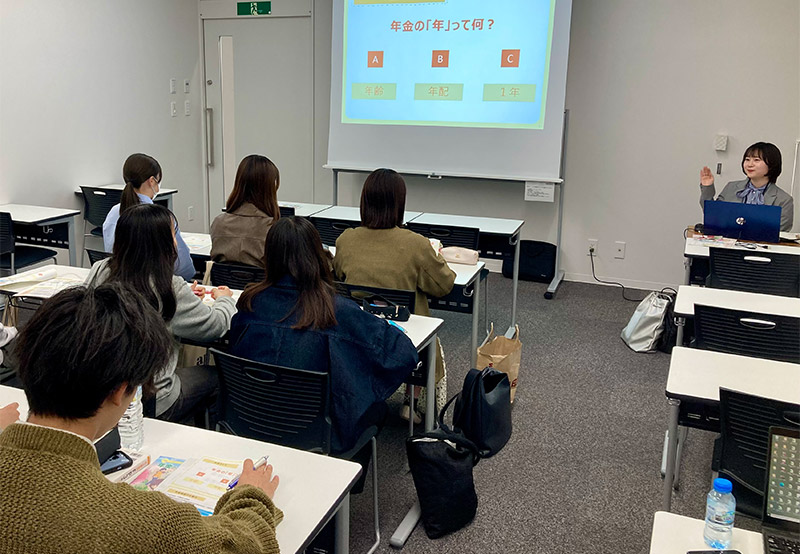
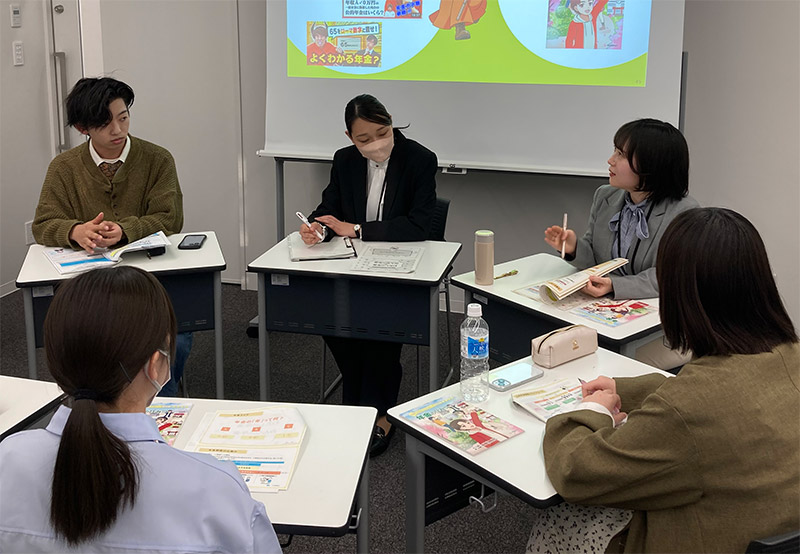
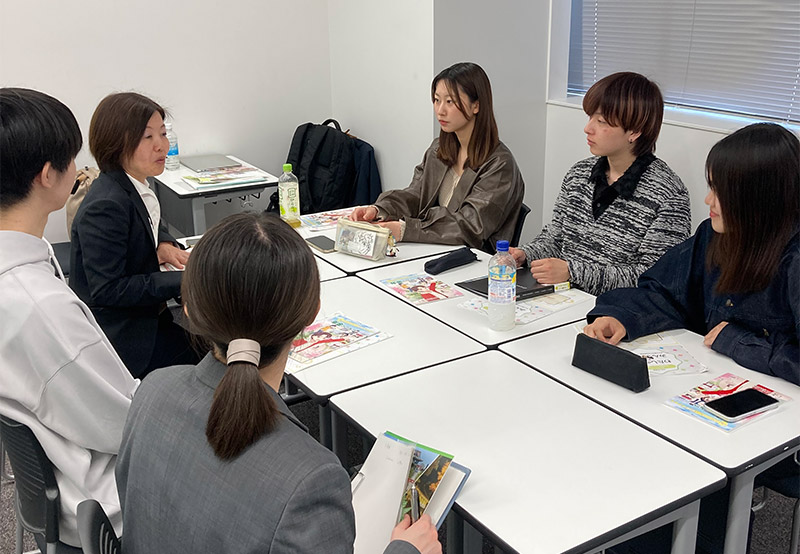
On May 14, 2025, we held a pension dialogue meeting with representatives from the Pension Bureau of the Ministry of Health, Labour and Welfare and the Tohoku Regional Bureau of Health and Welfare. It seems to have been a good opportunity to deepen understanding of public pensions.
- Part 1: Seminar
- An official from the Pension Bureau of the Ministry of Health, Labour and Welfare explained the pension system to us.
- Part 2: Roundtable Discussion
- We met with representatives from the Pension Bureau of the Ministry of Health, Labour and Welfare and the Tohoku Regional Bureau of Health and Welfare to ask questions and exchange opinions about pensions.
I also learned a lot about working as a national civil servant.
Student impressions
- It was great to hear about things I wouldn't normally research on my own, such as the pension system, the Ministry of Health, Labour and Welfare, and the Regional Bureaus of Health and Welfare. I learned that the Ministry of Health, Labour and Welfare handles a variety of tasks, including signing agreements with foreign countries.
- I had been feeling uneasy about the Japanese system, but I now feel that it's a system that can be reassured.
- Because it was a small group work session, it was easy to ask questions, and I was able to resolve my doubts about pensions.
- [Related Links]
- Tohoku Regional Bureau of Health and Welfare Photo Report
We held a "Pension Dialogue Meeting with Students" at Tohoku Gakuin University.
Department of Policy Design 's Instagram account also has posts about the pension dialogue meeting.
