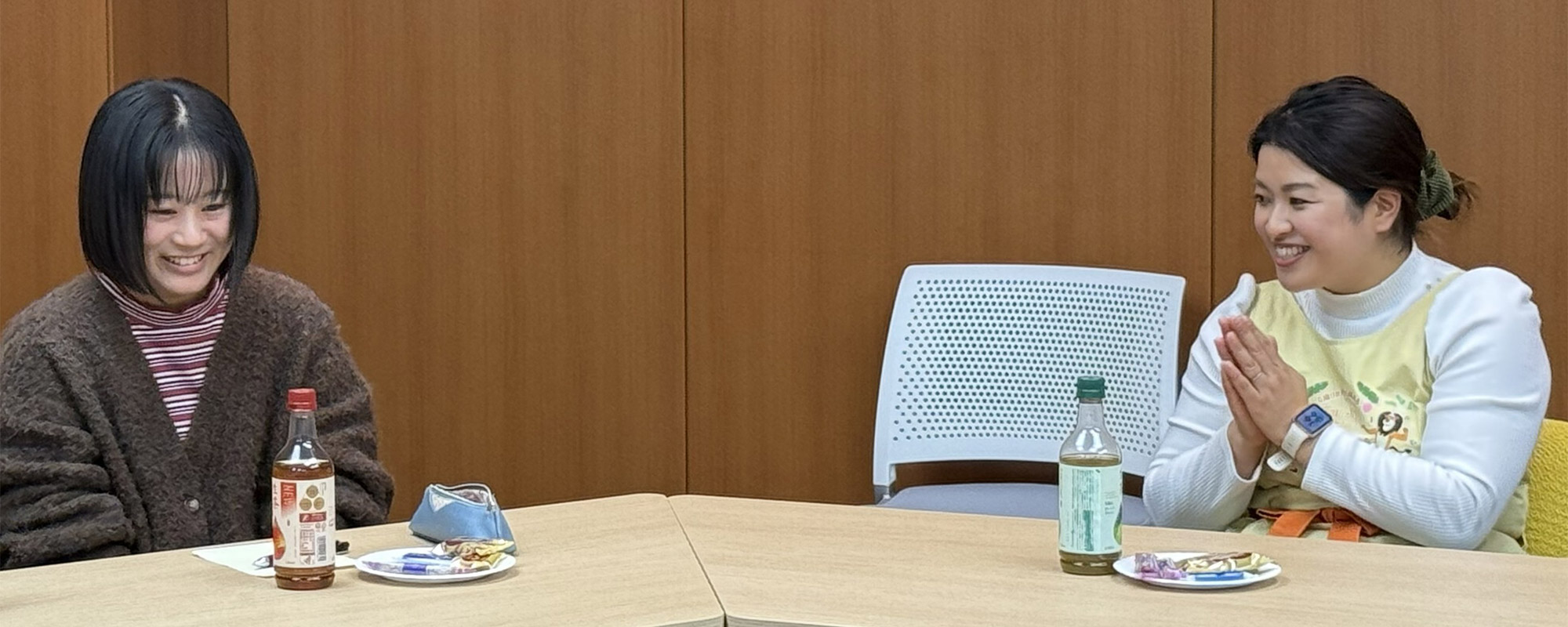
We welcome Erika Nakahara from Heralbony Co., Ltd.
Faculty of Regional Studies Department of Policy Design
Roundtable discussion: Graduates x Students Cutest Co., Ltd. We welcome Erika Nakahara
Thinking about the future of our community and ourselves through childcare support.
Students with no experience raising children shared their insights into the realities of parenting, everyday social issues, and how to address them. We will be serializing the content of this roundtable discussion in four parts.
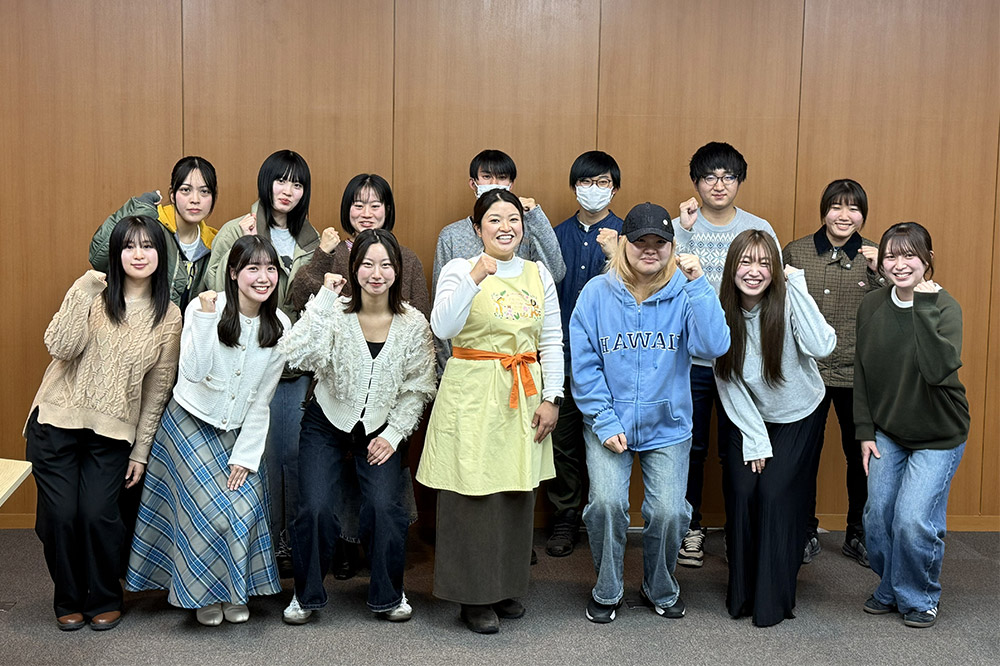
guest
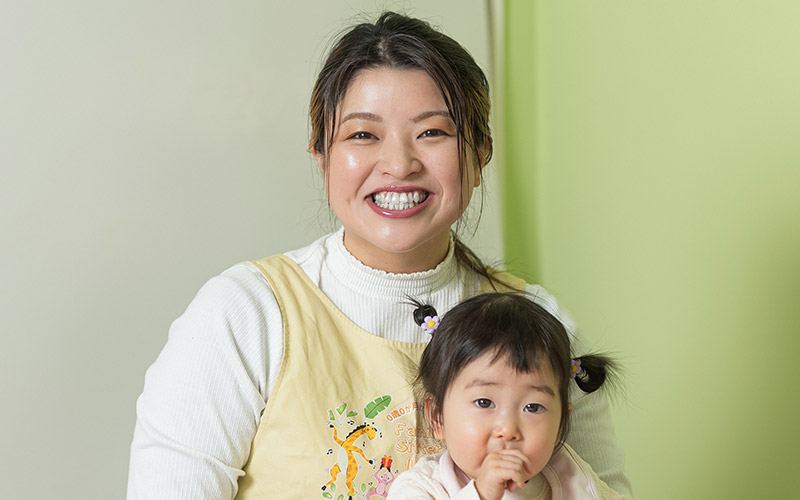
Erika Nakahara / Cutest Co., Ltd. Representative Director Graduates Department of Co-existing Society Studies Faculty of Economics Tohoku Gakuin University (2nd graduating class)
Participating students
(All students are Department of Policy Design)
Sakura Abe (1st year)
Seion Konno (1st year)
Shunya Munakata (2nd year)
Kurumi Sato (2nd year)
Nonoka Fujiwara (2nd year)
Sakura Tozaki (3rd year)
Fumina Masaki (3rd year)
Terune Shiine (3rd year)
Yukari Anzai (3rd year)
Misaki Akihira (3rd year)
Riho Sanpei (3rd year)
Taizon Ito (3rd year)
Kodai Watanabe (3rd year)
host
MIYACHI, Katsunori (Department of Policy Design, Faculty Member)
Date and time
Thursday, December 4, 2025, evening
place
Tohoku Gakuin University Tsuchitoi Campus Department of Policy Design Joint Research Laboratory
*This roundtable discussion was held after a lecture for students that took place on the same day.
#01 Is the hesitation of "there are people who are in a much worse situation" a barrier? -- The reality of parents who can't rely on the system despite it being in place.
Teacher Miyaji
My name is Miyaji, and I am a faculty member in Department of Policy Design. I believe that childcare support initiatives were one of the issues in the previous Miyagi gubernatorial election (October 2025). To begin with, as of 2025, Miyagi Prefecture's total fertility rate is the second worst among all 47 prefectures in Japan. Furthermore, it seems that commissioned projects for childcare support utilizing subsidies are not being implemented as prioritized compared to other prefectures. Could you please tell us about your perspective from the point of view of those actually providing such services on the ground?
Erika Nakahara
Childcare support varies greatly from municipality to municipality, and ideally, the prefecture should provide more support to municipalities and allocate more funds to childcare support. Municipalities with tax revenues as low as Sendai City have very low total fertility rates. Furthermore, in such municipalities, support for the elderly is often prioritized during elections, and childcare support is neglected because it is deemed that there is no need for it. If there is even the slightest need, childcare support should ideally be implemented with the idea of investing in the future. However, for better or for worse, the principle of numbers has led to too much reflection of public opinion, resulting in disparities in childcare support between municipalities. In the gubernatorial election, there were candidates who proposed quite proactive childcare support policies, and I think there are some things that cannot be achieved unless we make such drastic changes.
Teacher Miyaji
As you just mentioned, since the system is primarily run by municipalities, considering the significant differences in childcare support, such as subsidies for children's medical expenses, between neighboring cities, the role of the prefecture is crucial, and it's difficult to determine how much of the financial burden the cities alone can bear. If you don't mind me asking, are most of the users residents of Sendai City?
Erika Nakahara
About 90% of our bookings are from Sendai. This month, we've received one booking each from Murata Town and Marumori Town, but in municipalities outside of Sendai, even though the systems are in place, they aren't being utilized. Murata Town also started a program this fiscal year to support the use of childcare and housework services by providing coupons for families with children, and this is the first time we've seen it used. Even when local governments promote policies and systems, mothers themselves tend to hesitate, thinking things like, "Isn't that only for people who are depressed?" or "I'm fortunate, so I want it to go to people who are in more difficult situations." As a result, even though the systems exist, they end up not using them or relying on them. On the other hand, Sendai is home to many people who have no local or family ties. There are many people who are transferred for work, and because it's a branch-office economy, I think there are many cases where people who got jobs at large companies are transferred to Sendai, move there with their families, and start raising children. That's why people who physically can't manage raising children without relying on others turn to our company for help and raise their children together.
Teacher Miyaji
Originally, this was a forum for students to ask various questions, but I was so interested that I ended up asking a lot of questions.
#02 Real insights gained by students
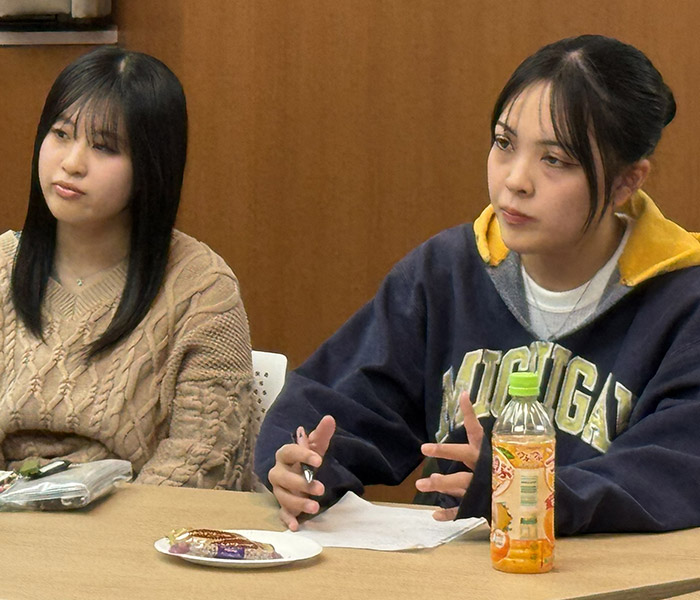
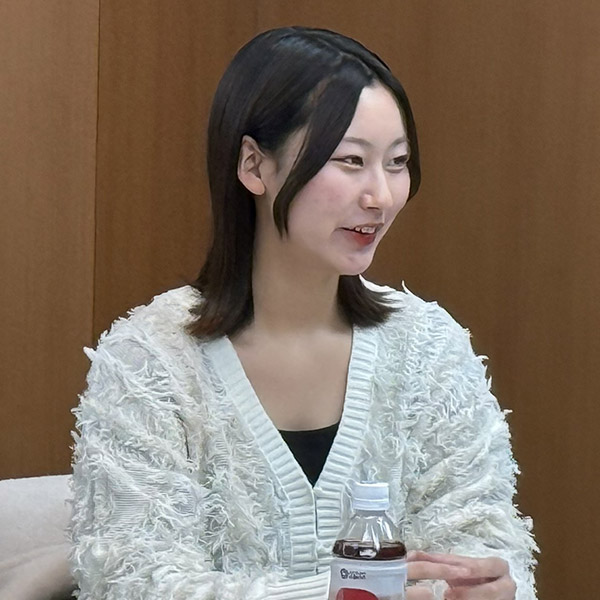
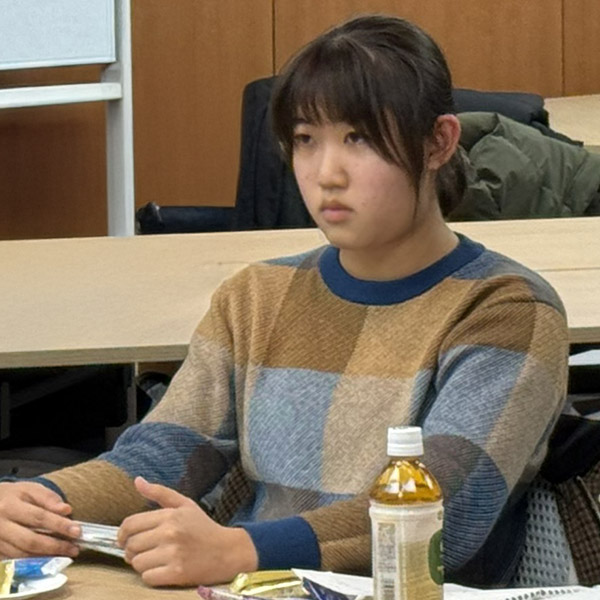
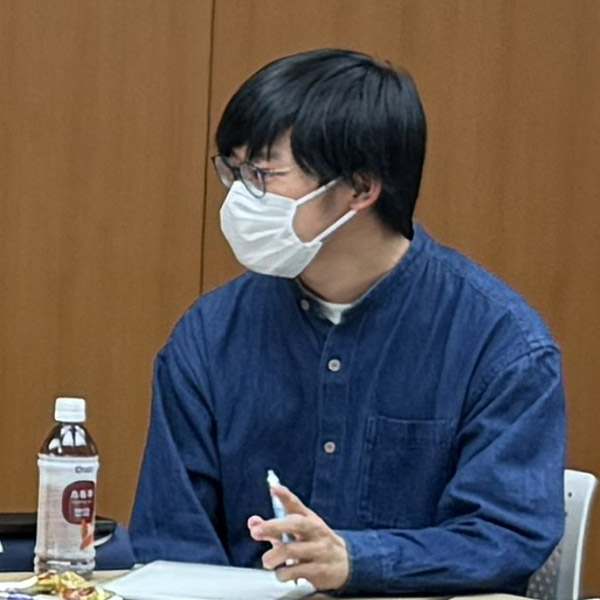
Shiine-sanMr. AbeKonno-sanTozaki-sanFujiwara-sanAnzai-san and Akihira-sanWatanabe-san
Erika Nakahara
I'd like to hear the students' impressions first. What did you think?
Masaki-san
I had always thought that raising children was something I was still too young for, so I hadn't been interested in it until now. However, after listening to this lecture, it gave me an opportunity to think about it not as something that doesn't concern me, but as something that concerns me personally.
《Shiine-san》
To be honest, there was a time when I took my parents' parenting for granted. However, through this lecture, I have come to realize anew that raising children involves a lot of hardship and responsibility. Because I always took it for granted, I haven't been able to express my gratitude properly. But when I get home today, the first thing I want to do is tell my parents "thank you" and express my gratitude.
《Mr. Abe》
I was completely unaware of the challenges in childcare support, and I never had the opportunity to learn about them, so I think this was a good opportunity to learn how difficult childcare is and that quite a few people die from postpartum depression.
Konno-san
I used to think that having someone do everyday household chores was something only the wealthy could afford, but that hurdle has now been lowered. Also, I used to wonder why postpartum depression occurred, but after hearing that it's because the body is left with internal wounds and it's difficult to soothe the baby while in that state, I realized how mentally challenging it is, and it has given me a new perspective on pregnant women.
《Mr. Sanpei》
I had a strong impression that child-rearing was something that should be completed within the home, but after listening to this lecture, I realized that with the development of options like babysitters and various other systems, child-rearing has become much easier.
《Mr. Tozaki》
As I begin my job search, I've been grappling with many things, such as whether to live in Miyagi or Tokyo, and whether or not to have children in the future. After attending today's lecture, I learned that there are companies in Sendai that are working to support childcare, and I feel like my future options have broadened a little. More than anything, I'm happy and encouraged to know that there are先輩 (senpai - senior colleagues) nearby who are taking on such challenges.
Fujiwara-san
I don't really have any particular interests yet, and I only came to this lecture because a friend invited me. That's why I was so impressed by how Ms. Nakahara, based on her own experiences, identified problems in society and took action to solve them. Also, I was very impressed by what you said in your lecture: "Raising children in a town you love enriches your life." I also thought your idea of gradually enriching people's lives starting from a local level was wonderful.
Erika Nakahara
That's good to hear. I also think that not being interested in something isn't a bad thing at all. I happen to be an energetic type, so I've been able to jump into various places, gather information, and connect with people, but I think there are also people who can't find anything they're interested in and end up with a lack of self-confidence until they get a job. You might think that you should become a civil servant because that's what your parents say, or that you should do a job that will earn your parents' approval, but I think it would be fun if you could find a field or even a broad category that interests you and excites you while you're still a student. Ultimately, my goal became being a child, but originally, my core motivation was to revitalize local areas and build communities. When I was in first grade and my name was featured in the school brochure, I clearly stated, "I will work to revitalize Kazuno City in Akita Prefecture. I will work to revitalize the hot spring town." It's nothing to be ashamed of if your dream changes after you've made such a declaration. When my career path changed, I also worried about it and consulted with my friends from high school. They encouraged me by saying things like, "Erika, you sound like it's all over, but it's just the beginning of your next life," or "It's just that the person who seemed most likely to start a business actually did it." When I started my business, I faced many difficulties, but my friends encouraged and supported me. The YouTube video I showed you at the beginning of the lecture was actually created by Yoshimi Hiratsuka, who was a student in Department of Co-existing Society Studies. She has become a video creator and started her own business. I hope you all find lots of things you love to do.
Mr. Sato
Cutest's babysitting and matching platform services are incredibly appealing because of their attentive approach to each individual customer, which I believe is why they have so many repeat customers. I also felt inspired after hearing about Ms. Nakahara's life story, including events from her childhood and the various volunteer activities and internships she participated in during her student years.
《Mr. Akihira》
I'm one of three sisters from a single-parent family in Akita Prefecture, and having witnessed my mother's struggles firsthand, I thought it would be great if there were a company like Cutest in Akita as well. Also, the fact that men can also experience postpartum depression made a strong impression on me.
Erika Nakahara
My husband was so determined to do his best at childcare that I think he might have been suffering from postpartum depression. Babies sometimes suddenly start crying loudly in the middle of the night, and at those times, it's better for the baby if the mother is there. But my husband tried so hard to get the baby to sleep that he ended up sleep-deprived and overwhelmed, which sometimes led to arguments. If women understand that men can also experience postpartum depression and treat them accordingly, they can gradually support their husbands while acknowledging their desire to do their best. There are many men and women who want to work hard to get used to childcare and do their best. I think it would be good to raise children together with that kind of attitude.
Mr. Anzai
I was aware that there were social problems such as the declining birthrate, aging population, and child abuse, but I hadn't actually taken any action, nor did I know if there were any policies to solve these problems. I was impressed by Ms. Nakahara's drive to change the current situation and her thorough exploration of how to make her service appealing, and it became an opportunity for me to gain motivation to do something useful myself.
《Mr. Watanabe》
It's a field I haven't been involved with before, and I didn't study it much at university, but I think I was able to understand at least some of it after listening to the lecture. Also, since CueTest is collaborating with local governments, private companies, and local businesses, I felt that there must be a need for it, and that it is necessary to respond to that need.
Mr. Ito
I've heard that I didn't have much trouble raising children because my grandparents live next door, but when you consider the situation where you have to raise children while physically injured to the point of needing three months to recover if you don't have family nearby to rely on, I think we need to create an era where husbands can reliably take paternity leave, especially as dual-income households become more common.
Erika Nakahara
The other day, when I gave a seminar at Shichijushichi Bank, a 24-year-old man who is about to become a father attended. Apparently, at financial institutions like Shichijushichi Bank, there are many specialized qualifications that employees must acquire after joining the company. He said that his seniors had advised him to "get these qualifications before your child is born," but he was a real pro who had already obtained them all. When you join a company and decide that you want to balance work and childcare in the future, it's wise to ask people who have been working there for a long time and are successfully balancing work and childcare, "Is there anything I should start doing now?" or "What qualifications should I get to continue this job for a long time, or if there's anything I should have done earlier to make childcare easier?" and then act on those suggestions.
《Munakata-san》
I've always felt that raising children was something far removed from my own experience as a university student, but after hearing Ms. Nakahara's story, it feels much closer to home. Currently, there are various social problems related to child-rearing, such as the declining birthrate and aging population, but I was shocked to hear about postpartum depression for the first time. Hearing Ms. Nakahara's stories about overcoming various difficulties gave me courage, and I want to use her mental strength and drive to my advantage in the future.
Erika Nakahara
thank you very much. While I was speaking at the lecture, I kept wondering if everyone was listening and if I was doing okay, but I was glad that they were listening attentively.
#03 That might be a social issue—How to build relationships that begin with "empathizing with the other person"
《Mr. Akihira》
Please tell us about the work you were doing on the morning (of the day of the lecture).
Erika Nakahara
From 7 a.m., while Grandma was making breakfast, I took care of the baby. Today, the baby was awake in a good mood, but soon became sleepy and a little fussy, so I held him and sang a crow song to him while we looked at the scenery outside, and he fell asleep. Then, a little after 7:30, the two older brothers woke up and started eating the breakfast Grandma had made, so I helped them eat. We were leaving the house around 8:15, so while I was helping the brothers get dressed, the baby woke up, so I made sure the baby was in a safe environment so he could play in the baby gym. After that, I did some chores like washing the dishes we'd used and the sterilizing set for the baby's bottles, then I put the baby back to sleep, cleaned the bathroom and toilet, and cleaned the room after dinner. Finally, I took turns watching the baby while he slept with his grandparents, and that was the end of it. It's wonderful when that's your job.
Masaki-san
How old are your children (Ms. Nakahara)? Also, was it difficult to work when your children were born?Masaki-san and Nakahara-san (Guests)
Erika Nakahara
My child is in the first grade of elementary school. My husband lived with us right after the baby was born, but he was transferred to a different city for about four years starting when our child was about one year old, so I was doing all the housework, childcare, and work by myself. Raising my own child was tough, but I tried to overcome it by treating the chaotic situation in front of me as an experiment, figuring out what was difficult, what the challenges were, and how I could keep my child happy in those situations. I even enjoyed it a little. So, although it was tough, I think I was able to get through it by thinking that it all connected to my work.
《Munakata-san》
Munakata-sanYou mentioned that you moved from Miyagi Prefecture to Kagawa Prefecture due to your husband's work. You said he used to work in Marumori Town, Miyagi Prefecture. Now that you've lived in Kagawa Prefecture, have you come to appreciate the good points of Miyagi Prefecture and Marumori Town?
Erika Nakahara
One of the best things about Miyagi is that I went to a university there, and I have lots of friends. Ultimately, I think life isn't interesting if it's just about work, and how many friends you have to enjoy spending time with on your days off, whether it's family or friends, is really important to me. When I was in Kagawa, I had absolutely no friends, and I was making friends by going to parenting classes and saying things like, "I'm from Miyagi, please be my friend." I guess you could say I'm in Miyagi because of the connections I've made with people here. Also, I've been skiing since I was little, and now I go skiing every week with my kids during the winter. I think being able to pursue hobbies like that is one of the charms of Miyagi. From a policy standpoint, Tokyo is undoubtedly more fortunate. However, I believe that nature experiences are very important for a child's development, and Sendai, with its abundance of nature, is a truly great environment for raising children. I love winter, and in the summer we can go camping. Watching my child, I think that experiences like finding ways to play on their own even without playground equipment, or climbing over uneven, unpaved terrain to play in the river, will help them grow into children who can interact well with nature. What do you think are the good points of Miyagi Prefecture?
《Munakata-san》
When it comes to what I like about Miyagi, the first thing that comes to mind is how truly abundant its nature is. Also, I myself am interested in tourism and regional revitalization, and from a tourism perspective, I think Miyagi's strength lies in the fact that you can enjoy all four seasons and it's a pleasant place to live. In that sense, I also felt that it's a really fulfilling city when it comes to raising children.
《Mr. Sanpei》
Sanpei-sanAs a babysitter, you have many opportunities to interact with families of all kinds. I'd like to know if there are any communication methods you use to gain the trust of the child's mother or father, or any things you pay attention to when interacting with them.
Erika Nakahara
That's a great question! At the beginning of the lecture, I asked everyone in a workshop, "Is there anything you think about what kind of parent you want to be, or what kind of parent you don't want to be?" And it turns out everyone had some kind of answer. We start with the premise that "everyone has different values regarding what kind of parent they want to be." The company name, Cutest, means the superlative of cute, and we want to be a company that cherishes together with our customers' "cutest things"—the things they value most, their treasures, the cutest things. When we interact with our customers, we listen to them while we talk about "how they want to raise their children" and "what kind of feelings they have towards raising their children." Even when choosing a nursery school, it's not like the baby wants to go there, so as a parent, you have to make decisions one by one, like "If this is the best place for my child, I can entrust them to the teachers with peace of mind," or "My child loves playing in the sand, so let's choose the one with a large playground in the yard." Parents make these choices because they want their child to grow up in a certain way. As you listen to their thoughts, you might find yourself saying things like, "So you're really particular about these things when you're raising your children," or "That's a wonderful way of thinking," acknowledging and supporting their perspective. I think it's important to maintain a stance of valuing their perspective rather than imposing your own as a partner in parenting. It's the same when you're doing business in the countryside. If you go to a town like Marumori and suddenly announce, "I'm a member of the regional revitalization team," of course, the people in the countryside won't suddenly accept you as a complete stranger. I'm from Akita myself, so I understand what rural life is like, and it's true that the people in that region have always worked hard together to hold festivals, conducted disaster prevention drills in the neighborhood association, made imoni (taro stew), and generally got along well with each other while occasionally making small talk or complaints. A community is essential, and when you step into a community, it's important to get to know the people who have lived there their whole lives—what they've done since birth, what they do every day from the moment they wake up until they go to sleep—before you express your own opinion. It's about having the desire to cherish the local traditions and culture that have been passed down through generations, and then saying something like, "I want to try opening a gelato shop in Marumori," and you'll often get support. So, I think that one of the essential elements for revitalizing a community is to work together on things that make the local people happy. No matter how economically profitable something is, if it doesn't make the local people happy, I think it's better to stop.
Mr. Sato
Sato-sanIn the second workshop, we were asked to think about local community issues and issues affecting our immediate surroundings. I have some thoughts related to that. Recently, I went to the driver's license center to take the written test to get my license, but because I hadn't changed my registered address, I went all the way to the driver's license center in Tendo, Yamagata Prefecture. However, I brought a certificate of residence that didn't include my registered domicile, which was one of the necessary documents for taking the test, so even though I went to the center, I wasn't even allowed to take the test, let alone failed. Because of that, I thought it would be great if, as a social issue, we could create a situation where people who go to get their licenses don't end up coming back without being able to get them.
Erika Nakahara
That's incredibly precise! Great!
Mr. Sato
If I had 300 million yen, I would definitely want to do that, but when I thought about what I would need to become to achieve that, I couldn't think of anything other than becoming Prime Minister. That's not realistic, so I'd like to ask Mr. Nakahara, who is active in society, what other things could I do besides becoming Prime Minister?
Erika Nakahara
Well, he'll become prime minister, that's the only option. Yeah. Since there's no other choice, let's support the second female minister. And we'll all be graduates of the academy. Recently, there's been a switch to something called a "My Number Driver's License," which I only recently found out about, but apparently, people who already have a license need to go to the driver's license center once to complete some procedures. People who have a license also need to renew it. Every few years, about a month before your birthday, you have to take a course, but it seems that you can now take it online. But to do that, you have to go to the driver's license center once, which is a hassle. I was thinking, "Please do something about it," so I asked, "Prime Minister, is that alright?"
Mr. Sato
I will do my best!
#04 Approaching social issues begins with familiar 'questions'.
Erika Nakahara
Is there anyone who would like to share their thoughts on social issues?
《Mr. Tozaki》
Since high school, I have wanted to raise awareness among society about the existence of siblings of young carers and the need for support for them. I myself do not yet have a concrete solution, but first, I want to make this issue known to many people and explore ways to support them in some form.
Erika Nakahara
There's a support group for siblings of children with disabilities called Ari, a general incorporated association founded by medical students at Tohoku University. If you search for "family older brother/sister," you'll probably find it. They're student entrepreneurs who have started a business specifically focused on supporting siblings of children with disabilities. So, joining an organization like that and working together might be a good idea. They've recently been raising money through crowdfunding, and it's a very difficult area from a business perspective, but they're people who are challenging themselves knowing how difficult it is, so it might be a good idea to contact them and ask if you can help them with some kind of activity. Do the boys have anything to say?
Mr. Ito
Mr. ItoWhat kind of mindset, motivation, and approach should men have when it comes to housework and childcare?
Erika Nakahara
Women become incredibly strong after giving birth. They give off an aura that says, "I'm already going through so much, so don't you dare stress me out, everyone except my child!" and it's quite irritating. It's understandable for women after childbirth. That's because a woman's hormone balance is disrupted by giving birth, making her more susceptible to depression. Her hormone balance is disrupted about 100 times more than before her period, so it's very difficult. Assuming that a woman is in such a sensitive mental state, if a man were to be supportive and avoid stepping on any landmines, he could do something like this: Women always have their own preferences when it comes to housework, for example, how to place dishes, whether they want them dried after washing or air-dried, how often to wash the towels they use, whether to wash them every day or after one use, whether to wash bath towels every day, whether to fold laundry in the style of a clothing store or if a square is fine, and so on. He could listen to all of her preferences regarding housework and then do it accordingly. Women generally expect you to read between the lines, so they tend not to explain things in detail between tasks. Even if they assign a task without specifying how they want it done, they often complain at the end, saying something like, "That's not how you do it!" So, I think it's best to ask at the beginning, "Is this the correct way to do the task you're asking about?" to ensure things go smoothly. The woman should speak up. If you have specific preferences, it's important to clearly communicate them, such as, "I'd like this done this way," "I'd like you to vacuum first and then use a Swiffer," or "I'd like you to wet-wipe this area." This is the secret to a harmonious relationship. Reduce the number of things that could cause conflict, even if it's just one.
《Mr. Watanabe》
I think the approach differs depending on whether the child is an infant or in the sixth grade of elementary school. How should we tailor our approach to each age group?
Erika Nakahara
Young children sometimes behave in ways that can be irritating to adults, like wanting to wear rain boots even when it's sunny, or wanting to put on their socks themselves when they can't. However, if adults can empathize with the child's feelings and verbalize them by saying things like, "So this is how you want to do it," "What don't you like?", or "You wanted a banana right now, didn't you?", the child will respond with something like, "That's what I wanted to say," and their frustration will subside. When it comes to interacting with young children, they often get upset because they can't put their feelings into words, so the key is for adults to articulate those feelings for them. Once they get to elementary school age, you stop treating them like little kids and instead ask them questions like, "What do you want to do about this?" or "What do you think?" to draw out what they want to do. This allows the child to take the lead in the childcare process, so I think there are some key points to consider when interacting with children. Please try these out when you interact with children. I'm not sure if this was helpful to anyone, but thank you for your time.