
The Significance of Department of Co-existing Society Studies
Building a symbiotic society based on economics
When considering sustainable socio-economic systems in a society facing population decline and an aging population, it's crucial to look around us. We need to acknowledge the existence of diverse people, empathize with them, and embrace the idea of living together while respecting differences. In short, building a symbiotic society is what Japan needs going forward.
For those aiming for Department of Co-existing Society Studies
In Department of Co-existing Society Studies, we explore the construction of an inclusive society with "empathy" as our key concept. We also learn about social issues such as inequality and initiatives such as civic activities. Let's learn about the modern economy, policies, and society, and consider together what we can do for the future of Japan.
Four years in Department of Co-existing Society Studies
Year 1: Students acquire fundamental learning skills.

The program begins with comprehensive exercises that help students understand the characteristics of university lectures and report writing techniques, thereby acquiring the objectives of university learning and fundamental learning skills. Students then familiarize themselves with inclusive societies and economics through foundational subjects such as Introduction to the Japanese Economy (for economics students) and Introduction to Inclusive Societies (for inclusive societies students). They gain an understanding of the breadth of these fields. Furthermore, through Career Development I, students acquire knowledge useful for job hunting and life after graduation, while also fostering a strong sense of professionalism.
Second year: Choose a topic of interest to study.
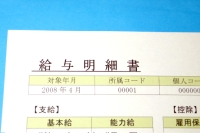
Students will choose a topic of interest from a range of distinctive specialized subjects, such as labor economics (economics) and social security/contemporary social issues (inclusive society), and delve deeper into their studies. They will consider various aspects of the challenges Japan is currently facing, such as regular employment versus non-regular employment, domestic violence, the working poor, and the modern social security system. In addition, they will explore a suitable direction for themselves in preparation for seminars that begin in their third year.
Third year: Develop a balanced understanding of both theory and practice.
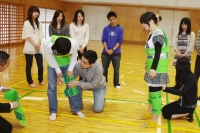
Students deepen their learning through unique seminars focusing on economics and inclusive societies. In parallel, they also engage in fieldwork, including volunteer work at hospitals, visits and internships at social welfare facilities, overseas study tours primarily in Asia, and experience working with NPOs supporting foreign residents in Japan. They feed back what they learn from these experiences into their studies, fostering a balanced understanding of both theory and practice.
Fourth year: The perspective honed through fieldwork becomes a strength.
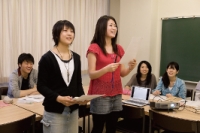
In seminars, students repeatedly engage in problem-solving and research presentations, receiving diverse intellectual stimulation that they then apply to their graduation theses. They also reflect on their four years at university, considering whether they have acquired the fundamental skills necessary to confidently enter society, envisioning their future, and developing strategies for achieving it. The perspective of coexistence honed through fieldwork proves to be a particularly valuable asset.