
High employment rate

Generally speaking, economics departments are said to have high employment rates. At our university, Faculty of Economics department also has a higher employment rate than the humanities departments as a whole. A notable feature is the high employment rate for female graduates as well.
Deeply consider "the present" and "the future."
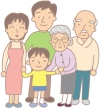
One of the main themes of Department of Co-existing Society Studies is the declining birthrate, aging population, and overall population decrease. This will have a significant impact not only on the future of the country and local governments, but also on business. Studying these themes, which involve deep consideration of "the present" and "the future," is expected to be a great asset in one's career.
Therefore, it will be useful once you enter the workforce.
For example, this can help people who envision the following future:
- I'm interested in social welfare, but I want to work for a general company.
- I'm interested in social welfare, but I'm more interested in facility management and administration than in jobs like caregiving.
- I want to become a civil servant after learning about the diverse range of people in the world.
- I want to develop my business after understanding that there are all kinds of people in the world.
- I want to do a job that allows me to contribute to society.
What specific occupation do you have in mind?

Many of the faculty members in Department of Co-existing Society Studies had been teaching seminars and lectures in Department of Co-existing Society Studies Faculty of Economics even before the department was established three years ago. These alumni were introduced to "learning about inclusiveness" through those seminars and lectures. Although their work differs, they all say that "learning about inclusiveness" is useful in their current jobs. We expect that graduates of Department of Co-existing Society Studies will also be able to contribute to society in a similar way.
Considering from various perspectives,
This reveals what the construction industry can do.
Social Security Seminar, Student A
Employed by Takenaka Corporation
Currently, I work to maintain and enhance the value of buildings by providing a wide range of support, including revitalization. For office buildings, in addition to exteriors and air conditioning, I also propose renovations to create an environment where people with disabilities can work. Recently, I've also been responding to the need to build housing for the elderly, including business planning. Furthermore, I'm making progress in environmental initiatives, and I've come to realize that architectural work strongly reflects the social trends of the time. I believe that the message embedded within a building often reflects the era in which it was created.
I enrolled in Professor Kumazawa's seminar because I wanted to learn about the values necessary to create a new future for Japan, given the critical financial situation caused by the declining birthrate and aging population.
In my seminar, I studied the historical development of Japan's social security system while also actively researching recent cases. I was particularly interested in researching employment for people with disabilities. I not only looked at existing policies and initiatives, but also visited welfare facilities and listened to the stories of the users. Thanks to my studies in economics and my experience of being on the ground, I believe I have developed the ability to observe things from a different perspective, to think about what will be required in the future, and to always have a challenging spirit and a way of thinking that focuses on the essence of things.
It was this experience that led me to apply to Takenaka Corporation, a construction company. After seeing various facilities, I realized that buildings were becoming unsuitable for aging people, and in my job interviews, I frankly stated, "I believe that the construction industry can provide even more support for Japan's living environment in the future."
I believe that Department of Co-existing Society Studies allows us to learn about familiar social issues surrounding our lives from a variety of perspectives. I feel that the field of study in Department of Co-existing Society Studies is very important for the future of Japan, and is extremely useful in marketing planning. Tohoku Gakuin University provides extensive support in both job hunting and daily life, and I think it is a very fortunate environment. Why not try something new in such an environment?
Those who are actually working on healthcare systems and policies,
That's the feeling I get.
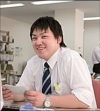
Ms. M from the Public Finance Seminar
Employed at Sendai Red Cross Hospital
I found this workplace because I wanted to work in an environment where I could use the knowledge and skills I acquired during my student days to help people. In this job, I feel like I'm actually working in a place where the medical systems and policies I learned about as a student are being put into practice.
For those of you who are considering studying in Department of Co-existing Society Studies, I encourage you to acquire a wealth of knowledge about various systems and policies during your time at the university, and to experience firsthand the connection between people and policies in real-world settings. I believe that this experience will be invaluable even after graduation.
I believe the new department reflects the current era and anticipates the future.
I hope you'll meet your lifelong mentor here.
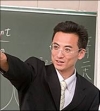
E-san from the Asian Economics Seminar
Junior high school social studies teacher
For four years, I belonged to the university's archery club. I lived a crazy life, practicing archery until late at night and then working part-time jobs. But that changed dramatically in my third year when I met Professor Nozaki, whom I can still proudly call my lifelong mentor. I owe my current self to him. During a conversation with one of my seminar students, my mentor said, "You're like an Asian woman (from country XX)." He meant it as "attractive." The student was offended, but at that moment, the professor saw right through it. "There is no doubt that you have a sense of superiority within Asia and discriminatory attitudes towards other Asian countries." He was a teacher who could see through to the heart of the matter. In my third year, I had the opportunity to visit a rural school in northeastern Thailand on a study tour. At that time, the children sang "Ee Ai Ee Ai O" in Thai, and I thought, "These are pure children, I want to live among such pure people." That's when I seriously decided to become a teacher. The theme of my graduation thesis was "Child Labor in Thailand." I think that led to my current job as a middle school teacher.
I believe the new department reflects the present era and anticipates the future. In the future, Japan will likely increase its financial assistance for environmental conservation, development, and education. However, we must not think of "support = loss." Perhaps the mission of Department of Co-existing Society Studies is to teach students how to understand the "economics of loss." I hope that students will become people who can contribute to society by putting themselves in the shoes of others. It's the same for us teachers; it's very important to be able to understand the perspective of students who don't understand the lessons. What's the point of studying if you can't even understand that? I always tell my students at the beginning of each class, "Just because I give you a '5' doesn't mean I see you as a particularly virtuous person, and just because I give you a '1' doesn't mean I think of you as a low-ranking human being."
Come to think of it, two years ago, students from Professor Nozaki's seminar came to our school wanting to share the passion they'd learned in the seminar with the children, and they gave a lesson to the first-year students about what they'd learned and felt during their study tour. I think they even gave it a wonderful name like "We Want to Tell You." I still vividly remember the sparkle in the eyes of our first-year junior high students at that time.
I believe that students can do anything they set their minds to, and they have the ability to do so. I hope that the new department will be a place where students can seize that opportunity. And I believe that the professors of the new department can make that happen.
The desire to live together with the community,
I learned this in my seminar.
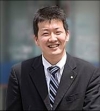
Social Security Seminar, Ms. T
Bank employee
While bank employees may have a rigid image, interacting with people is extremely important.
Currently, I mainly work in sales, proposing investment solutions. Many of my clients are worried about their retirement, so knowing about public pensions is absolutely essential. I feel that what I learned about public pensions and social security during my student days is proving useful in my current job.
Furthermore, my desire to grow together with local customers through my work, and my wish to get to know them, are things I learned and acquired in my seminar. No one can live alone. I believe that being considerate of others and always caring for them is essential for living together and is connected to a harmonious society.
Even in the field of social welfare,
Business acumen and management skills are being put to the test.
Social Welfare Seminar, Ms. N
Employed at Hojuen
I work for a social welfare corporation that primarily focuses on elderly care services, and I am involved in the management of the corporation and its facilities.
With the introduction of the long-term care insurance system, elderly welfare has undergone a significant transformation into a "service" that everyone has the right to use, and a competitive environment has emerged where private companies can also enter the market. Businesses providing "welfare" and "care" services are required to continuously provide high-quality services and, in addition, contribute to their communities and society.
To achieve this, while it is essential to enhance expertise in welfare, there is also a growing need for individuals with business acumen who can manage organizations and services, and who can take a broad perspective and see the bigger picture. We hope that studying in Department of Co-existing Society Studies for four years will provide a foundation for developing such individuals.
Encounters, experiential learning...
I think this is truly a precious time.
Social Security Seminar, Student C
Mirai Soken Group
Employed at Japan Mirai Tax Accountant Corporation
My job involves assisting corporations and medical institutions with their accounting processes, working alongside tax accountants, and providing timely information on revisions to tax and medical laws. I also work with clients to develop and implement countermeasures. What I learned about medical insurance and medical institutions in my seminar is useful in my current work. Recently, I also started a computer class for senior citizens. I feel that I can contribute to society in various ways and from various positions.
I believe that the time spent meeting new people, studying, and gaining practical experience is truly invaluable. I hope that all of you studying in the new Department of Co-existing Society Studies will make the most of this irreplaceable time, be curious about everything, and constantly challenge yourselves with new things.