
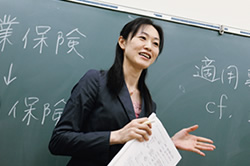
Why not consider the question, "Why is social security necessary?"
Professor of Social Security and Social Insurance
KUMAZAWA, Yumi Professor
This course will cover social security systems, including public pensions and health insurance. We will explore the history and role of social security, as well as how it relates to our daily lives in more detail. We encourage you to deepen your understanding of why social security is necessary and whether there are any problems with the current social security system and its structure, while acknowledging that there are many different perspectives and viewpoints among the students.
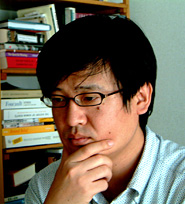
Cultivate intelligence based on kindness towards others.
Introduction to a Society of Coexistence; Globalism and Nationalism
KWAK, Kihwan Professor
I am a so-called "third-generation Zainichi" (Korean resident in Japan), born and raised in Japan, although I have Korean roots. (I value both my Korean roots and the fact that I was born and raised in Japan equally.) My specialty is sociology. I am interested in discrimination issues, particularly ethnic discrimination.
What I hope for from you all is to cultivate an intelligence based on kindness towards others. "Perhaps I have unknowingly hurt others, or infringed upon their freedom, pride, or rights. Perhaps the laws and common sense of the society I belong to are cruel to certain individuals, and in some cases, may even put them in dire straits." I hope you will develop the ethical sensitivity to question and feel such things, the ability to analyze society based on that sensitivity, and the creativity to find solutions to problems.
My hope is that you will acquire those skills through your university life.
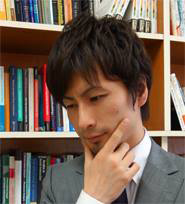
Let's think about the "power" of gender norms.
Instructor for "Gender Studies" and "Foundations of Gender Studies"
KOMIYA, Tomone Professor
The fact that humans are animals that reproduce through sexual reproduction is an undeniable reality shaped by the process of evolution. However, the fact that we possess the attribute of gender has a profound influence on all aspects of our choices regarding the life we lead, far beyond the aspect of reproduction. For example, the clothes we wear, our hairstyles, our hobbies, the subjects we study, the jobs we take, the amount of our salary, our professional status, our involvement in housework and childcare, whether we become victims of or perpetrators of violence, the people we fall in love with, the nature of our sexual desires, our perception of our own gender... All of these things are influenced by the idea that "women/men should do this" (gender norms). Gender studies, in a sense, is the study of the "power" of gender norms and their origins.
Furthermore, this analysis is deeply connected to an examination of various discrimination issues. As you study gender studies, you will come to understand not only discrimination based on gender and sexuality, but also how these are intricately intertwined with other forms of discrimination in our society. This knowledge will not only empower you to envision a society where people with diverse attributes and diverse viewpoints can coexist, but it will also empower you to enrich your own life and open up more possibilities.
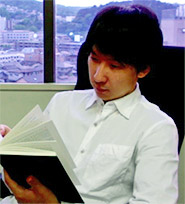
For those of you who want to learn about the exciting and "fighting social sciences"
Local Public Finance I & II Instructor
SATO, Shigeru Professor
Japan is the world's third-largest economy. Considering there are around 200 countries in the world, this may seem remarkable. However, economic prosperity does not directly translate to people's happiness. In fact, Japan has one of the highest poverty rates in the world and is known as a very difficult country to live in. Furthermore, there are around 30,000 suicides every year. It is worth noting that suicides linked to "economic problems" have increased significantly over the past 20 years or so. Japan is an economic powerhouse, but it is also a country that suffers from significant inequality and poverty.
Why is that? Many factors contribute to this, including the deterioration of employment, changes in family structures, and the disintegration of communities. In my course on local government finance, I intend to address this issue from the perspective of public policy—the policies implemented by the government and local authorities. In the midst of an unprecedented budget deficit in human history, what should the role of the nation and local governments be in supporting people's lives? It's an extremely challenging task, but all the more rewarding.
To grapple with the challenges facing society and conceive of a field of study that forms the foundation of people's lives—a scholar I deeply respect called this "fighting social science." Let's enjoy this intellectually stimulating and thrilling field of study together!
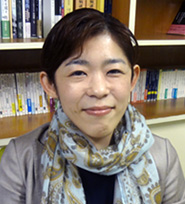
Discover the richness and joy of meeting others.
Contemporary Social Issues, Contemporary Society and Discrimination
KUROSAKA, Ai Professor
My research has focused on social and discrimination issues in Japan, particularly the leprosy issue and the Buraku discrimination issue. Specifically, I employ methods such as "participant observation," where I visit "the field" and work alongside people in social minority positions, keeping daily records, and "life story research," where I listen to their stories about their life journeys.
The narratives of minority individuals offer us profound insights. They reveal the existence of social oppression and exclusion, often invisible from the daily lives of those in the social majority. They showcase the rich lives of those who have survived these circumstances. They reveal the diverse ways in which individuals exist... In this lecture, I want to cherish the opportunity to "encounter" the lives of those directly affected.
I hope that students will cultivate a rich sensitivity to diversity and the ability to think about social issues in relation to themselves.
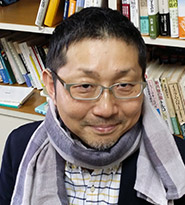
The imagination to live together with diverse "cultures" = "people"
Theory of Multicultural Coexistence, Cultural Diversity
ISHIKAWA, Shinsaku Professor
My specialty is cultural anthropology, and I teach courses on multicultural coexistence. Cultural anthropology is the study of the "cultures" of people in various regions of the world through fieldwork. Some people may wonder why there is a cultural anthropology professor in the economics department. The "culture" that cultural anthropology deals with is culture in a broad sense, that is, the accumulation of human thought, behavior, and, so to speak, ways of life. Naturally, the economic aspect is also very important in this context.
Discussions about multicultural coexistence cannot be understood solely from the perspective of "culture" in a narrow sense, but rather from a broader perspective that includes economic aspects—that is, from the entirety of human life. Department of Co-existing Society Studies offers such a broad perspective for learning.
Multicultural coexistence means getting along well with people who have different languages, religions, and customs. However, to put it extremely, we can never fully know anyone other than ourselves, so understanding people who are different to us is not something special, but something we do every day. What is needed is imagination. Let's learn together to cultivate the "imagination" that allows us to consider a wide range of things.
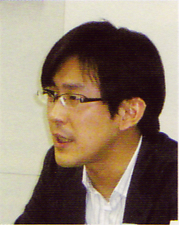
Learn how to "read" and "navigate" civic activities.
I teach courses on volunteerism and NPOs, and social movements and community studies.
Professor Yasunori Saito
Hello everyone, my name is Yasunori Saito, and I teach the course on civic activities (offered in the third year). My specialty is sociology. Up until now, I have been conducting research that examines issues from the field, focusing on community organizations and volunteer activities in local communities, such as citizen participation in formulating comprehensive municipal plans and the commercialization of shared taxi services in areas with poor transportation.
Many people might wonder why there's a course on civic activities in Department of Co-existing Society Studies. However, consider the recovery and reconstruction process following the Great East Japan Earthquake in March of this year. You've probably noticed that newspapers and news reports featured not only the administrative activities of the government and local authorities, but also civic activities led by NPOs (Non-Profit Organizations) and NGOs (Non-Governmental Organizations). As people move from evacuation centers to temporary housing and towards rebuilding their lives, these civic activities play a crucial role in supporting the victims.
In this course, we will explore topics such as the rapid economic growth and resident movements like the Minamata disease crisis, community organizations and urban development, consumer cooperatives and the proxy movement, and the independent living movement for people with disabilities, aiming to paint a "social history of postwar Japan" that differs from so-called political and economic history. We will also explain the rise of volunteerism since the Great Hanshin-Awaji Earthquake and the institutionalization of NPOs, while introducing concrete examples of citizen activities focused on community, welfare, and the environment. I hope that through lectures and exercises, we can dispel the image of "citizen activity theory" as being easy to understand at first glance but difficult to grasp upon closer examination, and that each of you will acquire the ability to "read" and "navigate" citizen activities.