
Held on June 9, 2012
Student impressions
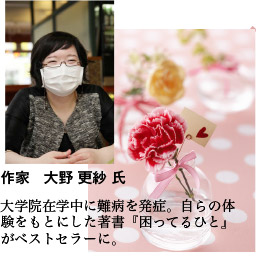
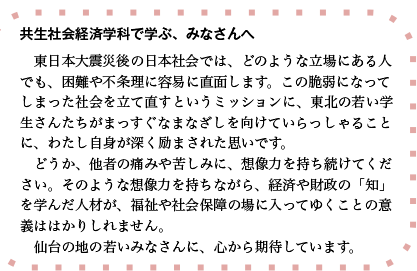
- When asked, "What would you like us, the students of Department of Co-existing Society Studies to do for the future of society?", Ms. Ohno replied, "I want you to continue to be interested and curious." I realized that in the inclusive society we aim for, it is crucial to be able to show interest and concern for others and to coexist with them. (S.)
- I believe the ideal society is one where everyone has the same rights and can coexist, where people with disabilities are not forced to live inconvenient lives, but rather can actively challenge themselves in various ways, even if they have disabilities. When Ms. Ohno praised Department of Co-existing Society Studies, she said, "You will take the baton you received from the professor in this groundbreaking department and go out into society." We were very proud that she praised our department, and at the same time, we strongly felt that we had also received the baton from Ms. Ohno at this lecture. With our biggest challenge, "maintaining interest," in mind, we will strive to study hard. (I)
- The words, "I lost a lot after getting sick, but I like myself now," really resonated with me. She explained that it was only after becoming ill that she truly understood the hardships and struggles of vulnerable members of society. I think we need to consider how we can ensure that each of us can live with dignity in the future society. (Ms. M)
- Ms. Ohno said that it is important for each person to have dignity and to continue to care for others. I think that if many people, including myself, could have such feelings, people with and without disabilities could live similar lives. I felt that it would be wonderful if we could realize such a society. (T)
- Having an illness brings many inconveniences and significant losses. However, I realized there's more to it than that. I also felt that there are many benefits to having an illness, such as meeting people I would never have met otherwise, and becoming kinder to others by understanding their pain and suffering. As shown in the video at the lecture, there are many "manufactured disabilities," such as the scarcity of wheelchair-accessible train stations and the difficulty in getting passersby to stop and help with a public phone as practice for assisting someone alone. I felt that Japan is still far from a society where people with disabilities can live comfortably. (N)
- In order to eliminate "disability" in future society, it will be necessary to provide such education, and also to actually listen to the stories of people with disabilities. First and foremost, we must understand. This may seem simple, but it is extremely difficult, yet I believe it is the most important thing. We need to eliminate "manufactured disabilities" and create a society where people with and without disabilities can live happily and equally. After joining Department of Co-existing Society Studies and listening to this lecture, my heart has been enriched. (S.)
- Listening to this lecture gave me a good opportunity to re-evaluate myself. I lack initiative and tend to think only about myself. Ms. Ohno said that by supporting others, you can also gain something from them. That's what I lack. I realized that I need to experience many things and absorb as much as I can. It was a good lecture that gave me a chance to think more about my future. (F)
- When I heard someone say, "I like myself now more than I did before I got sick," I wondered why. Ms. Ohno replied, "Although I'm in a difficult situation, with hair loss and taking a lot of medication, conversely, because of that difficulty, I've become more sensitive to various things than before. I've become able to think about the people around me. That's why I've come to like myself now." Those words gave me courage. (Ms. A)
- In a society where essential support such as healthcare and welfare is not functioning properly for those truly in need, how should we live? There is only one way to change such a society: we must raise our voices. To change the welfare system, economic knowledge is absolutely necessary. That's why Mr. Ohno has said that this department is groundbreaking. We students of Department of Co-existing Society Studies may very well change Japan. I felt that we have great potential and a great responsibility to bear. (T)