
Held on December 7, 2013
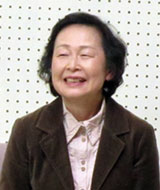
Support Group for Children of Foreigners
representative Tadokoro Kieko Mr.
I have been working as a Japanese language volunteer for 26 years, supporting parents and children learning Japanese.
In 2002, I served as the secretariat for the "Association for Considering Japanese Language Classes Open to Learners with Infants and Toddlers, etc."
In 2005, she became the representative of the "Association for Supporting Children of Foreign Residents."
To all students of Department of Co-existing Society Studies
At the "Support Group for Foreign Children," many students are actively involved in supporting children's Japanese language and academic studies. Each person has different motivations for starting and different thoughts about the activities, but before they begin, the group asks them to "treat it like you're helping a younger sibling with their studies, not by teaching them, but by solving problems together, thinking together, and researching together."
"For elementary, middle, and high school students who are in the process of growing up, studying and talking with slightly older university students seems to be an enjoyable experience. And above all, as time goes on, the students come to understand the students' personalities and feelings. At the same time, the students see the university students working hard on their exams and studies, and striving in their job hunting, as seniors who are preparing to live in society."
"If you ever have the opportunity to meet children from other countries, please remember how you felt when you were their age. And please be patient and take your time to get to know them. Don't worry, the language barrier will disappear with time."
Student impressions
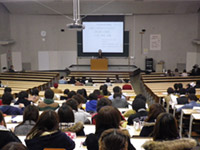
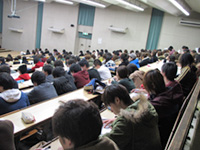
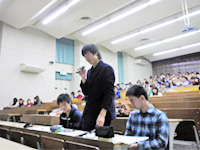
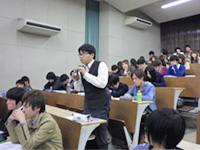
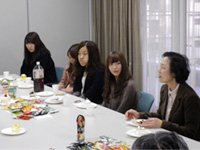
- As Ms. Tadokoro mentioned at the beginning, learning about children from other countries through this lecture gave me a new perspective on Japanese society, the education system, and human relationships that I hadn't seen before.
- For people from other countries, Japan can often feel restrictive due to differences in language, culture, religion, and so on. However, if we look at it positively, it can be an opportunity to share ways of thinking and values that Japanese people may not possess. The example of S-kun from Pakistan, which Mr. Tadokoro shared, illustrates a similar point. If we can achieve this, it can be a positive stimulus, and in turn, broaden our own perspectives.
- I hope that we can revise the school education system to accommodate children from other countries, and also change the way Japanese children (and others) think, which can lead to discrimination against foreigners without them even realizing it. It will be very difficult to resolve these issues. However, after listening to the teacher's talk today, I learned the importance of each individual becoming aware, recognizing, and taking action.
- I felt that Japanese people unconsciously impose "Japanese ways of thinking" on those they communicate with, narrowing their perspectives. This lecture, which told the story of children who are struggling with cultural and lifestyle differences but are working hard to make their lives in Japan better, was an essential story for the theme of a harmonious society. As a student of Department of Co-existing Society Studies, it was a valuable experience.
- Up until now, I had only had a positive image of children from other countries, believing they could speak two or more languages and have a significant advantage when they enter society in the future. I never imagined they might be struggling. Foreign students have to learn while facing a significant handicap. I felt that we must understand this. I also felt that rather than simply teaching Japanese, we should first cherish their native languages and cultures, and then add Japanese culture on top of that. This way, we can turn their handicap into an advantage. I realized that our understanding and support are necessary for them to achieve their future goals.
- This lecture sparked my interest in volunteering to support children in other countries, so I decided to participate.
- I believe that having even one person who understands and accepts you can completely change your motivation. I felt that support like that provided by Kiiko Tadokoro is truly a source of emotional support, and it made me want to become someone who can be of service to others someday.
- Because everyone is born and raised in different environments, each person has their own unique personality. I felt that we should cherish ourselves as we are, and then, on top of that, try to understand the culture and customs of the country we live in.
- This lecture made me realize once again the problems faced by children of foreign nationalities. However, I also felt that they are moving forward positively towards the future despite their circumstances. I had been prejudiced and only thought about the negative aspects, but I hope that we can spread awareness of the positive aspects as well, change our perceptions, and support other children. I believe that considering and supporting people who are in different circumstances is one aspect of coexistence, so I would like to learn more about coexistence in the future.
- Hearing the real-life experiences of children from other countries made me realize that we students and those around us need to cultivate a more accepting attitude. Instead of setting boundaries because someone is a foreigner, I believe it's crucial to acknowledge and respect differences. And I hope that Japan will become an even more livable country for people from other countries.