
Held on June 14, 2014
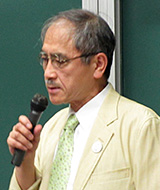
Lecturer: Toru Honda
Doctor at Asakusa Hospital, Taito Ward; Representative Director of SHARE (Citizens' Association for International Health Cooperation)
Yamaya Yamayu Clinic Volunteers
For many years, in addition to providing medical support to foreigners living in Japan, we have also conducted overseas medical aid activities in countries such as Tunisia, Ethiopia, Cambodia, Rwanda, and East Timor.
Message to students
Empathy is truly tested when we have to work, negotiate, or mediate with people in relationships where our interests are completely opposed, or in societies dominated by different cultures and traditions. The ability to listen attentively to and respect the opinions and arguments of others, while maintaining one's own thoughts and perspectives, and effectively communicating them to others, is also a part of empathy. In that sense, I believe that experiencing different cultures, getting to know various people, and practicing broad reading and writing during your student years, when you are young and have fresh sensibilities, will enhance your empathy and be useful in later years.
I sincerely wish you all the best in your future endeavors.
Student impressions
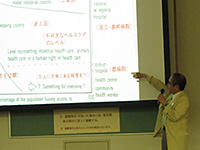
- I was shocked when I heard about the current situations in East Timor and Japan. Tuberculosis and malnutrition in East Timor, and Japan's declining birthrate and aging population are problems that each and every one of us living in society must confront. There are many people in the society we live in, and there are many people who are facing various problems that we don't see. I believe that creating a society where such people can live in peace is necessary not only in Japan, but all over the world. (K)
- Finally, I thought that putting into practice what Professor Honda said, "Nothing about us without us," would be a tremendous undertaking. However, after hearing Professor Honda's story about actively engaging in such activities, I wanted to find ways in which I could help. (T)
- Health disparities exist both domestically and internationally, and it is our role to help those who suffer from these disparities. What is needed for this is "empathy." We must not abandon people with different health conditions. By empathizing, we must deepen our understanding of such people and build a society where we can live together. Being healthy is a human right. We must protect that right. (D)
- As someone originally from Minamisanriku, I am concerned about the current state of healthcare in the town. Even before the earthquake, medical facilities were scarce, and the disaster has exacerbated the situation, leaving even fewer doctors. That's why community-based healthcare is so crucial. From now on, I want to actively participate in lectures and other events to address the issues facing my hometown. (Y)
- I believe one of the main reasons for the declining birthrate is likely the financial burden on families. A salaried worker earns approximately 100 to 200 million yen in their lifetime, and the cost of raising one child is approximately 30 to 40 million yen. I think this kind of life planning might be causing hesitation in having children. Therefore, I believe that an increase in dual-income households, preferential treatment for female workers, and strengthening of childcare leave systems are necessary. (Y)
- Attending this lecture made me think about what I can do for others. I think it's wonderful to work so hard for others like Ms. Honda does, and since I'm studying in Department of Co-existing Society Studies, I've always wanted to take some kind of action to make society a better place for people to live. I believe that doing something for others, rather than for myself, will surely lead to my future, so I want to start by participating in something close to me, like volunteering, and become the kind of person who can support people in need. (S.)
- Listening to Professor Toru Honda's lecture made me reflect on the theme of this lecture, "Cultivating Empathy." As Professor Honda is a hospital physician, the lecture was about medicine. Starting with primary health care, I was surprised and deeply interested to learn that he was involved in global issues such as the serious health problems in East Timor and the aging population and life expectancy in Japan. Furthermore, in his lecture, he spoke about the concept of "seriously engaging with each individual," which he had mentioned in the DVD we watched in class beforehand, and it resonated with the idea that "all things, from plants to trees, and the land itself, can attain Buddhahood." I thought that the same could be said for a symbiotic society. A society where people of all ages and genders can live happily together—that is what I believe a symbiotic society is. Through this lecture, I was made to reconsider what I have learned in this department over the past four years and how I can use it in the future. (A)