
Held on June 27, 2019
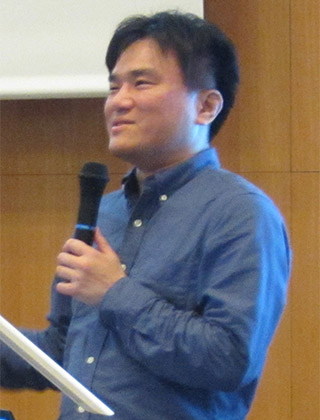
Lecturer: Haruki Konno (Representative of NPO POSSE)
A labor and welfare activist and sociologist. His specialties are labor sociology and industrial relations. While a student at Chuo University's Faculty of Law, he founded the NPO POSSE, which provides labor consultation services, and has served as its representative ever since. In 2013, he received the Osaragi Jiro Forum Prize for his book "Black Companies: The Monsters Devouring Japan" (Bungei Shunju, 2012).
Message to students
Japanese society is rife with labor and poverty problems. Precarious employment, exploitative companies, death from overwork... On top of that, with job losses due to AI, the rise of platform-based work, and the gig economy, it will likely become even more difficult to find stable employment.
That's why I believe "knowledge" will be crucial for navigating the future. However, this isn't simply the kind of knowledge that helps you get a good job. It's the knowledge needed to understand the workings and systems of society and to make your own informed decisions.
In this lecture, I spoke about the social structures and systems that people who are employed should be aware of. I hope that you will use the content of this lecture as a reference during your student life to deepen your knowledge and understanding of society and cultivate the strength to live and thrive in society.
Student impressions
- The strongest impression I got from the lecture was that once you enter society, you have no choice but to protect yourself. Even if there are rights and systems in place to protect working adults, if you can't exercise them, illegal acts will be covered up, and you won't be able to work with peace of mind.
- Hearing about the problem of exploitative companies, I was surprised to learn that even large corporations engage in illegal activities. These aren't simple illegal acts, but rather practices that operate in a gray area. Few people report these issues, and the fact that 80 hours of overtime were concealed is particularly concerning. As I continue my job search, I want to gather as much information as possible to minimize the risk of joining an exploitative company.
- I learned for the first time that there's a type of dismissal called the "optional type," where employees are forced to quit under the guise of voluntary resignation. I also learned for the first time that there's another type called the "use-and-discard type," where employees aren't informed after being hired that overtime pay is included in their base salary.
- Attending this lecture made me think again about what constitutes a "black company" (a company with exploitative working conditions). I learned a great deal about the background of the black company problem, the strategies for labor management that pose risks after joining a company, and how to identify and deal with black companies.
- Why do these working conditions persist, even though it creates a vicious cycle for both society and businesses? Furthermore, why is the idea that "it's their own fault for quitting" becoming widespread, when so many people are leaving because of illegal activities? I think it's time for companies to re-examine their practices.
- I will keep the content of this lecture in mind and strive to cherish the importance of "knowing and exercising one's rights."
- Unfortunately, the interests of companies and workers sometimes conflict. Using the law to protect one's own career is an important skill for working adults. This lecture was very informative. I intend to put what I learned into practice.
- What surprised me most was that even companies listed in publicly run job guides, such as those provided by universities, can be considered "black companies" (companies with exploitative working conditions). When I heard this from Ms. Konno, I realized that such companies exist all around us as a matter of course. I want to spread what I learned in this lecture so that we can reduce the number of victims and those who die from overwork in the future.
- Since studying at university is, to some extent, linked to employment, I was very interested in "black companies" for the sake of my future. First, I realized I had overlooked the term "regular employee." The fact that there are no regulations defining what constitutes a regular employee and that it can be set by each company is one of the reasons why new graduates end up in black companies, so it's important to thoroughly research companies. Next, I was introduced to various types of black companies, and they were all shocking. Hearing that there are companies that use counseling that drives new graduates into depression or that force them to quit made me feel helpless, even as a student. Also, the fact that employment conditions change after being hired is something that new graduates can't do anything about, and I can't understand the intentions of the companies that do it. A common theme in various cases was the unfairness of "it won't be a problem unless you sue." This is no longer something that individuals can do anything about; it's a problem that needs to be addressed by the country and society as a whole.
- Before attending this lecture, my image of a "black company" was simply one where employees were forced to work long hours. However, I learned that it can take many forms, including sexual harassment and power harassment. I believe the reason I only thought of black companies as places where employees are forced to work long hours is because various illegal activities are not made public, and problems occur without our knowledge. In other words, any harm done goes unresolved unless it is reported.
Hearing about this situation, I couldn't hide my shock at the realization that exploitative companies truly exist close by, pushing people to their mental and physical limits, and in the worst cases, even leading to death. I will be getting a job after graduating from university. When that time comes, I want to use this story to develop the ability to discern good companies and the skills to succeed once I join a company during my time at university. - The biggest takeaway from hearing about exploitative companies today is the importance of being vigilant yourself. I realized the importance of understanding the contract details, keeping various records in case of problems, and organizing things in my mind so that I can notice something is wrong along the way and have evidence to use if I decide to sue. I was truly terrified by the fact that they engage in illegal activities that are difficult to prosecute, or illegal activities that you don't realize you're doing until you actually start working there, and I thought they were incredibly skilled at trapping people. Until now, I thought of exploitative companies as something far removed from my reality, but I realized that there is a high possibility that I could end up in such a situation, and it scared me. I strongly felt that I need to accumulate knowledge so that I can deal with such a situation properly if it ever happens. I'm glad I was able to learn about the horrors and mechanisms of exploitative companies from real-life examples. I will remember the countermeasures I learned today and hope to increase my knowledge even further in the future.